
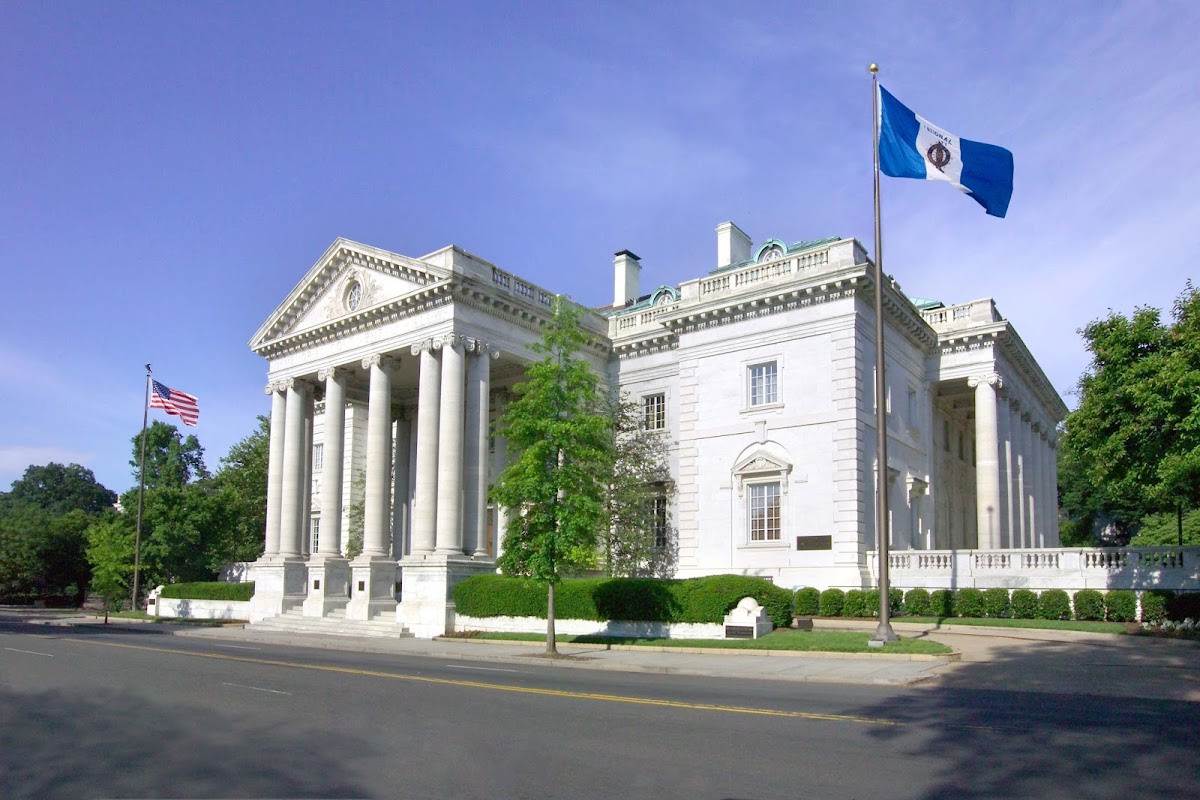
We know this venue intimately. Designing for the Daughters of the American Revolution (DAR) is an exercise in managing scale and historical gravity. The architecture here does the heavy lifting, but the cold marble and dark wood stacks require a thoughtful floral layer to feel intentional and lived-in.
The transition from the bright, airy O’Byrne Gallery to the moody, intellectual Library is the most significant design challenge. Florists must balance the need for “monumental” arrangements that match the exterior’s federal scale with the “intimate” requirements of the narrow reception tables inside.
The Spaces
Memorial Continental Hall (O’Byrne Gallery)
This is the primary indoor reception and ceremony space, defined by its long, rectangular layout and white marble surfaces. The light here is exceptional during the day, making it a favorite for photographers.
- What works: Low, lush troughs that span the length of the long tables. Because the room is narrow, keeping the floral footprint slim is essential for guest comfort.
- Skip: Tall, wide-reaching centerpieces that block the view of the barrel-vaulted ceiling or make the room feel claustrophobic.
- Watch out: The marble floor is incredibly slippery when wet. Every vase must be checked for leaks, and “no-drip” watering practices are mandatory during setup.
- Budget hero move: Focus all floral impact on the far end of the gallery to create a focal point for the ceremony that later serves as the backdrop for the head table.
The Library
The Library is perhaps the most atmospheric room in Washington, DC. It features three levels of bookshelves and a massive skylight, though it remains relatively dark due to the deep wood tones.
- What works: High-contrast palettes. Whites, creams, and pale peaches pop against the mahogany. Incorporating candlelight is non-negotiable here to illuminate the flowers.
- Skip: Darker floral palettes (burgundies, deep purples) unless you are prepared to invest heavily in professional pin-spot lighting.
- Watch out: The tables in the library are often non-traditional and narrow. Centerpieces must be designed with a “skinny” base to allow for glassware and place settings.
- Budget hero move: Utilize the balcony railings. A simple application of Smilax or Italian Ruscus trailing down from the first balcony level adds a sense of “growing” history without the cost of a full floral installation.
The Portico
This outdoor space is the crown jewel of the DAR complex. It offers an unobstructed view of the Washington Monument framed by massive neoclassical columns.
- What works: Large-scale “ground nests” or massive stone urns. The architecture is so grand that anything small looks like an afterthought.
- Skip: Lightweight pedestals or thin metal stands. The wind coming off the Ellipse can be significant, and top-heavy arrangements will topple.
- Watch out: National Park Service regulations and venue rules often restrict what can be attached to the historic stone. Assume all floral must be self-standing.
- Budget hero move: Two oversized, statement-making urns at the start of the aisle. They frame the couple against the monument and can be moved inside to the O’Byrne Gallery after the ceremony.
What Works at Daughters of the American Revolution
Embrace the “White Box” potential of the marble. The O’Byrne Gallery is essentially a neoclassical white box. It handles color beautifully, but it excels with a “Quiet Luxury” aesthetic—think monochromatic whites with heavy textural interest like ranunculus, sweet pea, and bleached ferns.
Design for the “Long View.” Most spaces at DAR are long and narrow. Instead of thinking about individual table “dots,” think about the floral line. Continuous greenery runners or a series of connected bud vases work better than isolated round arrangements.
Use greenery to bridge the history. The venue can feel a bit like a museum—because it is one. To make it feel like a wedding, use “wilder” greenery shapes. Smilax, jasmine vine, and agonis help break up the rigid lines of the architecture and make the space feel organic.
Prioritize the entrance. The DAR complex is massive. A significant floral moment at the main entrance on D Street sets the tone immediately and helps guide guests into the historic interior.
Candlelight is your best friend. Especially in the Library and the O’Byrne Gallery, the reflective surfaces (glass, marble, polished wood) multiply the effect of candlelight. We recommend doubling your standard candle count for this venue.
Budget Guide
| Tier | Investment | Floral Strategy |
|---|---|---|
| Essentials | $1,750 - $4,500 | Focus on personals and a pair of high-impact urns for the Portico ceremony that are moved to the reception. |
| Sweet Spot | $4,500 - $9,500 | Full table coverage with low-profile lush arrangements and a dedicated ceremony installation (arch or ground nests). |
| Full Experience | $9,500 - $16,000 | Includes balcony greenery in the Library, elevated focal pieces in the O’Byrne, and premium blooms like garden roses and peonies. |
| Statement | $16,000+ | Full-scale transformation including hanging installations from the Library chandeliers and floor-to-ceiling column wraps. |
The Daughters of the American Revolution is a venue that rewards those who respect its history while daring to soften its edges with abundant, intentional floral design.
Tips
Repurpose with a plan. The urns from the Portico ceremony should always move to the O’Byrne Gallery to flank the bar or the band—don’t let that budget stay outside.
Account for the “Narrow Table” factor. Many DAR layouts utilize 6-foot or 8-foot banquet tables that are only 30 inches wide; your centerpieces cannot exceed 10 inches in diameter at the base.
Check the load-in route. This is a historic building with specific elevators and narrow hallways; large-scale items must be built on-site or designed to fit through standard doorways.
Mind the light. The O’Byrne Gallery is bright, but the Library is dark—choose a floral palette that can perform in both lighting environments if your event spans both.
Respect the stone. No tape, no nails, and no floral foam runoff on the historic marble; your florist must be well-versed in sustainable, non-invasive mechanics.