
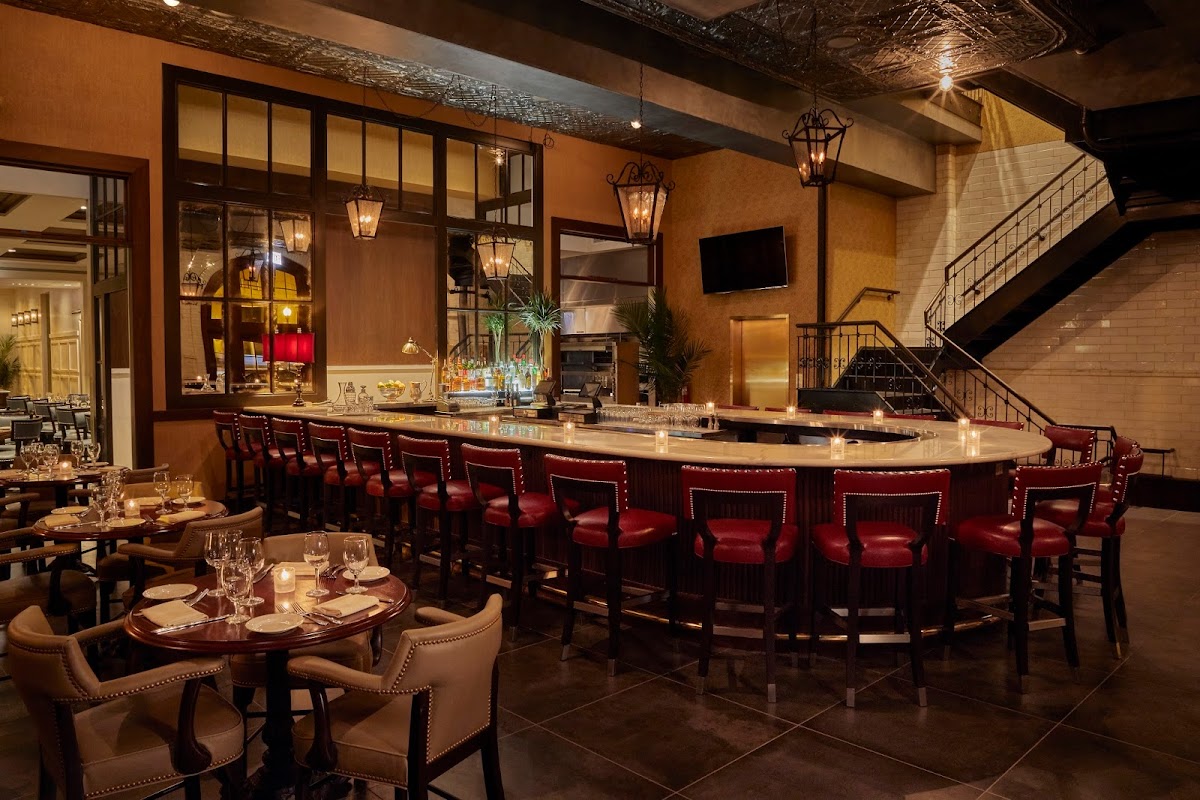
Designing for Chicago Firehouse requires a balance between the venue’s rugged industrial history and its current polished, white-walled sophistication. The space is a masterclass in texture—glazed brick, wrought iron, and weathered wood—which allows for floral concepts that range from architectural and minimalist to wild, overgrown garden aesthetics. Because the footprint is intimate, every arrangement is viewed up close, making quality of bloom and intentionality of placement more critical than sheer volume.
We know this venue intimately and have found that the most successful designs leverage the verticality of the engine room and the organic textures of the outdoor garden.
The Spaces
Main Room
The former engine room is the venue’s heart, characterized by its stunning white glazed brick and high ceilings. It is a bright, airy space that feels larger than its capacity suggests, thanks to the massive carriage doors that flood the room with natural light.
- What works: Tall, architectural branches or floor-to-ceiling greenery “climbing” the white brick. Statement floor meadows at the base of the carriage doors create a seamless transition between the indoor and outdoor spaces.
- Skip: Short, squat centerpieces that get lost in the room’s height.
- Watch out: The white brick is reflective; very pale or “muddy” tones can look washed out in midday light.
- Budget hero move: Focus your investment on two large-scale “growing” installations at the ceremony altar point, which can then be repurposed to frame the sweetheart table or the main entrance.
Side Garden
This is one of the most charming outdoor “rooms” in Chicago. Enclosed by brick walls and dense ivy, it feels like a private sanctuary. The stone and brick paving provide a stable but hard surface that needs the softening touch of florals.
- What works: Ground-level aisle markers that look like they are growing out of the brickwork. A “broken arch” or asymmetrical pillar design against the ivy wall allows the natural greenery to peek through while adding bridal focus.
- Skip: Traditional four-post chuppahs or heavy structures that block the view of the iconic firehouse architecture.
- Watch out: Wind can whip through the alleyway; all tall arrangements must be heavily weighted at the base.
- Budget hero move: Use the existing garden staircase. A lush floral “crawl” up the wrought iron railing provides a high-impact photo moment for the processional.
Balcony
The balcony offers a bird’s-eye view of the garden and serves as a secondary lounge area. It is a narrow space, so floral interventions must be strategic to avoid obstructing movement.
- What works: Greenery garlands woven through the railing or small, heavy-bottomed bud vases on the cocktail tables.
- Skip: Large pedestal arrangements that consume floor space.
- Watch out: Direct sun on the balcony can be intense; choose hardy blooms like ranunculus, roses, or tropicals that won’t wilt by cocktail hour.
Kitchen & Lounge Suites
These spaces are filled with vintage firehouse memorabilia and dark wood trim. They have a moodier, more residential feel than the Main Room.
- What works: Petite, vintage-inspired arrangements in footed bowls or clusters of bud vases that complement the historic furniture.
- Skip: Modern, acrylic, or hyper-minimalist vessels that clash with the firehouse’s soul.
What Works at Chicago Firehouse
- Monochromatic Palettes with Greenery: Against the white glazed brick, a single-color story (like all deep burgundy or all soft peach) with rich green foliage creates a sophisticated, editorial look.
- Vertical Scale: Use the high ceilings. If you aren’t doing a hanging installation, use tall glass trumpets or elevated stands to draw the eye upward and fill the “dead space” above the tables.
- Farm Table Runners: The venue often utilizes long farm tables. A continuous “meadow” runner or a series of nested bud vases and candles works better here than isolated round centerpieces.
- Textural Contrast: Lean into the “hard” elements of the venue. Pair the brick and metal with “soft” flowers like sweet peas, cosmos, and butterfly ranunculus to create a tension that feels modern and high-end.
- The Fire Pole: Yes, there is a fire pole. While it’s a novelty, a light winding of smilax or jasmine vine can integrate it into the wedding decor without making it look like a prop.
Budget Guide
| Tier | Investment | Floral Strategy |
|---|---|---|
| Essentials | $1,750 - $3,500 | Focus on personal flowers and a high-impact garden ceremony moment using the ivy as a backdrop. Minimalist bud vases for the engine room. |
| Sweet Spot | $3,500 - $6,500 | Includes full ceremony decor (aisle and altar), plus a mix of low lush centerpieces and bud vases for the farm tables. |
| Full Experience | $6,500 - $10,000 | Adds a statement entrance installation at the carriage doors, staircase greenery, and elevated arrangements to fill the Main Room’s height. |
| Statement | $10,000+ | Full-scale hanging installation in the engine room, a transformed garden with floral-heavy arches, and premium blooms throughout. |
This venue rewards those who design into its history rather than trying to mask it with generic decor.
Tips
- Weight your bases: The outdoor garden and the breeze from the open carriage doors can topple light arrangements; ensure your florist uses weighted containers.
- Repurpose with intent: The ceremony flowers from the garden should be moved to the engine room for the reception; plan for pieces that are mobile and don’t require complex re-rigging.
- Mind the heat: The radiant heated floors are a dream for guests in winter but a nightmare for low-sitting floral water. Keep floor arrangements in deep, cool reservoirs.
- Embrace the ivy: Don’t spend your budget trying to cover the garden walls; they are a feature. Use your flowers to accent and contrast the green.
- Lighting is key: Pair your florals with the venue’s string lights and candles to catch the reflection on the glazed brick walls.