
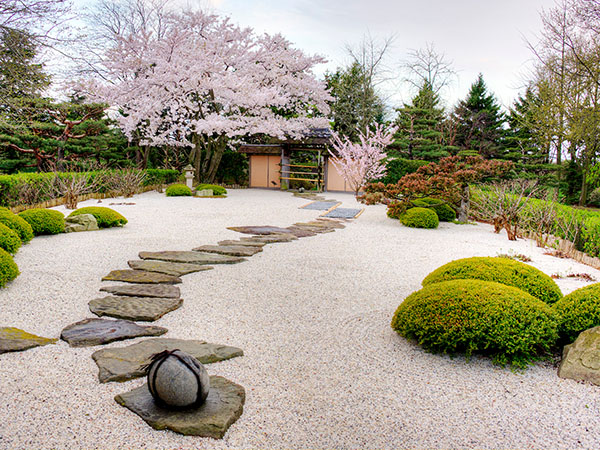
Designing flowers for the Chicago Botanic Garden is an exercise in horticultural restraint. This is not a venue that requires “filling up” with decor; rather, it demands a curated extension of the existing 385-acre living museum. The most successful designs here are those that look as if they could have grown naturally from the specific garden bed where they are placed.
The Spaces
Meadow Garden
This space mimics the look and feel of the Illinois prairie, utilizing perennials that change dramatically from May to October. It is a wide-open, “wild” space that can easily swallow up small, delicate arrangements.
- What works: Large-scale, asymmetrical ground installations. Think “floral nests” that anchor the ceremony space without blocking the horizon. Use plenty of grasses and movement-heavy blooms like cosmos or scabiosa.
- Skip: Rigid, perfectly round balls of roses. They look alien in this native-plant environment.
- Watch out: The wind. This is an open prairie setting; everything needs to be heavily weighted and low to the ground.
- Budget hero move: Focus your entire ceremony budget on two massive “growing” floor pieces rather than a dozen small aisle markers.
Farwell Landscape Garden
Known for its crevice gardens and alpine plants, this space is more architectural and intimate. The vertical stone slabs provide a built-in backdrop that is both rugged and refined.
- What works: Minimalist, structural designs. Use the stone as a mechanic—tuck small, high-impact arrangements at the base of the slabs to create a “rock garden” effect with your wedding flowers.
- Skip: Traditional arches. They often feel redundant against the interesting verticality of the stone.
- Watch out: Foot traffic. The paths here are specific; ensure your floral mechanics don’t impede the flow of guests through the delicate plantings.
Rose Garden
A classic, high-color environment that provides an incredible amount of built-in ambiance. Because the roses are so dominant, your floral work needs to be very intentional to avoid being redundant.
- What works: Monochromatic palettes that either match the roses for a lush look or contrast sharply (like deep burgundy against white roses) to stand out.
- Skip: Mixed “garden style” bouquets that include roses; they will look like you just picked them from the surrounding bushes.
- Watch out: Bloom cycles. Check with the garden staff on when the specific rose varieties are at their peak to coordinate your color palette.
Garden View Café
This is the primary indoor reception space, featuring floor-to-ceiling views of the surrounding grounds. It serves as a neutral transition from the lush outdoors.
- What works: Centerpieces that bring the outside in. Use branches, tall greenery, or “living” table runners to maintain the botanical theme.
- Skip: Overly glitzy, non-organic decor like crystal candelabras or heavy sequins. They clash with the “sustainable, local” vibe of the venue.
- Watch out: The view is the star. Keep centerpieces either very low or very tall and thin so they don’t block the windows.
What Works at Chicago Botanic Garden
Embrace the “Shrink the Lawn” aesthetic. The garden is a leader in biodiversity; your flowers should reflect this. Incorporate native-looking textures, seed heads, and varied foliage rather than just “focal” blooms.
Prioritize ground-level mechanics. Since there are no overhead structures for rigging in the outdoor gardens, the floor is your stage. Invest in heavy, stable ceremony markers and aisle “meadows.”
Coordinate with the season, not just the trend. If you are getting married in the Meadow Garden in September, the landscape will be golden and brown. A pastel spring palette will look out of place; lean into the sienna and ochre tones of the season.
Weight everything for North Shore winds. The proximity to the lake and the open nature of the gardens means wind is a constant factor. Every vase must be heavy-bottomed, and every installation must be anchored.
Use the venue’s scale to your advantage. Because the backdrop is so expansive, you can go larger than usual with your arrangements. Small, “dainty” flowers will disappear in the 385-acre landscape.
Budget Guide
| Tier | Investment | Floral Strategy |
|---|---|---|
| Essentials | $1,750 - $3,500 | High-impact personals and a single focal point for the ceremony. Focus on premium, large-headed blooms that stand out against the greenery. |
| Sweet Spot | $4,000 - $7,500 | Adds ground-level ceremony “nests” and low-profile reception centerpieces for the Café. This allows for a cohesive “growing” look throughout. |
| Full Experience | $8,000 - $12,000 | Includes larger installations in the ceremony space, lush aisle runners, and elevated centerpieces that mimic the garden’s height. |
| Statement | $15,000+ | Full-scale botanical transformation. Floral “hedges” for the aisle, custom installations on the Café’s structural points, and premium seasonal flower choices. |
The Chicago Botanic Garden is a venue for those who truly value horticulture; the flowers here are not just decor, they are the environment itself.
Tips
Think about the long walk. This is a massive site; ensure your florist has a plan for transporting delicate arrangements from the load-in area to distant gardens like the Meadow.
Skip the arch and go for the floor. Most spaces at the Botanic Garden have beautiful natural horizons; a heavy arch can block the very view you paid for.
Repurpose with care. Moving ground installations from a ceremony garden to the Café is smart, but remember the “living” look—they should be placed on the floor or on low risers in the reception to keep the effect.
Check the exhibition schedule. If your wedding coincides with the Orchid Show or a rare book exhibit, use those themes to inspire your floral textures and palettes.
Respect the collection. This is a research institution; never lean arrangements against rare specimens or move venue-owned planters without explicit permission.