
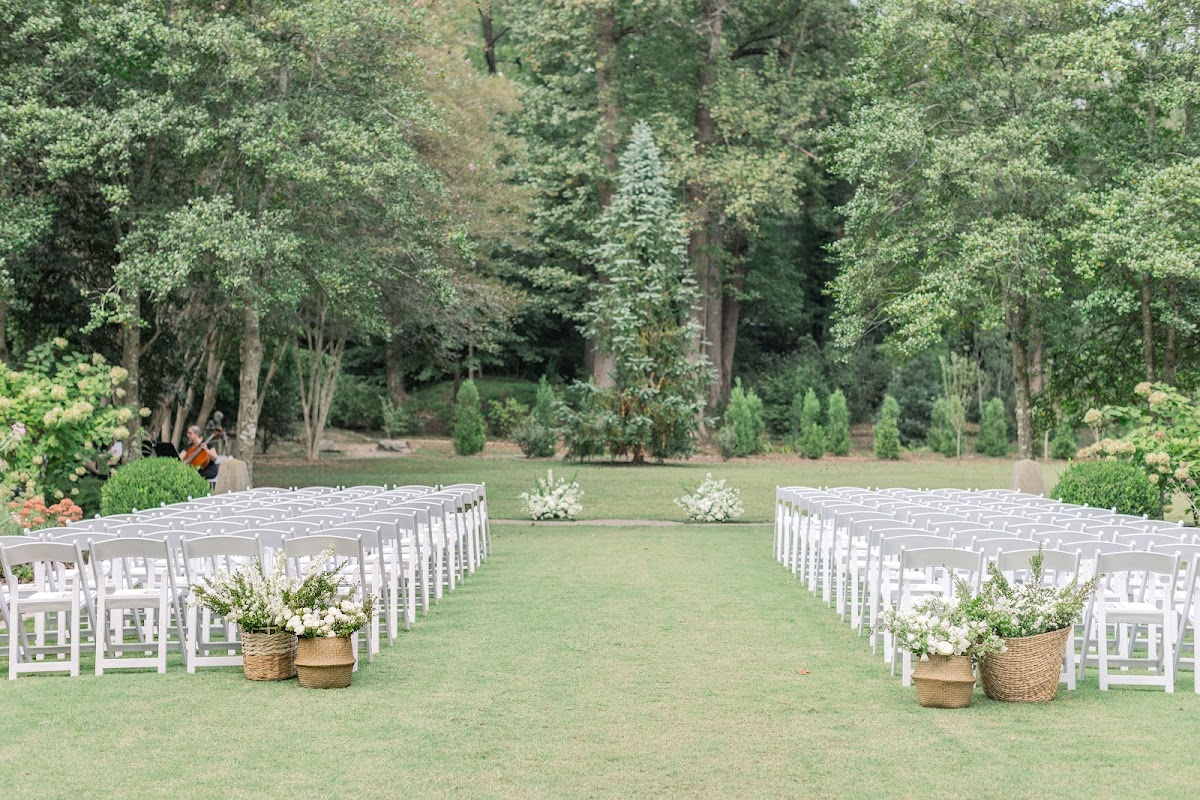
Designing for Cator Woolford Garden requires an understanding of the tension between formal Italianate structure and the wild, encroaching beauty of the Georgia forest. This is not a venue for rigid, artificial shapes; it is a space that demands organic movement and installations that feel as though they sprouted from the historic stonework.
We know this venue intimately, having navigated its stone pathways and steep inclines across multiple seasons. The primary challenge here is not the aesthetic—which is naturally stunning—but the logistics of an outdoor-only environment where every floral element must be self-supporting and resilient against the elements.
The Spaces
The Grand Staircase
This is the most iconic feature of the property. The weathered stone steps lead the eye downward toward the lawn, creating a natural aisle that is both dramatic and architectural.
- What works: “Growing” meadow installations. By placing weighted floral nests on the landings and edges of the steps, we create the illusion that flowers are creeping up the stone. This softens the hard lines of the staircase and frames the wedding party perfectly for wide-angle shots.
- Skip: Heavy, top-heavy pedestals. The incline makes them a tipping hazard, and they often look out of place against the historic masonry.
- Watch out: The stone can get incredibly hot in direct sun, which can wilt delicate blooms. We prioritize hardy stems like lisianthus, roses, and waxflower for these ground-level placements.
- Budget hero move: Focus your entire ceremony budget here. A lush staircase installation serves as both your aisle decor and your altar backdrop, eliminating the need for a separate arch.
The Colonnade
The canopy and columns of the Colonnade provide a structured, elegant transition between the garden levels. It offers a sense of enclosure while remaining entirely open to the surrounding greenery.
- What works: Column wraps. Using smilax or Italian ruscus to spiral up the stone pillars brings the garden into the architecture. Small, delicate clusters of blooms at eye level provide detail for close-up photography.
- Skip: Hanging installations. There are no safe rigging points in the historic canopy, and the venue is strict about protecting the integrity of the structure.
- Watch out: Wind. This area can act as a wind tunnel. All floral designs here must be securely anchored with heavy bases or discreetly tied to the columns.
The Ceremony Lawn
A sprawling, manicured green space that serves as a blank canvas. Because it is surrounded by such dense forest, the light here is beautifully filtered but the space can feel “bottomless” without a focal point.
- What works: Large-scale freestanding arches or “broken” arches. You need height here to compete with the scale of the mature trees. We recommend structures that reach at least eight feet.
- Skip: Small, dainty aisle markers. They disappear against the vastness of the lawn. If you want aisle decor, go for large, impactful clusters every three rows rather than a small bouquet on every chair.
- Watch out: Ground levelness. The lawn is well-maintained but naturally sloped. We use leveling shims for any heavy structures to ensure they don’t lean.
The Pavilion
The white marble archway and columns of the Pavilion offer a stark, sophisticated contrast to the deep greens of the forest. This is often used for intimate moments or as a secondary photo site.
- What works: Monochromatic white palettes with deep green foliage. The marble is the star here; the flowers should enhance its clean lines.
- Skip: Bright, neon colors that might clash with the classic, understated elegance of the white stone.
- Watch out: Reflections. The marble is bright in the midday sun. We avoid using too many glossy elements (like shiny ribbons) that might create glare in photos.
What Works at Cator Woolford Garden
- Ground-up meadows: Installations that appear to grow naturally from the lawn or stone paths are the most successful design choice here. They respect the garden setting while providing a modern, high-end look.
- Architectural framing: Use the existing stone columns and walls as the “bones” of your floral design. Rather than bringing in a separate metal stand, let the flowers climb the history that is already present.
- Textural foliage: Incorporating locally-inspired greenery like Smilax or Magnolia leaves ties the formal Italian garden back to its Georgia roots.
- Weighted, self-supporting structures: Because rigging is not an option, every design must be engineered from the ground up. We use heavy steel bases hidden by lush greenery to ensure stability on uneven garden terrain.
- High-contrast palettes: The deep shade of the 39-acre forest means that dark colors can get lost. We recommend whites, creams, and pale pastels to ensure your flowers stand out against the woodland background.
Budget Guide
| Tier | Price Range | Floral Strategy |
|---|---|---|
| Essentials | $1,750 - $3,500 | Focus on premium personal flowers and a pair of large, impactful arrangements for the start of the aisle that can be moved to the reception. |
| Sweet Spot | $3,500 - $6,000 | Includes a full freestanding ceremony arch or a partial Grand Staircase installation, plus lush table centerpieces for the reception. |
| Full Experience | $6,000 - $10,000 | A comprehensive design featuring a full Grand Staircase “takeover,” column wraps in the Colonnade, and elevated centerpieces in the Atrium. |
| Statement | $10,000+ | Total garden immersion. Lush meadows lining every path, a massive floral focal point on the lawn, and a reception space filled with high-impact, floor-to-ceiling floral moments. |
The character of Cator Woolford Garden is one of quiet, historic dignity; your floral budget should be spent on scale and texture rather than sheer quantity of variety.
Tips
- Prioritize repurposing: The meadows used on the Grand Staircase for the ceremony can be moved to the front of the band stage or the base of the sweetheart table for the reception.
- Prepare for the sun: This is a high-exposure venue. We avoid particularly thirsty blooms like hydrangeas in outdoor installations unless they are in a heavy water source.
- Respect the stonework: The venue is a historic site. We never use tape, nails, or anything that could damage the 1920s-era masonry.
- Think about the walk: The paths are beautiful but can be long for floral transport. We plan for extra setup time to navigate the terrain with care.
- Embrace the seasons: In early spring, the garden’s own azaleas and dogwoods provide a massive amount of “free” floral color; choose a palette that complements these existing blooms.