
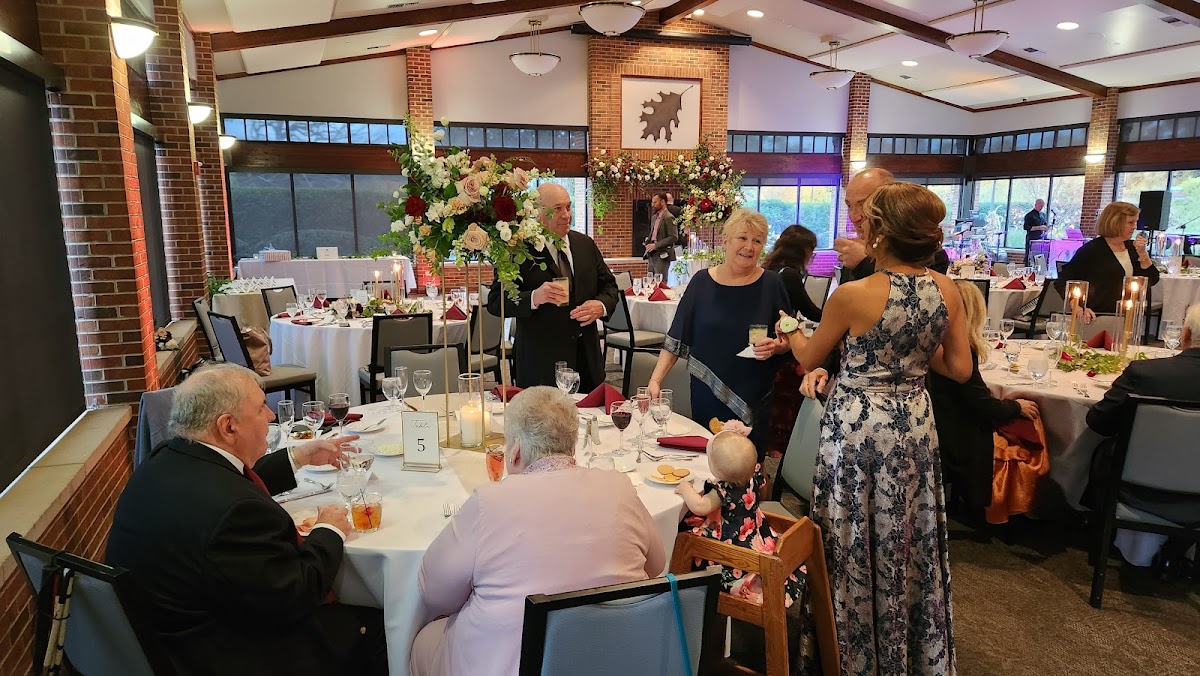
Designing for Cantigny Visitor’s Center requires an understanding of scale. With 500 acres of meticulously maintained grounds, small or spindly arrangements will disappear into the landscape. Success here lies in creating focal points that mirror the stately, classical proportions of the architecture and the lushness of the renovated formal gardens.
The Spaces
Renovated Formal Gardens
This space is a masterclass in landscape architecture, featuring clean lines, stone walls, and pergolas. The garden already provides significant color, so florals should focus on creating a specific destination within the greenery.
- What works: Large-scale floral arches that integrate with the existing pergolas. Use lush, textured greens to bridge the gap between our designs and the venue’s hedges.
- Skip: Thin, minimalist stands. They look fragile against the mature trees and expansive lawns.
- Watch out: The wind. Even a light breeze across the open meadow can topple top-heavy arrangements.
- Budget hero move: Use the existing stone walls as a base for a “growing” ground meadow ceremony setup rather than a traditional arch.
Museum Entrance
The First Division Museum offers a grand, symmetrical backdrop of red brick and white columns. It is arguably the most “premium” feeling photo op on the property and requires a design that respects its classical roots.
- What works: Symmetrical flanking arrangements. Think oversized stone urns or tall, structural pillars that frame the columns.
- Skip: Asymmetrical, “deconstructed” arches that might fight with the perfect balance of the building’s facade.
- Watch out: The brick color. Avoid deep reds or maroons that blend into the facade; instead, opt for high-contrast whites, creams, or soft peaches to pop against the masonry.
- Budget hero move: Focus your entire budget on two massive statement pieces at the entrance rather than spreading smaller arrangements across the wide steps.
Tank Park
An unconventional choice that offers a stark contrast between military history and soft nature. This space is visually heavy, so the floral strategy must be intentional.
- What works: Low, sprawling ground installations that “soften” the hard edges of the exhibits.
- Skip: Tall, airy arrangements that compete with the height of the machinery.
- Watch out: Guest flow. This is a high-traffic area for public visitors; ensure installations are contained and clearly visible to avoid being stepped on.
What Works at Cantigny Visitor’s Center
- Architectural Mirroring: Use the venue’s classical columns and oval windows as a guide. Symmetrical placements and clean, rounded shapes in your floral design will feel most at home here.
- Ground-Up Installations: Since there are no hanging points, the most successful designs are those that appear to grow from the earth. This works particularly well along the garden paths and the museum steps.
- High-Contrast Palettes: The grounds are intensely green and the buildings are deep red brick. To ensure your flowers are seen in photos, prioritize light-colored blooms—whites, pale yellows, and soft blushes.
- Structural Greenery: Use branches and sturdy foliage like smilax or ruscus to create height and volume without the fragility of delicate stems, which can wilt in the midday sun of the open gardens.
- Intentional Repurposing: Move large ceremony flanking pieces to the Visitor’s Center entrance or the reception area to maximize the impact of your statement designs.
Budget Guide
| Tier | Investment | Floral Experience |
|---|---|---|
| Essentials | $1,750 - $3,000 | Personal flowers and a pair of high-impact ceremony focal points that can be repurposed. |
| Sweet Spot | $3,000 - $5,500 | Full personal flowers, a structural ceremony arch or meadow, and refined centerpieces for the reception. |
| Full Experience | $5,500 - $8,500 | Lush ceremony installations, entrance statements at the Museum, and elevated reception designs with premium blooms. |
| Statement | $8,500+ | Large-scale custom installations in the gardens, multiple focal points across the grounds, and high-density floral design. |
The expansive nature of Cantigny means that a mid-range budget focused on a few key areas often looks better than a large budget spread too thin across the entire 500 acres.
Tips
- Prioritize weighted bases: Every outdoor structure must be heavily weighted to account for the open-air wind exposure across the meadows.
- Plan for the sun: There is very little shade in the formal gardens; choose hardy varieties like roses, lisianthus, and orchids that can withstand direct Chicago summer heat.
- Mind the public: Cantigny is a public park; ensure your load-in plan accounts for pedestrian traffic and that designs are robust enough to handle curious onlookers.
- Embrace the seasonality: The gardens change monthly; coordinate your palette with the venue’s planting schedule (e.g., tulips in spring, vibrant annuals in summer).
- Check the alcohol policy: If your event involves floral-heavy bar setups, be aware that the park has strict zones for alcohol service which may dictate where your “Instagrammable” moments can live.