
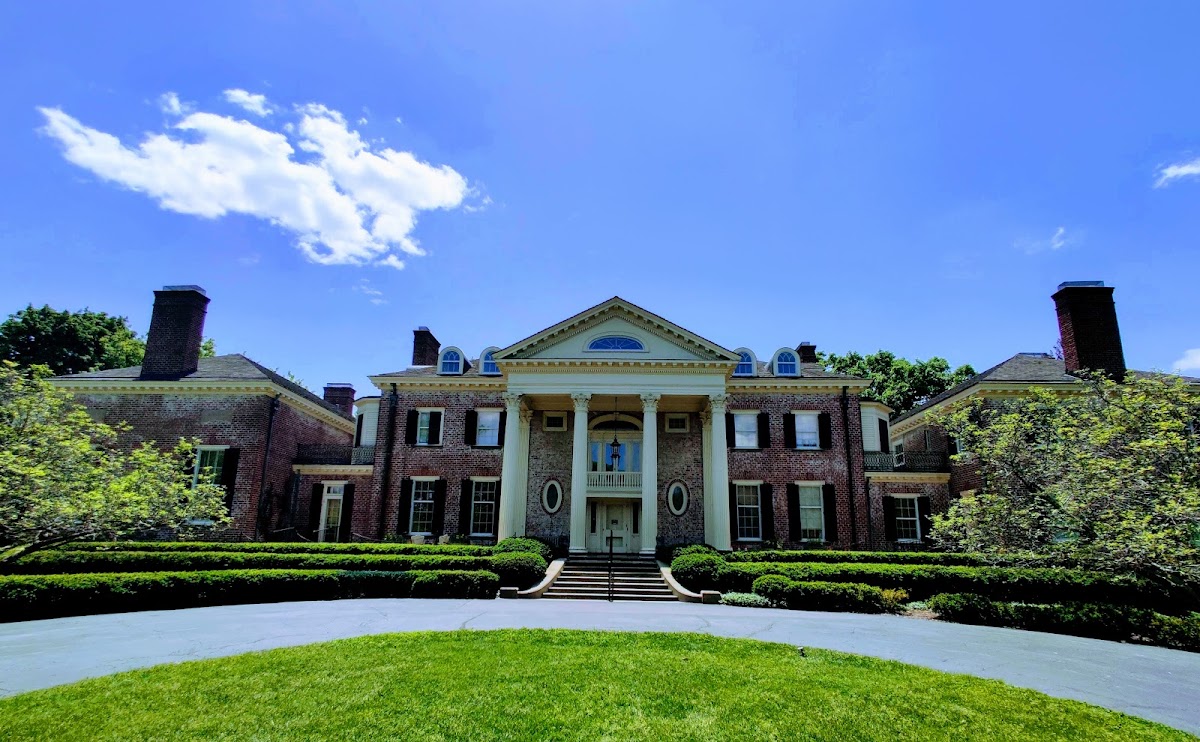
Cantigny’s Rock Garden is a masterclass in texture, offering a rugged but refined alternative to the more traditional formal gardens on the estate. Designing here requires an understanding of the interplay between the grey stone walls, the warm wood of the pergola, and the shifting colors of the park’s own perennial beds.
The Spaces
Rock Garden Ceremony Area
The Rock Garden is defined by its tiered stone walls and a prominent wooden pergola. It is an open-air environment with abundant natural light, which means every detail of your floral design will be under the microscope. The ground is a combination of manicured turf and gravel, which can be uneven.
- What works: Ground-level “meadow” arrangements that appear to grow directly out of the stone crevices or the gravel path. These should be designed in heavy, low-profile containers to combat the wind.
- Skip: Tall, thin pedestal arrangements. They look spindly against the massive scale of the mature trees and the weight of the stone walls.
- Watch out: Wind exposure is moderate to high. Anything top-heavy will tip without significant weighting (sandbags or lead weights are mandatory).
- Budget hero move: Focus all ceremony funds on the pergola. A single, lush asymmetrical installation on the upper corner creates a high-impact focal point that frames the couple perfectly for photography.
The Pergola
This is the architectural anchor of the Rock Garden. It provides the necessary verticality in a space that is otherwise very horizontal. Because there are no other overhead rigging points in the garden, this structure is your only opportunity for “hanging” or climbing designs.
- What works: Asymmetrical floral “clouds” or clusters that wrap around the pillars. This breaks up the hard lines of the wood and makes the structure feel integrated into the garden.
- Skip: Symmetrical “curtains” of flowers. They feel dated and obscure the beautiful timber craftsmanship of the pergola.
- Watch out: The wood can get hot in the Illinois summer. All pergola florals must be in a water source (cages or tubes) to prevent mid-ceremony wilting.
Indoor Event Space
While the ceremony is the star of the show, the transition to the indoor event space requires a shift in design thinking. The interior is a clean, multi-purpose area that lacks the inherent character of the gardens.
- What works: High-impact centerpieces that bring the “outside in.” Use branchy elements like spirea, forsythia, or long-stemmed roses to mimic the garden’s movement.
- Skip: Tiny bud vases alone. They will get lost in the room; if using bud vases, group them in clusters of five or seven to create a collective “moment.”
- Watch out: Lighting. The transition from the bright garden to an indoor room can feel flat. Use warm-toned florals (corals, peaches, honey yellows) to keep the energy up.
What Works at Cantigny - Rock Garden
Design for the wind. This is a 500-acre open park. Even on a calm day, there is a constant breeze. All floral structures must be freestanding and weighted. We recommend avoiding tall, narrow stands in favor of low, heavy-bottomed vessels or floor-based installations.
Embrace the stone. The grey rock formations are a gift to floral designers. They act as a neutral canvas. High-contrast palettes—think crisp whites, deep burgundies, or vibrant corals—stand out brilliantly against the slate tones of the garden.
Monochromatic greens. To make a garden wedding feel modern rather than “country,” use a sophisticated palette of various greens. Incorporating textures like hosta leaves, ferns, and eucalyptus creates a lush, high-end look that feels like an extension of the park itself.
Scale matters. The Rock Garden is surrounded by massive, old-growth trees. Small arrangements will look like toys in this environment. If the budget is tight, it is better to have two large, impactful statements at the start of the aisle than ten small, insignificant ones.
Repurpose with purpose. The pergola installations are difficult to move, but ground meadows used at the base of the ceremony site can easily be transitioned to the front of the head table or the base of a cake display. Always plan for the “second life” of your garden arrangements.
Budget Guide
| Tier | Investment | Floral Strategy |
|---|---|---|
| Essentials | $1,750 - $3,000 | Focus on personal flowers and two high-impact “altar” arrangements in heavy stone-colored urns that can be moved to the reception. |
| Sweet Spot | $3,500 - $5,500 | Includes a partial pergola installation (one corner), a full suite of personal flowers, and lush, low-profile centerpieces for 10-12 tables. |
| Full Experience | $6,000 - $8,500 | A full asymmetrical pergola wrap, “growing” aisle meadows for the first three rows, and elevated garden-style centerpieces for the reception. |
| Statement | $9,000+ | Floor-to-ceiling floral pillars at the garden entrance, a fully bloomed-out pergola, and a mix of high/low reception designs with overhead greenery in the reception space. |
Cantigny is a venue that rewards those who lean into its natural, rugged botanical character rather than trying to fight it with overly structured, ballroom-style decor.
Tips
Weight every base. Use sandbags hidden by moss or foliage for any freestanding structure; the Illinois prairie wind is unpredictable.
Time the blooms. Ask the Cantigny grounds team what is expected to be in bloom during your month; matching your floral palette to the park’s seasonal plantings creates a seamless visual experience.
Hydration is non-negotiable. The Rock Garden has very little shade; ensure all ceremony florals are processed with professional-grade hydrators and kept in water until the last possible moment.
Coordinate the load-in. The park is vast; ensure your floral team has clear directions to the Rock Garden specifically, as it is a distinct area from the main Red Oak Room or Le Jardin.
Softening the hardscape. Use trailing vines like jasmine or clematis to soften the transition between the stone walls and the ceremony seating area.