
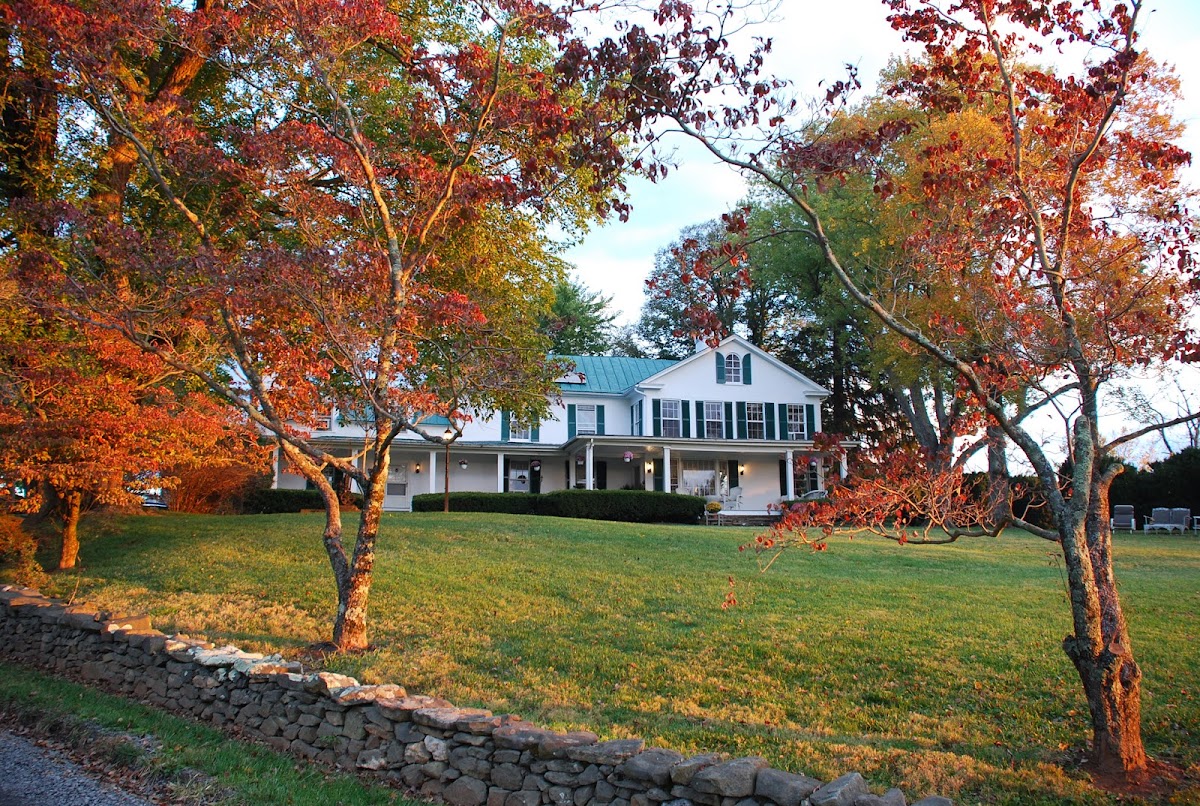
You turn off Route 50 onto Briar Patch Lane, and within seconds, the modern world falls away. White fences appear first, cutting geometric lines across rolling pasture where horses graze beneath ancient oaks. The road curves, climbs gently, and then the inn reveals itself — a Colonial-style main house dating to 1805, its white clapboard and black shutters glowing against the green hillside. Beyond the house, tucked into the landscape like a secret, sits the Fox Den: a renovated tractor barn that has somehow transformed from agricultural outbuilding into one of the most elegant reception spaces in Virginia hunt country. And everywhere — in every direction — the land unfolds in layers: pasture giving way to woodland, hills rolling toward the distant Blue Ridge, and above it all, the Bull Run Mountains tracing the horizon in soft blue silhouette. You park near the main house, step out, and hear only birdsong and the occasional whinny from the paddock. There are alpacas here, too, which guests invariably find charming. This is Briar Patch Bed & Breakfast Inn: 47 acres of historic Virginia farmland that feels both utterly removed from the city and surprisingly close to it. Poppy has designed Briar Patch Bed & Breakfast Inn wedding flowers for 1 celebration here so far, every time we scout this property, we understand why they’re drawn to it. This is the Virginia countryside at its most photogenic and welcoming.
About Briar Patch Bed & Breakfast Inn
Briar Patch occupies land that has been farmed since the early 1800s. The main house was built in 1805, and while it has been lovingly restored and updated, it retains the gracious proportions and historical character of its era: wide-plank floors, wavy glass windows, working fireplaces, and eight guest rooms named for flowers — Rose, Daisy, Violet, Iris, Lily, Peony, Gardenia, and Magnolia. Each room is furnished with antiques, four-poster beds, and the kind of floral wallpaper that somehow feels appropriate rather than fussy in a building this old. The front porch stretches the length of the house, lined with rocking chairs that overlook the lawn and paddocks beyond. For wedding parties, the main house functions as both lodging and getting-ready headquarters, with ample space for hair and makeup, champagne toasts, and those quiet morning-of moments that photographers love.
The true star of the wedding program, however, is the Fox Den — a former tractor shed that was gutted, rebuilt, and reimagined as a three-room event barn. The Gold Fox Room is the main reception hall: soaring ceilings, crystal chandeliers, exposed wooden beams painted white, French doors on two sides, and stone fireplaces at either end. It seats 200 comfortably and manages to feel both grand and intimate, which is a rare combination. The Bronze Fox Room, by contrast, embraces darker wood tones and a more rustic aesthetic, with vaulted ceilings, a fireplace with a carved wooden mantel, and a cozier scale that works beautifully for ceremonies, cocktail hours, or smaller receptions. The Silver Room connects the two, functioning primarily as a pre-reception gathering space for appetizers and drinks. All three rooms flow together, allowing for seamless transitions and creative use of the entire building throughout the event.
Outside, the property offers two primary ceremony sites. The Oak Tree site sits near the main house beneath a 200-year-old oak whose canopy could shelter half the guest list on its own. The tree’s massive trunk and sprawling branches create a natural cathedral, and the site benefits from excellent accessibility — level ground, proximity to the inn, and a shaded location that protects both guests and flowers from harsh sun. The Hilltop site, by contrast, requires a short uphill walk but rewards the effort with panoramic views of the Bull Run Mountains and a naturally sloped hillside that creates amphitheater-style seating. It is more exposed, more dramatic, and more photogenic, particularly at golden hour when the mountains glow and the Virginia light turns everything soft and painterly.
The property also includes a pool deck with market lighting for rehearsal dinners or afterparties, a covered verandah with mountain views for cocktails, and 47 acres of landscaped grounds dotted with mature trees, grazing animals, and photo opportunities around every corner. Briar Patch is located four miles east of Middleburg proper, about 20 minutes from Dulles International Airport and roughly an hour from downtown Washington, D.C. For Poppy’s delivery teams, the drive from our studio is straightforward via Route 50, with ample on-site parking and load-in access directly to the Fox Den. The venue is remarkably flexible: couples can bring in any licensed and insured caterer, provide their own alcohol without corkage fees, and drop off DIY decor early. There are no rigid vendor restrictions, no noise curfews that we’ve encountered, and the property grants full weekend access from Friday at 4 PM through Sunday at noon, allowing for relaxed setup and breakdown.
Event Spaces & Floral Opportunities
Fox Den - Gold Fox Room
Capacity: 200 seated
Setting: The Gold Fox Room is the crown jewel of Briar Patch’s event program. Picture a barn that has been scrubbed of all its agricultural roughness and rebuilt as a ballroom, but one that retains just enough rusticity to feel warm rather than formal. The ceilings soar — at least 20 feet at the peak — with exposed beams painted crisp white. Crystal chandeliers hang at intervals down the length of the room, casting prismatic light across tables below. French doors line both long walls, flooding the space with natural light during the day and opening onto brick patios for evening air. At each end of the room, substantial stone fireplaces anchor the space, their mantels deep enough to support cascading floral installations. The color palette is soft and neutral: white beams, honey-toned wood floors, pale stone, and cream walls. It is a space that takes direction beautifully, adapting to any aesthetic a couple brings to it.
Floral approach: The high ceilings in the Gold Fox Room invite vertical drama. We often design tall centerpieces on clear risers that lift blooms to eye level — think three-foot-tall arrangements of Quicksand roses, Café au Lait dahlias, white lisianthus, and trailing jasmine vine in gold compote vessels that echo the chandeliers overhead. Alternatively, for couples who prefer unobstructed sightlines, we create low, lush centerpieces in wide stone bowls: mounded garden roses (Juliet, Patience, Keira), ranunculus, hellebores, and textured greenery like Italian ruscus and olive branches that spill generously over the vessel edges. The fireplaces are non-negotiable focal points. We design asymmetric mantel installations that cascade down one side — a five-foot-long composition of hydrangea, garden roses, eucalyptus, and seasonal branches like flowering quince in spring or bittersweet in fall. For the chandeliers themselves, a light touch: we sometimes suspend minimal greenery garlands from beam to beam, creating soft overhead lines without blocking the crystals. The French doors can be framed with floral swags or left unadorned to showcase the view. The key in this room is balance — enough florals to feel abundant, but never so much that the architecture gets lost.
Fox Den - Bronze Fox Room
Capacity: Flexible; typically 50-100 depending on layout
Setting: If the Gold Fox Room is the polished ballroom, the Bronze Fox Room is its moodier, more intimate sibling. The ceilings are vaulted but lower, and the wood beams are left in their natural dark finish, creating warm, shadowy depth. A fireplace with a carved wooden mantel dominates one wall, and French doors open onto the same brick patios as the Gold Fox Room. This space works beautifully for cocktail receptions, smaller seated dinners, or — most commonly — indoor ceremonies when weather doesn’t cooperate. The darker wood tones lend themselves to richer, more saturated color palettes and organic, garden-style florals that feel less formal than what works in the Gold Fox Room.
Floral approach: For ceremonies in the Bronze Fox Room, we typically position the couple in front of the fireplace and design an asymmetric ceremony backdrop that drapes across the mantel and cascades toward the floor on one side. Imagine deep burgundy dahlias, burnt orange roses (Free Spirit, Toffee), plum-toned scabiosa, chocolate cosmos, and textured foliage like smokebush and amaranthus, all arranged in a loose, organic style that feels gathered rather than constructed. Aisle markers can be simple: votives in mercury glass or low arrangements in wooden boxes placed every other row. For cocktail hours, we scatter the space with small arrangements on high-boys and lounge tables — bud vases with single stems of garden roses or tight clusters of seasonal blooms in brass vessels. The fireplace mantel is always worth investing in, even if it’s just a supporting space in your floor plan, because it photographs beautifully and anchors the room visually.
Fox Den - Silver Room
Capacity: Standing room; typically 50-75 for cocktails
Setting: The Silver Room functions as the connective tissue between the Gold and Bronze Fox Rooms. It is a narrower, more transitional space with high ceilings, white walls, and large windows. Most couples use it for pre-reception appetizers and drinks, or as an overflow lounge area during cocktail hour. It does not demand heavy floral investment, but strategic touches here help tie the entire Fox Den together.
Floral approach: The Silver Room is all about accent florals. A large statement arrangement on the bar — perhaps a loose, asymmetric design in a brass urn filled with white hydrangea, Quicksand roses, eucalyptus, and trailing ivy — makes an immediate impression. If there are high-top cocktail tables, we add small arrangements in bud vases or grouped votives with single blooms floating in water. Window ledges can hold potted herbs or small floral clusters in vintage containers. The goal is to create visual continuity between the two main rooms without overinvesting in a space where guests will spend limited time.
Hilltop Ceremony Site
Capacity: 200 seated
Setting: The Hilltop ceremony site sits on the upper hill of the property, a short uphill walk from the Fox Den. It is an open meadow with a gently sloping hillside that creates natural stadium-style seating for guests. The view is the main attraction: unobstructed panoramas of the Bull Run Mountains, rolling pastures dotted with horses, and miles of Virginia countryside stretching in every direction. There are no structures here, no natural focal points except the land itself, which means the ceremony setup must create its own sense of place. The site is fully exposed to sun and wind, which has implications for floral durability and guest comfort, but the payoff is that jaw-dropping backdrop.
Floral approach: In an open meadow with mountain views, the ceremony arch is everything. We typically recommend a substantial wooden arch or frame — think seven feet tall and six feet wide — and dress it with a full, organic floral installation that looks gathered from the surrounding countryside. Begin with a base of wild greenery: smilax, Italian ruscus, and olive branches wired along the arch frame to create soft, irregular lines. Then layer in blooms with a loose, garden-picked feel: white garden roses (Patience, Polo), blush ranunculus, peach spray roses (Bombastic), lavender, scabiosa, and Queen Anne’s lace. The arrangement should feel abundant but not precious — this is not the place for tight, formal florals. Because the site is exposed, we select hardy blooms that tolerate sun and wind: roses, hydrangea, lisianthus, and structural foliage rather than delicate peonies or sweet peas. Aisle markers can be low arrangements in wooden crates or metal buckets placed every third row, or simple shepherd’s hooks with hanging posies. At the base of the arch, cluster several large urns overflowing with additional florals and greenery to create visual weight and ground the structure. The mountain views will outshine anything you bring to the hillside, so the goal is to complement rather than compete — the florals should feel like they belong in that landscape, not like they were trucked in from a different aesthetic universe.
Oak Tree Ceremony Site
Capacity: 200 seated
Setting: The Oak Tree ceremony site sits near the main house beneath a 200-year-old oak whose canopy spans an area large enough to shelter the entire guest section. The tree is massive — trunk diameter at least six feet, branches thick as telephone poles, leaves forming a dense green ceiling overhead. The ground beneath is level and accessible, and the site benefits from dappled shade that protects guests and florals from harsh sun. The tree itself functions as the ceremony backdrop, which is both a gift and a challenge: you have a built-in focal point, but it is also the single most dominant visual element, and anything placed in front of it must hold its own.
Floral approach: Under the oak tree, less is more — but the less must be spectacular. Rather than a traditional ceremony arch, we often design a ground-level floral installation that wraps around the base of the tree trunk. Imagine a crescent-shaped arrangement — eight feet wide and three feet tall at its peak — that appears to spill organically from the tree itself. Use moss-covered foam bases wired to the trunk (with protective padding beneath to avoid damaging bark), then build outward with lush, textured florals: white hydrangea, ivory garden roses (Patience, Ohara), blush lisianthus, seeded eucalyptus, ferns, and trailing jasmine vine. The arrangement should feel like the tree grew it, not like it was installed. For the aisle, we favor low, organic arrangements in natural containers — wooden crates, woven baskets, or simple enamelware buckets — placed every other row and filled with seasonal blooms that match the altar florals. The shaded location is ideal for more delicate flowers that might wilt in full sun: ranunculus, anemones, sweet peas, and hellebores all thrive in the dappled light beneath the oak. An alternative approach: forego the tree trunk installation entirely and instead suspend floral garlands from the lower branches, creating a floating canopy above the couple. Either way, the tree does most of the work — your florals just need to enhance what is already there.
Pool Deck
Capacity: Flexible; typically 40-60 for seated dinners
Setting: The pool deck is a casual outdoor space near the main house, strung with market lights and surrounded by brick patios and lawn. It is most commonly used for rehearsal dinners, welcome parties, or late-night afterparties, and the vibe is intentionally relaxed: long farm tables, string lights overhead, views of the rolling property, and an atmosphere that encourages lingering over wine and conversation.
Floral approach: For rehearsal dinners on the pool deck, we design florals that feel effortless and abundant without reading as overly formal. Long, low garlands of greenery run down the centers of farm tables — smilax, eucalyptus, and ivy woven together with clusters of garden roses, spray roses, and seasonal blooms tucked in at intervals. Alternatively, we create groupings of small arrangements in mismatched vintage vessels — mason jars, ceramic crocks, enamelware pitchers — clustered down the table in organic, irregular groupings. Potted herbs (rosemary, lavender, basil) make excellent filler and double as favors. For a more elevated look, we design low compote arrangements with garden roses, ranunculus, and textured greenery that still feel casual due to their organic, just-picked style. The market lighting provides most of the ambiance, so florals can be simpler here than in other spaces. The goal is to enhance the laid-back, celebratory atmosphere without introducing formality that feels out of place.
Wedding Flower Ideas for Briar Patch Bed & Breakfast Inn
Virginia Garden Estate
This concept draws directly from the property’s 200-year-old Virginia heritage and lush, English-garden-style landscaping. The palette is soft and romantic: blush, cream, butter yellow, and the palest lavender, grounded by silvery greens and textured foliage. Think Juliet garden roses (the perfect cupped peachy-pink bloom that reads as antique), Patience roses (ivory with blush edges), Café au Lait dahlias (dinner-plate size in soft café tones), white lisianthus, pale peach ranunculus, lavender (both fresh stems and dried for texture), Queen Anne’s lace, and seeded eucalyptus. Vessels lean traditional but not stuffy: aged stone urns, weathered concrete compotes, mercury glass votives, and soft white ceramic. This palette is stunning in the Gold Fox Room, where the neutral architecture allows the soft colors to glow, and equally lovely under the oak tree, where the dappled light brings out the subtle color shifts in each bloom. The style is abundant, organic, and effortlessly elegant — florals that look like they were gathered from a century-old cutting garden rather than constructed in a studio.
Hunt Country Romance
Middleburg is the heart of Virginia hunt country, and this concept leans into that equestrian heritage with a palette inspired by autumn hunts, leather tack, and the rich earth tones of the surrounding landscape. The colors are warm and saturated: burgundy, rust, terracotta, burnt orange, and deep plum, punctuated by touches of gold and cream. Blooms include burgundy dahlias (Black Satin, Rip City), rust-colored roses (Free Spirit, Toffee), chocolate cosmos, burnt orange ranunculus, plum-toned scabiosa, dark privet berries, and amaranthus in deep wine shades. Textural elements include magnolia leaves (copper undersides facing out), bittersweet vine, oak leaves, and actual grapevine clippings. Vessels are rich and tactile: aged brass urns, copper compotes, dark wood boxes, and leather-wrapped containers. This palette is spectacular in the Bronze Fox Room, where the dark wood beams amplify the moody tones, and equally striking on the Hilltop ceremony site in autumn, when the surrounding landscape echoes the same burnt oranges and deep reds. The aesthetic is warm, grounded, and deeply connected to place.
Mountain Meadow
This concept takes inspiration from the wildflower meadows and rolling countryside visible from every corner of the property. The palette is soft, natural, and slightly wild: whites, creams, soft yellows, and touches of lavender and peach, all grounded by varied greens and wispy, textured foliage. Flowers include white garden roses (Patience, Polo), cream lisianthus, soft yellow ranunculus, peach spray roses, lavender, scabiosa (both blooms and pods), Queen Anne’s lace, yarrow, and grasses like fountain grass or wild oats. Greenery is loose and organic: smilax, jasmine vine, olive branches, seeded eucalyptus, and ferns. Vessels are natural and rustic: wooden crates, enamelware buckets, woven baskets, and simple ceramic crocks. This style is perfect for couples who want their florals to feel organic and unstructured, as though they could have grown right there on the hillside. It works beautifully at the Hilltop ceremony site, where the wild, gathered aesthetic mirrors the surrounding landscape, and in the Silver Room, where the casual vibe suits the transitional nature of the space. The look is effortless, romantic, and quintessentially Virginia countryside.
Seasonal Considerations
Briar Patch sits in the Piedmont region of Virginia, where four distinct seasons bring dramatically different weather, landscapes, and floral availability. Understanding the seasonal rhythms here is essential for both aesthetic planning and floral durability.
Spring (March - May): Virginia springs are unpredictable. March can bring late snow or surprise warmth, while April and May typically deliver mild temperatures, blooming dogwoods, and verdant green landscapes. Average temperatures range from the 50s to the 70s, with frequent rain showers. Spring is peak season for many romantic blooms: tulips, daffodils, hyacinth, hellebores, ranunculus, anemones, sweet peas, and the first garden roses of the season. Flowering branches — dogwood, cherry, quince, lilac — are abundant and spectacular. The property’s extensive landscaping comes alive in spring, with flowering trees and bulbs providing a lush backdrop. For outdoor ceremonies, have a weather backup plan; April showers are real. Spring blooms are generally hardy but avoid overly delicate flowers like sweet peas in direct sun. Best months: late April and May, when temperatures stabilize and the landscape is at peak bloom.
Summer (June - August): Virginia summers are hot and humid, with temperatures regularly reaching the upper 80s and 90s and occasional afternoon thunderstorms. The property’s open hillsides offer little natural shade at ceremony sites, so the Oak Tree location becomes particularly appealing for its canopy. Summer brings an abundance of blooms: garden roses (at their absolute peak in June), peonies (early June only), hydrangea, lisianthus, dahlias (starting in July), sunflowers, zinnias, and nearly every popular wedding flower. The challenge is heat and humidity, which can cause delicate blooms to wilt quickly. We favor hardy flowers — roses, hydrangea, lisianthus, and thick-petaled blooms — and ensure arrangements are well-hydrated and kept cool until the last possible moment. For outdoor setups, we schedule installations as late as possible and avoid direct sun exposure. Despite the heat, summer offers the longest daylight hours and the most dramatic golden-hour light on the hillside. Best months: June for peonies and peak roses, or September as summer transitions to fall and temperatures moderate.
Fall (September - November): Autumn is arguably the most spectacular season at Briar Patch. Temperatures cool to comfortable ranges (60s and 70s), humidity drops, and the surrounding landscape transforms into a tapestry of reds, oranges, and golds. Fall foliage typically peaks in mid-to-late October in Loudoun County, creating a natural backdrop that rivals any floral installation. Autumn blooms include dahlias (at their absolute best), chrysanthemums, marigolds, zinnias, late-season roses, and asters. Textural elements like oak leaves, bittersweet vine, hypericum berries, and dried grasses add seasonal richness. The cooler temperatures are ideal for floral longevity, and blooms that might struggle in summer heat thrive in fall’s crisp air. This is peak wedding season at Briar Patch, and for good reason: the weather is reliable, the views are stunning, and the property feels especially alive. Best months: October for peak foliage and reliable weather.
Winter (December - February): Winter weddings at Briar Patch are rare but magical. Temperatures range from the 30s to the 50s, with occasional snow possible (especially in January and February). The property takes on a stark, elegant beauty: bare tree branches, dormant pastures, and a quieter, more intimate atmosphere. Indoor spaces like the Fox Den become essential, and the fireplaces earn their keep. Winter florals lean on evergreens, berries, and greenhouse-grown blooms: white roses, amaryllis, ranunculus (imported), anemones, evergreen branches (cedar, pine, fir), holly, magnolia leaves, and hypericum berries. Burgundy, deep red, cream, and forest green palettes feel seasonally appropriate. The advantage of winter is that cold temperatures preserve florals beautifully, and you can incorporate elements like frosted branches, pinecones, and even snow-dusted evergreens if weather cooperates. Best month: December for holiday-season charm and the possibility of snow-dusted landscapes.
Poppy’s Expert Take
The Hilltop site requires wind-resistant flowers and weighted structures. That open meadow is breathtaking, but it is also exposed to wind. We have seen ceremony arches sway and lightweight arrangements tip over. For the arch, use a heavy wooden structure anchored with sandbags or stakes, and design florals with thick, sturdy stems — roses, hydrangea, and woody branches — rather than delicate blooms on weak stems. Avoid tall, top-heavy aisle arrangements; low, weighted containers are your friend. And always have a backup plan for high-wind days.
Invest in the fireplace mantels — they are photography gold. Both fireplaces in the Fox Den photograph constantly, appearing in ceremony backdrops, reception details, and candid guest shots. A beautifully designed mantel arrangement pays dividends across your photo gallery. We typically design asymmetric cascading installations — three to five feet long — that drape down one side of the mantel and appear to spill organically toward the hearth. These arrangements become focal points and anchor the room visually.
The Oak Tree needs minimal florals, but what you do should be thoughtful. That 200-year-old tree is the star of the show. Rather than competing with it, embrace it. A lush ground-level installation at the tree base or suspended garlands from the branches enhance without overwhelming. Avoid a traditional freestanding arch, which will look out of place beneath that massive canopy. Let the tree do the work and support it subtly with florals that feel like a natural extension of the landscape.
Plan for the Fox Den’s crystal chandeliers — they complicate hanging installations. The chandeliers are stunning, but they occupy the exact vertical space where you might want to suspend florals. If you want overhead greenery garlands, we work around the chandeliers, running garlands from beam to beam in the negative space between fixtures. Alternatively, embrace the chandeliers as they are and focus floral investment on mantels, tables, and entryways. Communicate clearly with your planner about what is structurally possible.
Summer ceremonies require late setup and hardy flowers. If you are marrying outdoors in July or August, understand that flowers will begin to stress within an hour in full sun and 90-degree heat. We set up ceremony florals as close to start time as possible — often within 90 minutes of guests arriving — and we select the hardiest blooms in our cooler: roses, lisianthus, hydrangea (well-hydrated), and thick-leaved foliage. Avoid ranunculus, sweet peas, or anything delicate. And seriously consider the Oak Tree site for its shade.
The property’s flexibility is a gift — use it strategically. Briar Patch allows vendor access from Friday afternoon through Sunday, which means you can stage florals, deliver rentals, and set up at a relaxed pace. Take advantage of this. Schedule your ceremony florals to be set up Saturday morning for a Saturday evening wedding, giving blooms time to settle and open. Use the extra time to perfect tablescapes and make adjustments. The lack of rigid restrictions is rare and valuable.
Embrace the farm aesthetic, but refine it. Briar Patch is a working farm with horses, alpacas, and historic barns. The aesthetic leans rustic, but the Fox Den’s crystal chandeliers and elegant architecture call for