
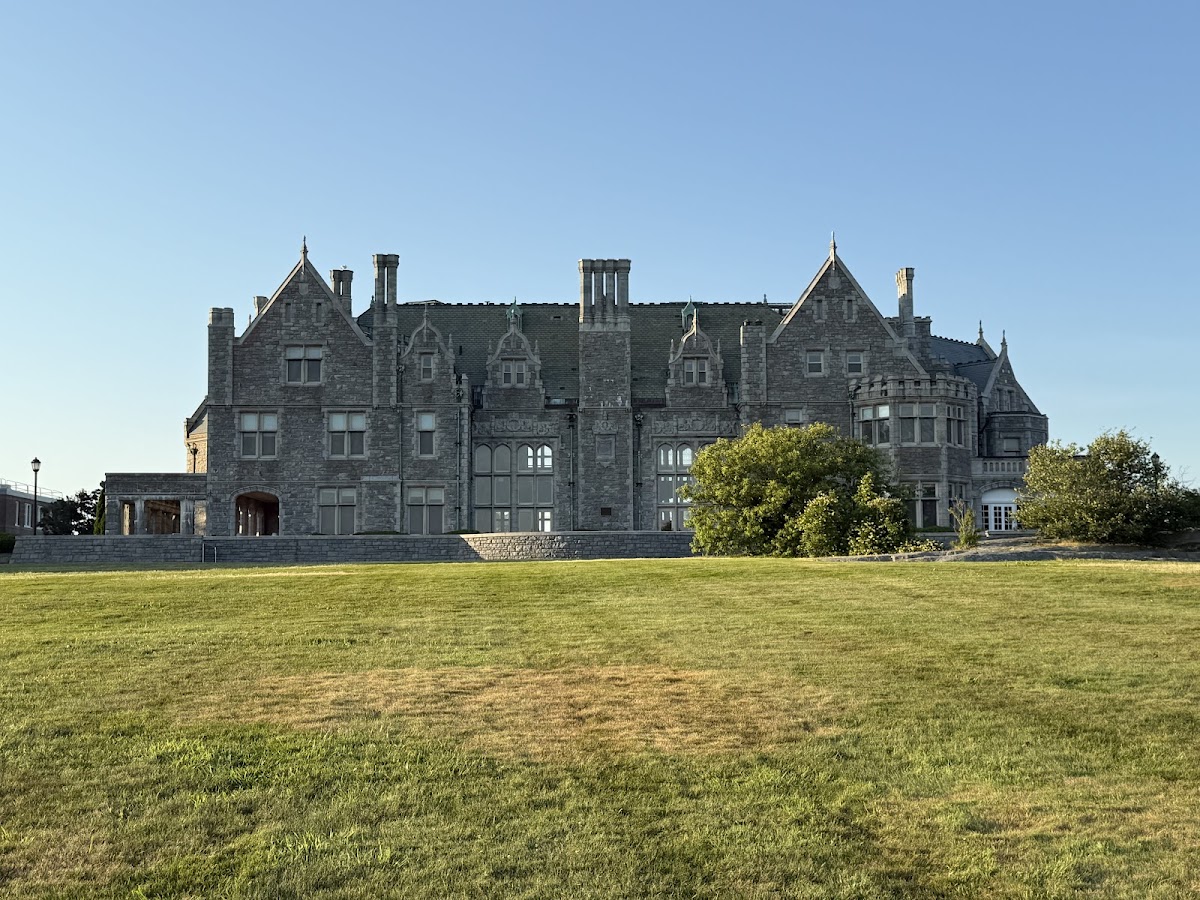
The first time you drive through the University of Connecticut’s Avery Point campus toward Branford House, the Connecticut shoreline unfolds in stages. Campus buildings give way to mature trees, the road curves past manicured lawns, and then — suddenly, unapologetically — there it is: a 1902 Gilded Age mansion perched on a rocky peninsula with Long Island Sound stretching out on three sides like a private sea. The scale announces itself immediately. This is not a renovated farmhouse or a tastefully converted barn. This is a stone mansion built by railroad money at the height of American opulence, with soaring windows positioned to capture every possible angle of ocean light, ornate plasterwork ceilings that reward looking up, and a two-story marble fireplace that could accommodate a standing adult in its hearth. The views alone — sailboats tracking across the Sound, lighthouse on the horizon, sunset turning the water from steel to gold — would be enough to make this a remarkable wedding venue. But Branford House offers something more: the collision of architectural grandeur with raw coastal beauty, formal Gilded Age proportions softened by salt air and the cry of gulls. Poppy has designed Branford House wedding flowers for 11 celebrations here, and we have learned that the most successful floral work at this venue does not try to compete with the mansion or the ocean — it creates a third element that bridges them, something cultivated and intentional that makes sense of all that beauty.
About Branford House
Branford House was built in 1902 as the summer residence of Morton Freeman Plant, a Connecticut-born financier whose fortune derived from steamship lines, railroads, and strategic real estate investments across the eastern seaboard. Plant was part of the Gilded Age elite who summered in Newport, Rhode Island, and when he commissioned Branford House, he asked his architects to create something that could hold its own against those legendary “cottages” while taking advantage of Connecticut’s dramatic coastal topography. The result was a stone mansion modeled after the grand estates of Newport — Beaux-Arts proportions, ornate interior detailing, rooms scaled for formal entertaining — but sited on a peninsula that juts into Long Island Sound in a way that makes the ocean feel less like a view and more like a presence.
The architecture is confident and refined. Exterior walls of Connecticut fieldstone, quarried locally, give the mansion a sense of permanence and place. Inside, the proportions are grand without being overwhelming: high ceilings with rococo plasterwork, carved wood paneling in Gothic revival style, multiple fireplaces with baroque detailing, and an entrance staircase of carved oak that sweeps upward in a curve designed for dramatic arrivals. The windows — enormous, numerous, strategically positioned — were clearly a priority. Every major room has at least one wall of windows, and many have two or three, positioned to capture changing light over the water throughout the day. This was a house designed to display the Connecticut coast as much as to provide shelter from it.
Plant’s family occupied Branford House through several generations, but by the mid-20th century, the estate had passed through various owners and uses before the University of Connecticut acquired the property as part of its Avery Point campus expansion. In 2001, UConn undertook a comprehensive restoration and opened Branford House to weddings and private events for the first time. The restoration preserved the mansion’s original architectural character while modernizing infrastructure — climate control, lighting, accessibility — to support contemporary celebrations. The university’s stewardship has been careful: this is not a venue that feels institutional or compromised by its academic ownership. It feels like what it is — a meticulously maintained historic estate that happens to be available for weddings.
Branford House sits on Avery Point, a peninsula in southeastern Connecticut’s Groton, approximately ten miles from Mystic and two hours from both Boston and New York City. The location on the UConn campus provides ample parking, manicured grounds, and an events team familiar with complex wedding logistics. UConn Catering Services handles all food and beverage — a built-in arrangement that simplifies vendor coordination and ensures consistent service standards. Outside vendors, including florists, are welcome, and the events staff is practiced at coordinating with multiple teams during setup.
From Poppy’s perspective, Branford House offers several logistical advantages. Load-in access is straightforward, with staging areas adjacent to all major event spaces. The venue staff communicates timelines clearly and respects the time florists need to execute complex installations. The mansion’s interior climate control means arrangements hold beautifully throughout the day, and the multiple event spaces allow for creative flow between ceremony, cocktails, and reception. The coastal location — exposed, breezy, spectacular — does require wind-smart design for any outdoor installations, but we have worked this venue enough times to know exactly how to build for the conditions.
Event Spaces & Floral Opportunities
Grand Ballroom
Capacity: 200 seated, 350 standing
Setting: The Grand Ballroom is Branford House’s architectural centerpiece — a soaring space anchored by a two-story marble fireplace that rises from floor to ceiling like a vertical palace. Rococo plasterwork crawls across the ceiling in elaborate patterns, and tall windows on two walls frame panoramic views of Long Island Sound. The room’s proportions are genuinely grand: high ceilings that make guests feel small in the best possible way, substantial floor area that accommodates large guest counts without crowding, and architectural detailing that rewards close inspection. The color palette is warm neutral — cream walls, honey-toned wood floors, gold accents in the ceiling details — creating a backdrop that feels rich without dictating any particular floral direction. On clear days, the ocean views through those windows are so compelling that guests drift over between courses just to watch the light change on the water.
Floral approach: The cardinal challenge in this ballroom is scale. Low, modest centerpieces can disappear in a room this large, reading as under-dressed or tentative. The most successful designs we have created here use a strategic mix of heights: elevated arrangements on clear acrylic or gold metal stands, rising 28 to 34 inches above the table surface, on at least half the tables, alternating with substantial low compote arrangements on the remaining tables. The elevated pieces draw the eye upward toward those spectacular ceilings while keeping sightlines between tables open for conversation and ocean views. For the tall arrangements, we favor full, romantic compositions — garden roses in Keira and O’Hara varieties, white or blush hydrangea, lisianthus in champagne or soft pink, and trailing jasmine or Italian ruscus that cascades down the stand for movement. The low arrangements should be lush and dimensional — mounded compositions in aged brass or mercury glass compotes, dense with blooms and touching the table surface with trailing greenery.
The two-story marble fireplace is the room’s natural focal point and deserves a floral moment. A substantial mantle arrangement — long and linear, running four to six feet across the lower mantle with height that reaches toward the upper level — creates a ceremony backdrop or sweetheart table accent that feels proportionate to the architecture. Think garden roses, hydrangea, stock for vertical texture, and long trails of smilax or seeded eucalyptus that soften the marble’s hard edges. For couples using the ballroom for both ceremony and reception, we often place a major installation at the fireplace for vows, then repurpose elements of it as the sweetheart table arrangement for the reception.
The tall windows present both an opportunity and a constraint. They flood the room with natural light and provide that extraordinary ocean backdrop, which means any floral design needs to complement rather than block the views. We position arrangements to frame the windows from the interior, not to cover them. Window sill placements — long, low garlands or a series of small bud vases — can enhance the architecture without blocking the view. The goal is for guests to look through your flowers to the ocean beyond, not to choose between them.
East Wing
Capacity: 100 seated (850 square feet)
Setting: The East Wing offers a more intimate counterpart to the ballroom’s grandeur. Gothic revival wood paneling in rich mahogany tones covers the walls, a baroque fireplace with carved details anchors one end of the room, and large windows provide abundant natural light and partial ocean views. The proportions here feel more like a private library or parlor in a grand home — still formal, but inviting in a way the ballroom is not. Many couples use the East Wing for cocktail hour while the ballroom transitions from ceremony to reception setup, or as a seated dinner space for smaller weddings that do not require the ballroom’s full capacity.
Floral approach: The East Wing’s intimacy rewards detail and refinement over sheer scale. This is a space where guests will stand close to your arrangements, glass in hand, actually noticing the specific blooms and how they are composed. We design for close-range appreciation: low, lush centerpieces in vessels with character — mercury glass compotes, antique brass bowls, ceramic vessels with interesting texture — filled with blooms that have something to offer up close. Ranunculus with their tissue-paper petals, garden roses with swirled centers, sweet peas with their delicate tendrils, scabiosa with their architectural seed pods. The palette can be more complex here than in the ballroom — multiple tones, interesting contrasts, unexpected combinations — because guests have time and proximity to appreciate the nuance.
The fireplace mantle invites a garland-style installation: greenery (seeded eucalyptus, Italian ruscus, bay laurel) running the length of the mantle, punctuated with clusters of roses and seasonal blooms at intervals, with trailing tendrils that soften the mantle’s edge. Window sills can support small arrangements or bud vases that catch the natural light. For cocktail hour, scattered arrangements on high-top tables — low enough not to interfere with conversation, substantial enough to feel intentional — create multiple focal points as guests circulate.
West Wing
Capacity: 100 seated (860 square feet)
Setting: The West Wing mirrors the East Wing’s proportions and Gothic paneling but with a more rectangular footprint that lends itself to long banquet tables rather than rounds. A baroque fireplace, large windows with water views, and access to a separate brick patio make this space versatile for cocktail receptions, seated dinners, or dancing. The wood tones here are warm and inviting, creating a natural backdrop for almost any floral palette.
Floral approach: The rectangular proportions practically demand greenery runners. A lush, continuous garland running the length of a long banquet table — constructed from smilax vine, seeded eucalyptus, Italian ruscus, and bay laurel, punctuated with clusters of garden roses, seasonal dahlias, and scattered pillar candles at varying heights — creates a tablescape that feels both abundant and refined. This is an alternative to traditional centerpieces that works beautifully in a room with strong linear architecture. The continuous nature of the runner makes the entire table feel like one cohesive installation rather than a series of separate arrangements.
If the West Wing is used for cocktail hour, the fireplace mantle becomes a natural focal point for a substantial arrangement, and the patio access allows for outdoor overflow with scattered cocktail table accents. The design should feel like a seamless extension of whatever is happening in the ballroom — same palette, complementary but not identical execution.
Stone Patio
Capacity: Varies by setup
Setting: The stone patio behind the mansion is pure Connecticut coastal elegance: bluestone underfoot, panoramic ocean views stretching toward Fishers Island, and that particular quality of seaside light that shifts from silver to gold as the sun moves across the water. The patio connects directly to the mansion’s interior spaces, making it ideal for cocktail hour, outdoor dancing, or simply a place for guests to step outside between courses and take in the view. On summer evenings, when the breeze is gentle and the Sound is calm, this patio becomes the most coveted spot at the entire venue.
Floral approach: The ocean view is doing all the heavy visual work here, which means floral design should enhance the setting without competing for attention. Bar arrangements — substantial, elevated compositions on the bar surface that guests encounter as they order drinks — create a focal point without blocking views. Cocktail table accents can be minimal: low, tight arrangements in textured vessels that anchor the tables without dominating them. If the patio is used for an outdoor ceremony, flanking arrangements on weighted pedestals — structurally sound, wind-resistant designs with garden roses, hydrangea, and stock — frame the couple against the ocean backdrop. Aisle markers can be as simple as shepherd’s hooks with small arrangements or scattered rose petals on the bluestone. The cardinal rule: let the Sound be the main event, and use flowers to define human-scale spaces within that vast natural backdrop.
The Lawn
Capacity: 350 guests (with tent)
Setting: The lawn at Branford House is several acres of manicured green stretching toward the water’s edge, with Long Island Sound visible on three sides and mature trees providing natural framing. This is the venue’s most dramatic ceremony site and its most challenging from a floral logistics perspective. The views are extraordinary — unobstructed ocean, distant lighthouse, sailboats tracking across the water — but the exposed coastal location means wind is a near-constant presence. Tented receptions on the lawn can accommodate very large guest counts, and the flexibility of a blank slate allows for nearly any design vision, but every element requires securing against coastal breezes.
Floral approach: For lawn ceremonies, the ocean backdrop does most of the work, which means the floral installations need to frame the couple without attempting to upstage the Sound. A simple ceremony arch — wooden frame or metal structure dressed with greenery (smilax, Italian ruscus, eucalyptus) and seasonal blooms (garden roses, hydrangea, stock) — provides a focal point that defines the ceremony space without blocking the view behind. The structure must be weighted and secured; we use sandbags, ground stakes, and mechanical reinforcements as standard practice for this site. Aisle arrangements on shepherd’s hooks or low markers along the aisle — garden roses, hydrangea, and greenery in weighted vessels — define the processional path without creating visual obstacles.
For tented receptions, the design possibilities open up considerably. Chandelier installations suspended from tent rigging, long greenery runners on banquet tables, elevated centerpieces that take advantage of the tent’s interior volume, and statement pieces at the tent entrance all become possible. The key logistical consideration is timing: all installations must account for load-in access across grass, potential weather fluctuations, and the need to stage arrangements in areas protected from wind until the tent is fully enclosed.
Wind-resistant bloom choices are essential for any lawn installation: garden roses (Keira, Patience, O’Hara) hold up well, hydrangea provides mass and structure, stock offers vertical interest, and dahlias (in season) are surprisingly resilient. Delicate blooms like sweet peas, ranunculus, and anemones are better reserved for indoor arrangements or personal flowers where they are protected from coastal breezes.
Wedding Flower Ideas for Branford House
Newport Heir
This design concept leans fully into Branford House’s Gilded Age pedigree with a palette that could have graced the original 1902 celebrations. Pure white, champagne, and soft gold — garden roses in Patience and Mondial varieties, white phalaenopsis orchids, champagne lisianthus, white hydrangea, and golden yellow garden roses (Juliet, Catalina) as subtle accents. Vessels are formal and classical: polished silver compotes, crystal cylinders, aged gold urns. Greenery is refined: Italian ruscus, seeded eucalyptus, bay laurel — nothing wild or overly organic. The ballroom gets elevated arrangements alternating with low compotes, all in the same sophisticated palette. The two-story fireplace receives a dramatic mantle installation with trailing smilax and clusters of white blooms at intervals. Ceremony on the lawn features flanking urns overflowing with white and champagne florals. The overall effect is timeless elegance, the kind of flowers that would photograph beautifully in black and white but offer subtle warmth in person. This palette works year-round and pairs beautifully with both the mansion’s warm interior tones and the cool ocean light through the windows.
Coastal Garden
A softer, more romantic approach that bridges the mansion’s formality with the organic beauty of the Connecticut shoreline. The palette is blush, ivory, dusty blue, and silvery green — the colors of beach roses, sea foam, and driftwood. Garden roses in Quicksand, Keira, and Cappuccino provide the foundation, lightened by ivory ranunculus, blush astilbe, dusty blue delphinium, and white sweet peas. Foliage is soft and textured: silvery dusty miller, seeded eucalyptus, maiden hair fern, and trailing jasmine vine. Vessels have patina and character: mercury glass compotes, weathered ceramic bowls, verdigris urns. The arrangements feel gathered rather than formally composed — loose, organic, with blooms at varying heights and trailing elements that create movement. This style works beautifully in both the ballroom and the more intimate East and West Wings. On the lawn, a ceremony arch of driftwood or weathered branches dressed with the same garden-style florals feels perfectly at home against the ocean backdrop. The bridal bouquet is a loose, hand-tied composition that looks like it could have been gathered from a seaside garden that morning. This concept is particularly stunning in late spring and summer when garden roses and sweet peas are at their peak.
Maritime Autumn
For fall weddings, when the Connecticut coast takes on deeper tones and the light turns golden and low-angled, this palette celebrates the season’s richness. Deep burgundy, burnt amber, dusty mauve, and antique gold — dahlias in Cafe au Lait and wine varieties (Jowey Winnie, Black Jack), garden roses in Toffee and Cappuccino, burgundy ranunculus, mauve astilbe, and amber chrysanthemums. Foliage includes autumn-toned oak leaves, copper beech branches, and silvery eucalyptus. Vessels are aged brass, copper, and dark bronze — metals that echo the season’s warmth. The warm palette glows against the ballroom’s cream walls and catches the golden fall light that pours through the windows in late afternoon. On the stone patio for cocktail hour, these colors look stunning as the sun begins to set over the Sound. The fireplace mantle in the Grand Ballroom receives a lush garland in these tones with trailing amaranthus adding textural depth. This is a sophisticated autumn palette that avoids typical pumpkin clichés while fully embracing the season. Best executed in September and October when dahlias are at their peak and the coastal light is at its most flattering.
Seasonal Considerations
Branford House’s location on the Connecticut coast creates four genuinely distinct seasons, each offering different opportunities and considerations for wedding flowers.
Spring (April - June): Spring arrives gradually on the Connecticut shoreline — a softening of the grey winter light, the greening of the lawn, and a gentleness in the air that feels like possibility. Early spring can still be cool and unpredictable, with the ocean moderating temperatures but also bringing morning fog and variable conditions. By late May, the weather stabilizes into warm days and mild evenings ideal for lawn ceremonies. Spring blooms include tulips (April-early May), peonies (late May-June, weather dependent), ranunculus, garden roses, and lilac. The light in spring at Branford House is soft and diffused, particularly flattering for photography without the harsh midday intensity of summer. One practical consideration: have a clear indoor ceremony contingency plan for early spring dates. The mansion’s interior spaces are beautiful alternatives if weather does not cooperate. Choose blooms that tolerate cooler temperatures and higher humidity — garden roses, ranunculus, and stock all perform well in spring conditions.
Summer (July - September): Peak season at Branford House, and for good reason. Long, warm days with moderate coastal temperatures, golden evening light, and sunset ceremonies on the lawn that take full advantage of the ocean views. The Sound sparkles, the breeze is generally pleasant rather than blustery, and outdoor celebrations feel effortless. Summer blooms are abundant: dahlias begin in July and run through September, hydrangeas are at their peak, garden roses thrive, lisianthus, stock, and zinnias from local Connecticut growers offer variety and value. The challenge in summer is wind management for outdoor installations — even gentle breezes require proper securing of all arrangements. The reward is golden hour on the lawn, when the sun drops toward the water and the entire peninsula seems to glow. Time your ceremony for late afternoon to capture that light. Summer is also high demand at Branford House, so book your date and your florist early.
Fall (September - November): Many florists and photographers consider fall the finest season at Branford House. The humidity of summer lifts, the light becomes more dramatic — lower sun angle, richer tones, stunning skies — and the ocean takes on deeper blue hues that make warm floral palettes absolutely sing. September and early October offer beautiful weather with significantly fewer weather risks than spring. Dahlias are at their absolute peak in fall, joined by chrysanthemums, autumn-toned roses, and foliage in burgundy and gold. The changing leaves visible through the ballroom windows create a natural backdrop that no installation can replicate. Late October and November bring cooler temperatures and earlier sunsets, which shifts the celebration’s rhythm — cocktail hour may move indoors, and the warm, candlelit ballroom becomes increasingly appealing. Fall at Branford House is genuinely special, combining favorable weather, peak floral availability, and that particular quality of New England autumn light that needs to be seen to be believed.
Winter (December - March): Winter weddings at Branford House are underrated. The mansion was designed for formal entertaining, and the contrast between the warm, candlelit interior and the grey or sparkling ocean outside creates an atmosphere of sheltered elegance. The Grand Ballroom in winter, with arrangements glowing in candlelight and the dark Sound visible through the windows, feels intimate despite its grand scale. Winter blooms include anemones (with their dark centers and delicate petals), amaryllis, ranunculus, garden roses, and winter greenery like pine, cedar, and eucalyptus. Seasonal branches — curly willow, manzanita, birch — add sculptural interest to large arrangements. The practical advantages of winter include more scheduling flexibility (fewer weddings means more vendor availability and potentially lower costs), no concerns about heat affecting floral longevity, and the mansion’s excellent climate control. The challenge is shorter daylight hours — December and January ceremonies need to start earlier to capture any natural light, or embrace the evening atmosphere entirely. Winter at Branford House is for couples who want the venue’s grandeur without the peak-season intensity and who appreciate the beauty of the Connecticut coast in all its moods.
Poppy’s Expert Take
After designing flowers for 11 weddings at Branford House, we have developed strong opinions about what works at this venue and what does not. Here is what we tell couples before they book.
The ballroom needs height, or it will feel empty. This is the single most important design decision you will make for your Branford House reception. The Grand Ballroom’s proportions — soaring ceilings, expansive floor area, dramatic two-story fireplace — demand arrangements with vertical presence. Low centerpieces alone, no matter how beautiful, will read as under-dressed in this space. We recommend elevated arrangements on at least half your tables, rising 28 to 34 inches above the table surface on clear acrylic or metal stands, alternating with substantial low compotes. The investment in height is the highest-impact floral decision at this venue. If budget requires prioritizing, put your resources into the reception installations rather than scattering them across every possible space.
Wind on the lawn is structural, not optional. Every couple imagines a serene, breeze-kissed ceremony on the waterfront lawn. Many of those ceremonies are exactly that. But the Avery Point peninsula is exposed on three sides to Long Island Sound, and we have seen calm mornings turn breezy by afternoon with little warning. We now design every outdoor installation for this venue assuming wind will be a factor: weighted bases on all pedestal arrangements (minimum 25 pounds), mechanical foam cages secured with waterproof tape grids, chicken wire armatures within all designs, and bloom selection that favors structural flowers (garden roses, hydrangea, stock) over delicate varieties (sweet peas, spray roses, anemones) for anything exposed to the elements. This is not pessimism — it is experience. Your ceremony flowers will photograph beautifully if they are still standing when you walk down the aisle.
Let the ocean be your partner, not your competition. The most successful Branford House floral designs we have created treat Long Island Sound as an active participant in the overall aesthetic rather than a backdrop to be ignored or competed with. This means positioning arrangements to frame the water views through the ballroom windows rather than blocking them, choosing coastal-inspired palettes that echo the water’s tones, and embracing a design philosophy of amplification rather than distraction. The couples who are happiest with their flowers here are the ones who understand that the venue’s existing drama — the architecture, the ocean, the light — is not a problem to be solved with more flowers, but an asset to be highlighted with the right flowers. Restraint in the right places often creates more impact than abundance everywhere.
Coordinate timing with the tide of light. Branford House’s extensive windows mean the quality of light changes dramatically throughout the day, and those changes affect how your floral palette reads. A daytime ceremony on the lawn is bathed in bright, cool, ocean-reflected light — soft pastels and pure whites glow beautifully in this context and photograph crisply. By early evening, the ballroom transitions to warm candlelight and the darkening ocean beyond the windows, which makes richer, warmer tones (blush, champagne, dusty mauve, burgundy) feel more alive than stark white, which can read flat in candlelight. If your celebration spans multiple lighting conditions — daytime ceremony, evening reception — choose a palette with enough tonal range to read well in both. Blush and champagne are remarkably versatile; pure white is less forgiving as light changes.
The two-story fireplace is your ceremony focal point. If you are holding your ceremony in the Grand Ballroom, the marble fireplace is the natural backdrop — it is architecturally dramatic, provides a clear focal point for all sightlines, and frames the couple beautifully. A substantial mantle installation running four to six feet along the lower mantle, with height that reaches toward the upper level, creates a ceremony backdrop that feels proportionate to the architecture. We design these installations to be substantial but not obstructive — trailing greenery softens the marble’s hard edges, and blooms at varying heights create visual interest without covering the fireplace’s beautiful carved details. After the ceremony, key elements can be repurposed as the sweetheart table arrangement, maximizing your floral investment. If you are using the fireplace for ceremony, plan your room layout to position guest seating facing that wall with adequate aisle width for your processional.
UConn Catering simplifies logistics. Because Branford House requires all food and beverage service through UConn Catering, your floral team has more predictable access to tables and setup areas than at venues where an outside caterer is also navigating load-in simultaneously. We coordinate directly with the venue’s events staff on delivery windows and staging, and the process has consistently been smooth. There is a dedicated events coordinator who manages all vendor timing, which eliminates the confusion that sometimes happens at venues with less structured oversight. One practical note: climate-controlled holding space is limited, so we time our deliveries to minimize the gap between setup and ceremony start. For summer weddings, this is especially important — we do not want arrangements sitting in a hot vehicle or exposed to wind any longer than necessary.
Consider the full venue experience, not just the ballroom. Branford House offers multiple event spaces, and the most successful wedding days use them intentionally to create a journey: welcome cocktails on the stone patio with ocean views, ceremony in the ballroom or on the lawn, cocktail hour in the East or West Wing while the ballroom transitions, and reception back in the Grand Ballroom. Floral design can reinforce this progression with distinct but related installations in each space — the same palette but different scale, the same flowers but different vessels. The goal is for guests to feel they are moving through a thoughtfully designed experience rather than just standing in different rooms. If budget allows, invest in at least a modest floral presence in each major space your guests will encounter. If budget is constrained, focus resources on the ballroom and ceremony space, then add simple accents elsewhere.
What Poppy Couples Spend on Flowers Here
Branford House’s grand scale and premier coastal location influence the floral investment — arrangements need a certain presence