
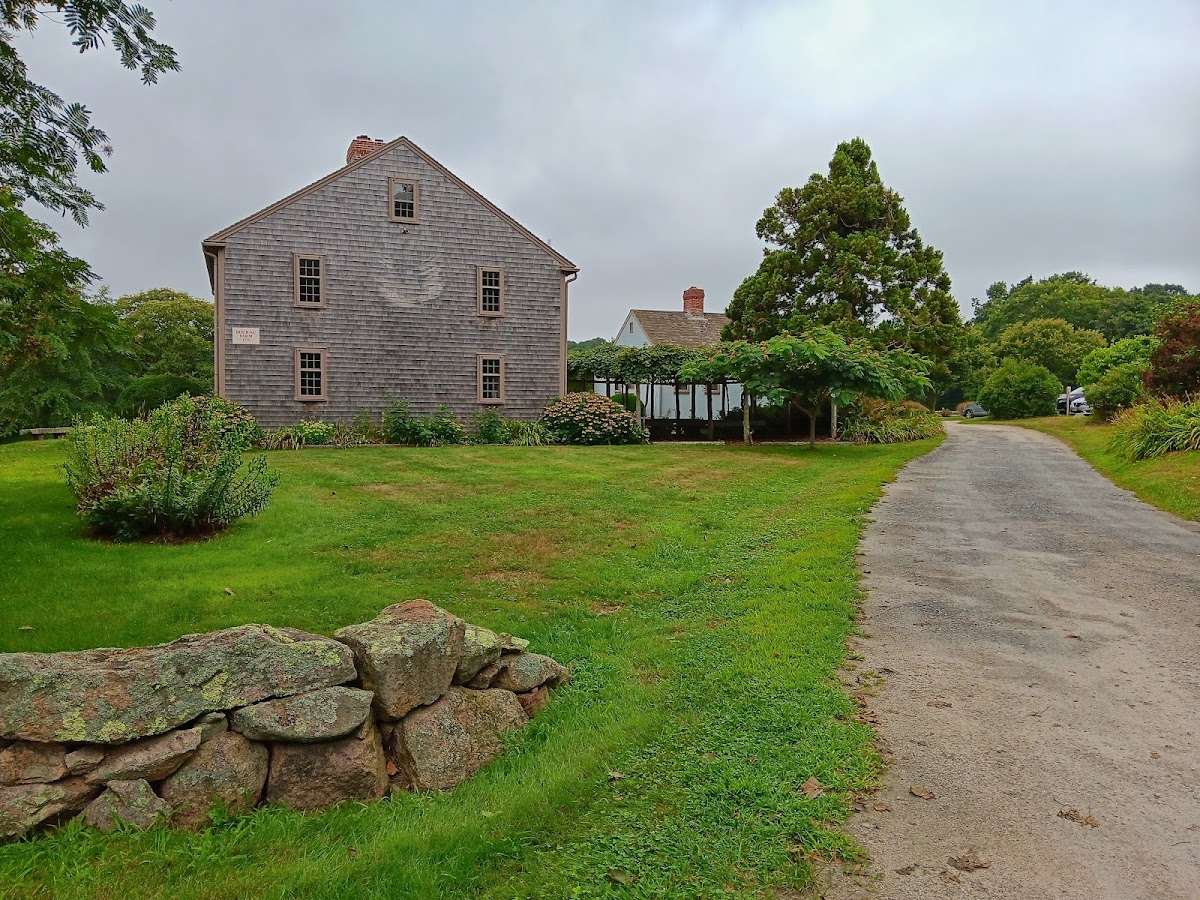
Bourne Farm is a masterclass in coastal texture, where the salt air meets the rugged permanence of New England stone. Designing here requires an understanding that the landscape—49 acres of bird sanctuary, vineyard, and pond views—is your primary collaborator, not just a backdrop.
The design opportunity at Bourne Farm lies in the contrast between the delicate nature of high-end floral stems and the raw, unyielding elements of the Upper Cape. This is a venue for the couple who values the “blank canvas” of a tented reception but wants the soul of a historic site. Because you have exclusive use of the property for the weekend, the floral narrative can truly span from the wooded trails to the water’s edge.
The Spaces
Waterfront Area
This is the quintessential Cape Cod ceremony spot, overlooking Crocker Pond and Buzzards Bay. The wind here is a significant factor, often dictating the structural integrity of your design.
- What works: Ground-level “meadows” or floral nests that anchor the ceremony space without fighting the wind. These arrangements feel organic to the shoreline and won’t tip over.
- Skip: Flimsy, four-post arbors or top-heavy floral arches. Unless they are staked deep into the earth and weighted with sandbags, they become sails in the coastal breeze.
- Watch out: The natural shoreline is beautiful but uneven. Ensure any pedestals have adjustable feet or are placed on stable ground.
- Budget hero move: Focus all ceremony funds on two large, impactful ground installations at the foot of the aisle. They frame the couple perfectly against the water and are easily moved to the reception tent afterward.
Tent on the Lawn
Most receptions at Bourne Farm take place under a high-peak or sailcloth tent. This is where the scale of your floral design must shift to meet the volume of the space.
- What works: Verticality. Use the tent poles. Wrapping the center poles in smilax or hops vine draws the eye upward and softens the industrial feel of the tent structure.
- Skip: Tiny centerpieces on large round tables. They will disappear. If the budget is tight, use high-impact greenery to create volume.
- Watch out: Check with your tent rental company regarding weight limits for hanging installations. Sailcloth tents have different rigging points than frame tents.
- Budget hero move: Greenery pole wraps. They provide the most “look” for the investment, transforming the tent into an indoor-outdoor garden.
The Historic Barn
The barn is a rustic, textured space that serves best as a transition point or a secondary focal area. It is darker than the outdoor spaces, which dictates your color palette.
- What works: High-contrast florals. Whites, creams, and pale yellows pop against the aged wood. Use the entrance for a “moment” arrangement to welcome guests.
- Skip: Dark, moody palettes. Deep purples and burgundies will get lost in the shadows of the barn’s interior.
- Watch out: The barn is historic; do not use nails or staples on the original wood. All floral attachments must be tied or free-standing.
The Vineyard and Stone Walls
The property is defined by its stone walls and small vineyard, offering a more structured agricultural vibe than the wilder waterfront.
- What works: Asymmetrical garlands that “crawl” along the stone walls. This highlights the architecture of the farm and creates a high-end, editorial look for photos.
- Skip: Perfect, symmetrical arrangements. The farm is intentionally rustic; your flowers should feel like they were gathered from the surrounding fields.
What Works at Bourne Farm
- Landscape-Driven Palettes: Pull inspiration from the bird sanctuary. Think dusty blues, sage greens, sandy beiges, and the occasional pop of berry-tone to mimic the native blueberry bushes.
- Structural Integrity: Every outdoor arrangement must be weighted. We use heavy lead weights or sand-filled bases for everything at Bourne Farm to ensure the Cape wind doesn’t redesign the wedding mid-ceremony.
- Movement-Heavy Designs: Use flowers with “wiggle”—cosmos, ranunculus, and various grasses. When the breeze catches them, they look alive and intentional rather than stiff.
- Textural Contrast: Lean into the “soft vs. hard” aesthetic. Pair the rough grey stone of the walls with soft, pillowy blooms like garden roses or peonies.
- Repurposing Strategy: Because the walk from the waterfront to the tent is a journey, ensure your ceremony flowers are designed to be moved. Ground nests from the aisle can become a lush “garden” around the sweetheart table or the base of the band stage.
Budget Guide
| Tier | Investment | Floral Strategy |
|---|---|---|
| Essentials | $1,750 - $3,000 | Focus on personal flowers and a few high-impact statements for the barn entrance or a simple waterfront ceremony anchor. |
| Sweet Spot | $3,500 - $6,500 | Full personal flowers, a grounded ceremony meadow, and a mix of bud vases and low, lush centerpieces in the tent. |
| Full Experience | $7,000 - $12,000 | Adds tent pole wraps or a small hanging installation, a full floral arch (heavily weighted), and more substantial reception arrangements. |
| Statement | $15,000+ | Large-scale hanging floral “clouds” in the tent, full meadow aisles, and floral installations on the historic stone walls. |
Bourne Farm is a venue that rewards those who lean into its natural, unpolished character rather than trying to hide it behind generic decor.
Tips
- Weight is mandatory: Do not underestimate the Buzzards Bay gusts; every vessel and structure needs significant ballast.
- Utilize the stone: The stone walls are free “furniture”—use them as ledges for floral nests or escort card displays.
- Mind the sun: The waterfront is fully exposed; choose hardy blooms that can withstand several hours of direct afternoon sun before the ceremony.
- Plan the move: The distance between the waterfront and the tent is significant; ensure you have a dedicated team (or a golf cart) to move ceremony florals to the reception.
- Seasonality matters: In late summer, the surrounding fields turn golden; adjust your palette to include more ochre and dried elements to match the sanctuary’s natural cycle.