
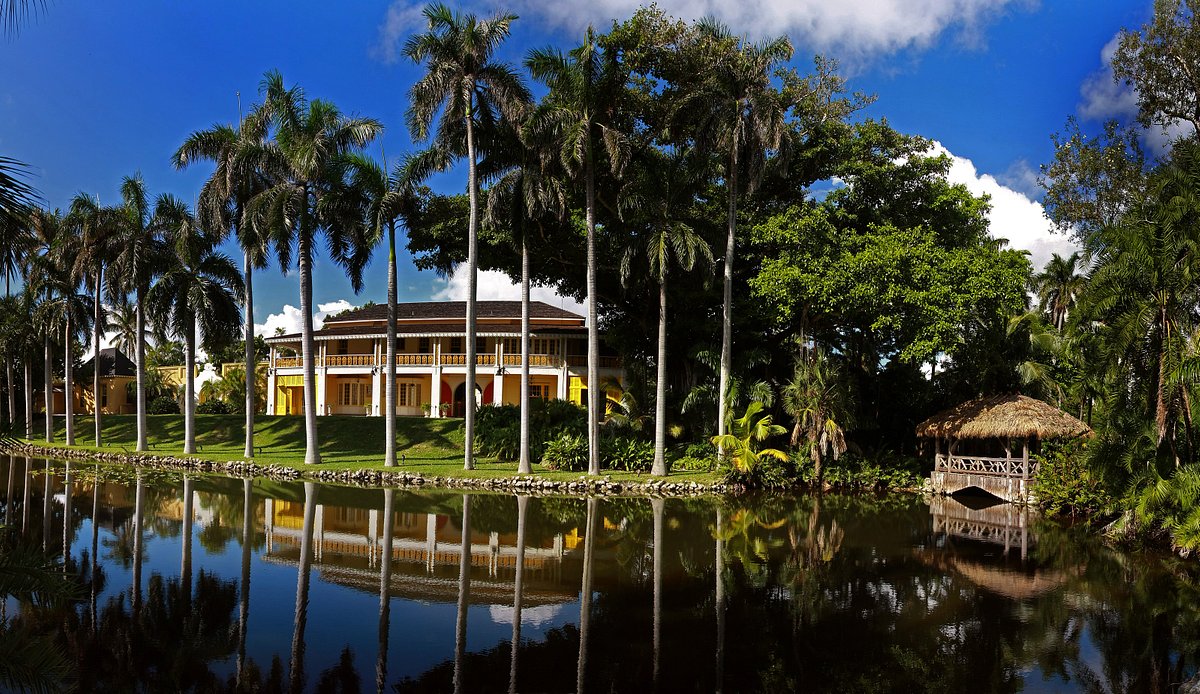
Designing at Bonnet House Museum and Gardens requires a deep understanding of Florida’s tropical light and the estate’s distinct 1920s color palette. The venue is a masterclass in texture, where the architectural yellow walls provide a high-energy backdrop that can either harmonize with sunset tones or serve as a sharp contrast to classic whites. This is a property where floral design should lean into the lushness of the surroundings rather than trying to domesticate them.
The Spaces
Hibiscus Garden & Lawn
This is the primary ceremony location, offering a sprawling green canvas. Because the space is so open, a standard arch often looks undersized against the towering palms and surrounding hammock.
- What works: Ground-anchored “growing” meadows that wrap around the couple. These installations feel like an extension of the garden and don’t compete with the natural horizon.
- Skip: Thin, spindly metal arches. They lack the visual weight needed to stand up to the dense tropical foliage.
- Watch out: The Florida sun is unforgiving here. Avoid delicate blooms like hydrangeas or sweet peas for outdoor ceremonies in this space.
- Budget hero move: Use large-scale floral “nests” or semi-circles at the altar that can be moved to the front of the sweetheart table or the bandstand for the reception.
Fountain Courtyard
The courtyard is the heart of the historic house, characterized by its intimate feel and vibrant yellow walls. It is a high-impact area for photography, particularly near the arched entryways.
- What works: Asymmetrical floral pillars that frame the doorways. Using the existing architecture as a “rigging point” (figuratively) allows the flowers to look like they are climbing the historic stone.
- Skip: Tall, narrow centerpieces on every table. They can make the courtyard feel cluttered and interrupt the flow of the space.
- Watch out: The fountain is a natural focal point; do not over-decorate it. A few floating blooms or a light greenery vine is sufficient.
- Budget hero move: Focus your budget on one “statement” installation at the main entrance gate to greet guests, then keep the internal courtyard tables simple with bud vases or low clusters.
Waterfront Veranda & Lawn
Often used for receptions or cocktail hours, this space overlooks the water. It offers a cooler breeze but brings the challenge of wind and salt spray.
- What works: Low-profile troughs or heavy stone vessels. These stay grounded in the wind and allow guests to see the water and the sunset without obstruction.
- Skip: Tall, top-heavy arrangements on slender stands. They are a liability in coastal gusts.
- Watch out: If using a clear tent in this area, the “greenhouse effect” can wilt flowers quickly. Ensure your designer uses water-tubed stems or hardy tropicals.
What Works at Bonnet House
Lean into the Orchid Heritage. Given the venue’s world-class orchid collection, incorporating Phalaenopsis, Vanda, or Cymbidium orchids into your designs is a nod to the estate’s history. They are also incredibly heat-resilient, making them a practical choice for the Fort Lauderdale climate.
Embrace High-Saturation Palettes. The bright yellow architecture and deep green foliage can wash out pale, “dusty” colors. Vibrant corals, bougainvillea pinks, and rich oranges hold their own against the estate’s color story. If you prefer a neutral palette, stick to a “clean” white with plenty of dark, glossy tropical foliage like Monstera or Anthurium leaves.
Design for Scale, Not Quantity. Because the grounds are so expansive (35 acres), a dozen small arrangements will look like clutter. It is better to have three massive, high-impact installations—at the entrance, the ceremony altar, and the bar—than twenty small ones scattered throughout the property.
Heavy Mechanics for Coastal Winds. The proximity to the ocean means the Waterfront Veranda is prone to sudden gusts. We utilize weighted bases and low centers of gravity for all designs in this area to ensure nothing shifts during the event.
Texture Over Traditional Fillers. Trade standard baby’s breath or eucalyptus for tropical textures like bleached fan palms, ginger blossoms, or protea. These materials mirror the “exotic” vibe of the Bonnet House gardens and feel much more intentional in this setting.
Budget Guide
| Tier | Investment | Floral Strategy |
|---|---|---|
| Essentials | $1,750 - $3,500 | Focus exclusively on the bridal party and a single statement “moment”—either a lush ceremony altar or a decorated bar. |
| Sweet Spot | $3,500 - $7,500 | Includes full ceremony coverage with repurposable aisle flowers, plus a mix of low, lush centerpieces and bud vases for the reception. |
| Full Experience | $7,500 - $12,000 | Allows for a large-scale architectural installation in the Fountain Courtyard and elevated designs for all reception tables, including the Waterfront Veranda. |
| Statement | $12,000+ | Full-scale transformation including hanging installations in the reception tent, lush floral entryways, and premium, exotic orchid varieties throughout. |
The natural abundance of the estate means you are never starting from zero; your floral budget should be spent on “editing” the space to match your specific aesthetic.
Tips
Prioritize heat-tolerant stems. Anthuriums, orchids, birds of paradise, and tropical greenery are non-negotiable for outdoor Florida weddings to ensure they look fresh until the final dance.
Utilize the tent rigging. If you are using a clear-top tent on the waterfront, use the structural poles for climbing greenery to break up the “plastic” feel and draw the eye upward.
Mind the salt spray. Flowers on the waterfront can take a beating from the salt air; have your florist mist the arrangements with fresh water occasionally if the setup is early.
Repurpose with intention. Move your ceremony ground meadows to the base of the bandstand or around the cake table to maximize your investment across the evening.
Coordinate with the Orchid Curator. If you are a true enthusiast, timing your wedding to the peak orchid bloom (typically spring) can provide a massive amount of “free” floral backdrop.