
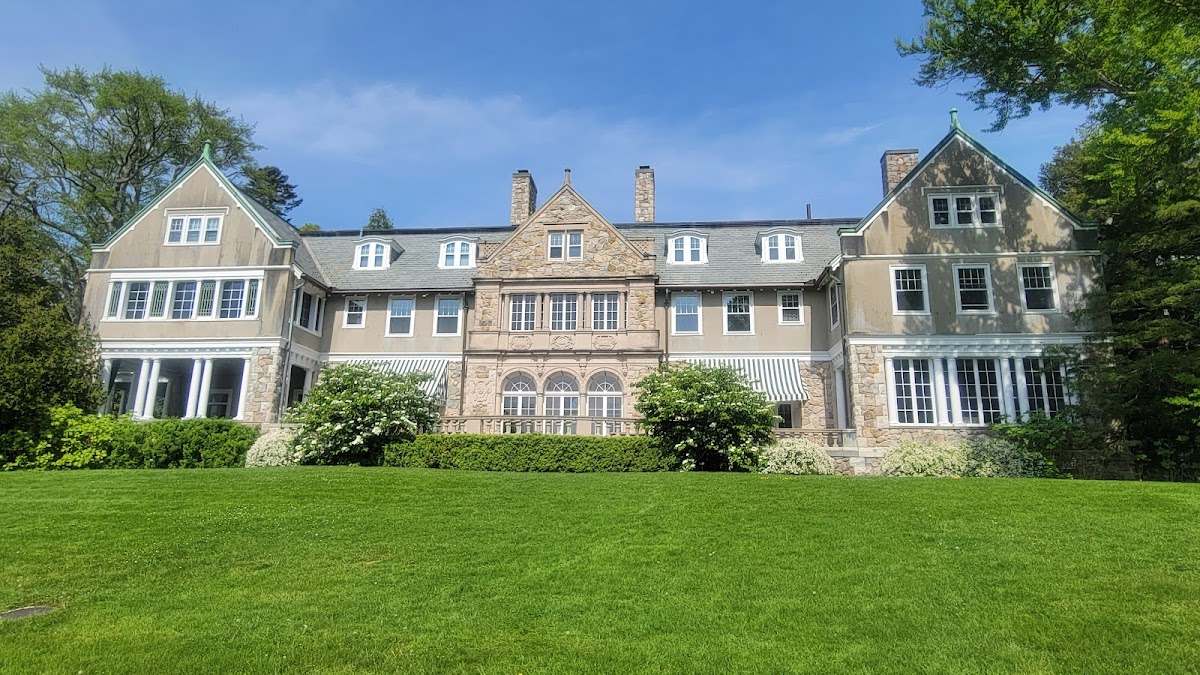
Blithewold Mansion presents a dual design challenge that requires a sophisticated understanding of both botanical environments and historic preservation. The floral opportunity here lies in the transition from the soaring, light-drenched glass of the Greenhouse to the dense, dark-wood and plaster textures of the mansion interior. We know this venue intimately and design with the understanding that the 33-acre arboretum is the primary guest experience, meaning supplemental florals must be intentional and structurally sound.
The Spaces
The Greenhouse
This is the most architecturally versatile space on the property for floral designers. The metal framework and gabled glass roof sections provide a literal skeleton for high-impact installations that would be impossible in a standard tent or ballroom.
- What works: Large-scale hanging installations that draw the eye upward to the central dome. Lush, vine-heavy designs that make the structure look like it is being reclaimed by nature.
- Skip: Short, squat centerpieces that get swallowed by the verticality of the glass walls.
- Watch out: The greenhouse effect is real. In mid-summer, the temperature and humidity inside this space can skyrocket, which will wilt delicate blooms like sweet peas or hydrangea in under an hour.
- Budget hero move: Focus the majority of the floral spend on a single, massive hanging installation over the ceremony spot or head table rather than dozens of small aisle markers.
The Conservatory
The Conservatory is a more intimate botanical experience, characterized by narrow concrete pathways and existing potted plants. It feels like a secret garden, but it requires a disciplined footprint.
- What works: Ground-level flanking installations that define the ceremony “altar” without blocking the path. Use the existing metal shelving to tuck in small, trailing floral elements.
- Skip: Wide-base pedestals or massive urns that force guests to walk single-file or brush against the flowers.
- Watch out: The humidity here is consistently high to maintain the venue’s permanent plant collection. Choose tropicals or hardy, waxy-leafed greens that thrive in moisture.
- Budget hero move: Use the venue’s existing potted plants as “fill” and place high-end, focal-flower-heavy arrangements in the gaps to create a seamless, lush look for less.
Mansion Interior & Library
Inside the mansion, the vibe shifts to Edwardian elegance. The rooms feature built-in bookcases, ornate plaster columns, and detailed fireplaces that provide natural stages for floral work.
- What works: Low, lush mantle arrangements and petite “bud vase” clusters on the tops of bookcases. The goal is to accent the architecture, not hide it.
- Skip: Tall, modern stands or acrylic pedestals that clash with the historic, dark-wood aesthetic.
- Watch out: There are no rigging points in the mansion. Everything must be freestanding or sit directly on furniture surfaces.
- Budget hero move: A single, statement-making mantle piece in the library creates a massive impact for photos and costs significantly less than multiple floor installations.
The Gardens (Rose, North, and Enclosed)
With 33 acres of professional landscaping, the gardens are already a floral masterpiece. The design task here is to provide a focal point in an otherwise vast landscape.
- What works: Deconstructed arches or “ground meadows” that look like they are growing out of the lawn. These provide a frame for the couple without obstructing the view of the Narragansett Bay.
- Skip: Small, fussy aisle posies that disappear against the scale of the trees.
- Watch out: Wind exposure is high near the water. All outdoor structures must be heavily weighted with sandbags or stakes.
- Budget hero move: Use large-scale greenery like smilax or eucalyptus to build volume in outdoor installations, then “dot” in premium blooms for color.
What Works at Blithewold Mansion
- Botanical Cohesion: This is an arboretum. Using “florist-y” flowers like standard carnations or dyed roses looks out of place. Stick to garden-style blooms—peonies, ranunculus, and textural greens—that look like they could have been plucked from the North Garden.
- Structural Verticality: In the Greenhouse, you have the height. Use it. Branchy materials like cherry blossoms or forsythia work beautifully to bridge the gap between the ground and the glass ceiling.
- Heat Management: For any glass-house ceremony, we recommend staying away from “thirsty” flowers. Use orchids, protea, or succulents if the wedding is in July or August.
- Architectural Respect: In the mansion, the molding is the star. We design arrangements that follow the lines of the cornices and columns rather than fighting them with geometric or overly modern shapes.
- Movement and Texture: Because the venue is so lush, flat floral designs look boring. We use varying heights and “airy” textures like cosmos or butterfly ranunculus to mimic the movement of the coastal breeze.
Budget Guide
| Tier | Estimate | Floral Strategy |
|---|---|---|
| Essentials | $1,750 - $3,500 | High-impact personal flowers and a statement mantle piece in the mansion or a simple “ground meadow” for a garden ceremony. |
| Sweet Spot | $3,500 - $7,500 | Full personal flowers, a structural arch for the ceremony, and a mix of low, lush centerpieces across the reception tables. |
| Full Experience | $7,500 - $12,000 | Includes a significant hanging installation in the Greenhouse, full ceremony decor, and elevated centerpieces for all reception tables. |
| Statement | $12,000+ | Large-scale rigging in the Greenhouse, floral-wrapped columns in the mansion, and expansive garden installations that define multiple guest zones. |
The character of Blithewold is defined by its history as a private estate; your floral budget should prioritize quality and texture over sheer bulk to maintain that residential, high-end feel.
Tips
- Prioritize the Greenhouse rigging: If your budget allows for only one “extra,” make it a hanging installation in the Greenhouse; it is the venue’s most iconic floral feature.
- Repurpose with care: Moving large installations from the garden ceremony into the mansion is difficult due to narrow doorways and stairs; plan for space-specific designs instead.
- Account for the arboretum’s schedule: Blithewold is a living museum; certain paths may be restricted during peak bloom times for rare species.
- Lean into the season: The Rose Garden is spectacular in June, while the arboretum’s foliage is the main event in October; choose your color palette to match the grounds’ natural cycle.
- Check the load-in path: The walk from the Visitors Center parking to the Greenhouse is significant; ensure your floral team has the appropriate carts and manpower for the haul.