
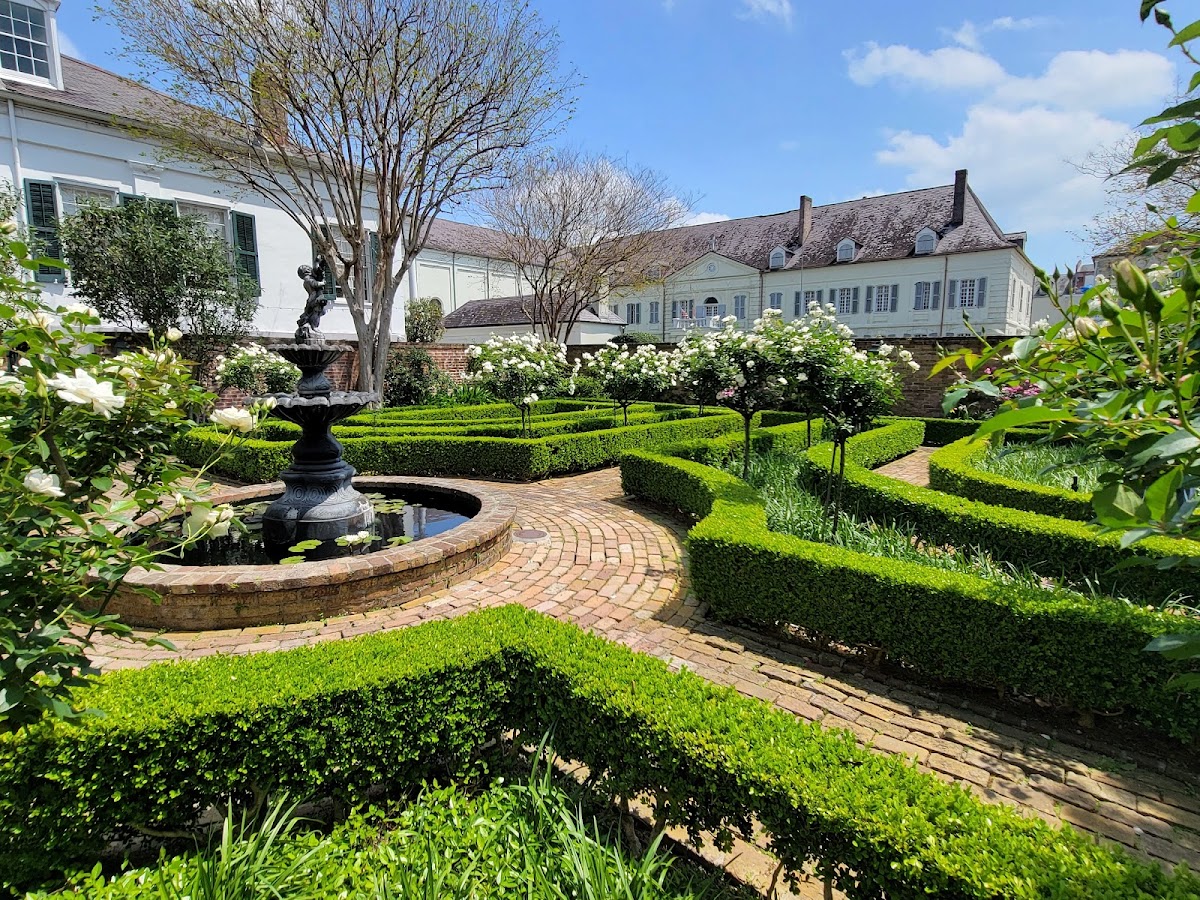
Designing for the Beauregard-Keyes House requires a deep appreciation for the restraint and symmetry of 19th-century Creole architecture. This is not a venue for “filler” or oversized, sprawling installations that mask the character of the French Quarter; rather, it is a space for sophisticated, intentional accents that bridge the gap between the historic museum interiors and the vibrant life of the parterre gardens.
The floral opportunity here lies in the contrast between the structured, geometric outdoor spaces and the intimate, richly textured interior rooms. Whether you are leaning into the literary history of Frances Parkinson Keyes or the military legacy of General Beauregard, your floral choices should feel like they have always belonged in this 1826 landmark.
The Spaces
Rose Garden / Formal Garden
This is one of the most significant examples of a French parterre garden in New Orleans. The space is defined by its low boxwood hedges and seasonal rose blooms, creating a natural symmetry that dictates the flow of any ceremony.
- What works: Ground-level “growing” installations that appear to sprout from the parterre beds. Use delicate, airy textures like Queen Anne’s Lace or Spirea to contrast with the structured hedges.
- Skip: Heavy, blocky floral arches that obscure the view of the house’s facade or the garden’s geometry.
- Watch out: The garden is a living museum. All installations must be strictly self-supporting and cannot involve stakes driven into the historic soil or attachments to the delicate plantings.
- Budget hero move: Flank the entrance to the parterre with two large, garden-style urns. This defines the ceremony space without the high cost of a full arch, letting the existing roses do the heavy lifting.
Historic Courtyard
The courtyard is the heart of the reception experience, characterized by its classic New Orleans wrought-iron balconies, flagstone flooring, and the soft glow of string lights. It provides a vertical canvas that many other French Quarter venues lack.
- What works: Utilizing the balconies for lush, trailing greenery and floral clusters. This draws the eye upward and creates a sense of enclosure and intimacy in the open air.
- Skip: Tall, spindly centerpieces on cocktail tables. The wind in the courtyard can be unpredictable, and top-heavy arrangements are a liability on stone floors.
- Watch out: Access to the balconies for installation may be restricted or require specific ladder safety protocols. Coordinate with the venue manager early regarding “over-the-rail” designs.
- Budget hero move: Focus your budget on a single, high-impact staircase garland. Because the staircase is a primary focal point for photos and entrances, a lush floral treatment here provides more “visual equity” than scattered small arrangements.
Main Hall / Ballroom
The interior of the house is a masterclass in 19th-century elegance, featuring high ceilings, original hardwood floors, and ornate plaster moldings. The natural light through the large windows is exceptional, but the historic nature of the walls is a primary constraint.
- What works: Low-profile, lush centerpieces that allow guests to see the room’s architectural details and mirrors. Compote-style arrangements in brass or silver vessels complement the vintage aesthetic perfectly.
- Skip: Anything requiring tape, nails, or Command hooks. The plaster and historic wallpaper are strictly off-limits for attachments.
- Watch out: The “Main Hall” is more intimate than a modern ballroom. Scale your arrangements to the size of the tables; oversized designs will make the room feel cramped rather than grand.
- Budget hero move: A lush mantel installation. The fireplaces are natural focal points; a “mantel meadow” that spills over the edge creates a high-end look without needing a massive floral count.
French Wines Tasting Room / Bar Area
Used often for cocktail hour or intimate gatherings, this space features unique patterned wallpaper and a cozy, vintage atmosphere.
- What works: Petite, monochromatic bud vase clusters. Choose flowers that echo the colors in the wallpaper—deep burgundies, dusty roses, or muted golds work beautifully here.
- Skip: Large arrangements on the bar top. Space is at a premium for service, and a large vase will likely be moved by the catering staff to make room for glassware.
- Watch out: Lighting in this room can be lower than in the Main Hall. Ensure your floral colors have enough contrast to be seen in dim, atmospheric light.
- Budget hero move: One singular, architectural arrangement at the end of the bar or on a side console table to greet guests as they enter.
What Works at Beauregard-Keyes House
Lean into the “Garden-Gathered” Aesthetic. This venue is best served by floral designs that look like they were harvested from a high-end 19th-century estate. Avoid overly tight, round, “commercial” looking roses; instead, opt for garden roses, ranunculus, and plenty of textural foliage.
Respect the Parterre Symmetry. When designing for the outdoor spaces, use the existing lines of the garden. If the garden is symmetrical, your floral placements should be as well. Asymmetry can work, but it must be intentional and balanced against the house’s rigid architecture.
Use Period-Appropriate Vessels. The Beauregard-Keyes House is a museum. Plastic containers or modern geometric stands will feel out of place. Stick to aged terracotta, tarnished brass, silver, or classic glass to ensure the florals feel like an extension of the home’s decor.
Embrace the Greenery of New Orleans. The courtyard and garden already provide a lush backdrop. Use local-looking foliage like Smilax or Jasmine vine to tie your installations into the existing environment. This makes the floral work feel “settled” into the venue.
Prioritize the “Walk-Through” Experience. Because guests move through a series of rooms and outdoor spaces, consistency is key. A “signature flower” or a consistent color palette should travel with the guests from the Rose Garden ceremony to the Courtyard cocktail hour and into the Main Hall for the reception.
Budget Guide
| Tier | Investment | Floral Strategy |
|---|---|---|
| Essentials | $1,750 - $3,500 | Focus on personal flowers (bouquets/boutonnieres) and high-impact “moment” pieces for the ceremony entrance or the Main Hall mantel. |
| Sweet Spot | $3,500 - $7,500 | Includes a full ceremony installation (non-invasive arch or ground nests), low-profile centerpieces for the interior rooms, and bar accents. |
| Full Experience | $7,500 - $12,000 | Adds lush balcony garlands in the courtyard, a grand staircase installation, and elevated floral counts for all reception tables. |
| Statement | $12,000+ | Full garden transformation including overhead courtyard installs (where feasible), multiple mantel designs, and premium blooms throughout. |
The character of the Beauregard-Keyes House is defined by its history and its gardens; your floral budget should be used to highlight these features, not compete with them.
Tips
Protect the historic plaster by using only floor-standing or tabletop-based floral structures.
Weighted bases are non-negotiable for the courtyard to prevent wind-blown arrangements on the flagstone.
Repurpose your ceremony ground installations to frame the cake table or the bandstand in the courtyard.
The French Quarter is humid; choose hardy blooms like orchids, tropicals, or thick-petaled roses for any outdoor installations.
Load-in for the French Quarter requires precision; ensure your floral team has a clear plan for the narrow Chartres Street access.