
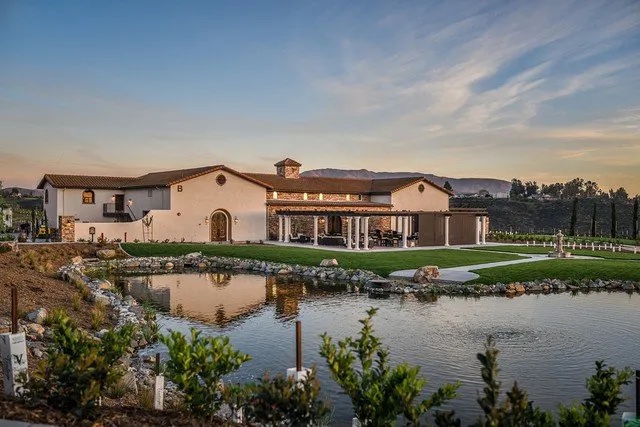
The approach to Truffle Pig Winery tells you what kind of day you’re about to have. You leave the last shopping center on Rancho California Road, and suddenly the world opens up — sixteen acres of vineyards unfurling in every direction, grapevines marching in orderly rows across gentle hills. The Mediterranean architecture appears gradually: first the terracotta roof tiles catching the Southern California sun, then the cream-colored stucco walls and wrought iron details that could have been lifted from a Tuscan hillside. And then you round the final curve and see it — that distinctive domed rotunda at the end of the ceremony lawn, white columns gleaming against endless blue sky, cypress trees standing guard like sentinels. This is wine country wedding territory, the kind of place where your guests will take a collective breath when they step onto the terrace and see nothing but vines and hills stretching toward the horizon. Poppy has received 17 inquiries from couples planning Truffle Pig Winery wedding flowers, and we understand the appeal. This venue doesn’t need you to work hard. It simply asks you to complement what’s already here.
About Truffle Pig Winery by Wedgewood Weddings
Truffle Pig Winery sits on Rancho California Road — the heart of Temecula Valley’s wine trail, where more than 40 wineries cluster within a ten-mile stretch. The property spans sixteen acres of working vineyards, planted primarily with varietals that thrive in Southern California’s Mediterranean climate: Sangiovese, Zinfandel, Cabernet Sauvignon, and Viognier. Unlike some venues that plant a few decorative rows of vines for atmosphere, Truffle Pig is the real thing — a functioning winery where the grapes visible from your ceremony site end up in bottles. This distinction matters because it means the landscape shifts with the seasons. In spring, the vines leaf out in brilliant green. By late summer, they’re heavy with fruit. Come fall, the leaves turn gold and russet. Even in winter, the bare vines trace elegant patterns against the hills.
The architecture is pure Southern California interpretation of Mediterranean style — specifically Tuscan, with its warm terracotta tiles, arched openings, elegant columns, and wrought iron flourishes. The buildings are painted in warm cream and ochre tones that glow in the region’s famously golden light. Palatial tiled floors, ornate sconces, and stone pathways wind through mature gardens punctuated by a tranquil pond with a fountain. It’s the kind of design that photographs beautifully at any time of day, though the light an hour before sunset — when everything turns amber and the shadows stretch long across the vineyard rows — is particularly magical.
The venue is managed by Wedgewood Weddings, which means couples work with a dedicated events team that handles coordination, exclusive in-house catering through Chef Barry and Coast Catering, and beverage service. For florists, this structure is helpful — there’s a clear point person for logistics, vendor arrival times are well-organized (typically 1:00 PM for a 4:00 PM ceremony), and load-in access is straightforward with ample parking near the main buildings. The venue provides tables, chairs, linens, and basic centerpieces, though most Poppy couples prefer custom floral centerpieces that better reflect their personal style. Candles are permitted in proper holders, and floral installations are welcome on the ceremony structures, columns, and throughout the spaces.
Geographically, Truffle Pig Winery is remarkably accessible for a venue that feels this remote. It’s approximately 60 miles north of San Diego (about an hour’s drive), 85 miles from Orange County, and 30 miles from Riverside. For guests coming from Los Angeles, it’s about a 90-minute drive without traffic. This makes it viable as a day-trip destination, though many couples encourage guests to make a weekend of it — Temecula has dozens of tasting rooms, several excellent restaurants, and a charming Old Town with boutique shops and wine bars. For Poppy’s delivery logistics, the drive from our Southern California studio is manageable, and the venue’s location on the main wine trail means we’re familiar with the route and load-in protocols.
Event Spaces & Floral Opportunities
Private Ceremony Lawn
Capacity: 200 seated
Setting: This is the venue’s signature ceremony space, and it’s immediately clear why. The Private Ceremony Lawn is anchored by a domed rotunda structure with classical white columns and decorative wrought iron details — a permanent architectural feature that provides both visual drama and practical shade for Southern California sun. The approach to the rotunda is down a natural aisle lined with mature cypress trees, their dark green foliage creating a natural colonnade. Behind the rotunda, the view opens onto 360-degree vineyard panoramas with rolling hills in the distance. To one side, the tranquil pond with its fountain provides a water element and additional photo backdrop. The ceremony site is positioned to take advantage of late afternoon light, which pours through the cypress trees and illuminates the couple at the altar with that particular golden glow that makes photographers happy.
Floral approach: The rotunda is your primary focal point here, and the question is how much to adorn it. Our philosophy at Truffle Pig is restraint — the structure is already beautiful, and excessive florals can make it feel overdressed. Instead, we recommend an asymmetrical installation that works with the dome’s curves: a cascading arrangement on one side using Quicksand roses, white ranunculus, blush Juliet garden roses, and plenty of Italian ruscus and olive branch, secured to the column with minimal visible mechanics. The asymmetry feels organic, like the florals grew there naturally. For the opposite column, perhaps just a simple garland of seeded eucalyptus wrapped spiraling upward. The aisle deserves something more substantial than scattered petals but lighter than full arrangements — we like shepherd’s hooks every third row with medium arrangements in terracotta vessels (Café au Lait dahlias, peach stock, white lisianthus, and trailing jasmine vine), which nod to the Mediterranean architecture without blocking guests’ views of the processional. The cypress trees themselves need nothing — they’re your natural architecture. But if budget allows, consider lining the stone pathway from the Grand Tasting Room to the ceremony site with large potted lemon trees or rosemary topiaries in terracotta containers, creating a fragrant, Italian-inspired entrance journey.
Grand Hall
Capacity: 200 seated
Setting: The Grand Hall is Truffle Pig’s primary reception space, and it delivers on every level. The ceiling soars to approximately 20 feet with exposed wooden beams and ornate wrought iron and crystal chandeliers that provide both architectural interest and ambient lighting. One entire wall features floor-to-ceiling windows and sliding glass doors that open directly onto the Vineyard Terrace, creating seamless indoor-outdoor flow and flooding the space with natural light during daytime events. The color palette is warm neutral — cream walls, honey-toned wood, terracotta tile accents — which makes it a remarkably versatile canvas for any floral color story. The room is climate-controlled, which matters for both guest comfort during Temecula’s hot summers and floral longevity during setup. The ornate chandeliers are statement pieces on their own, glittering overhead like jewelry.
Floral approach: Those soaring ceilings are both opportunity and challenge. The opportunity: you can go tall here without fear. We love elevated centerpieces on 30-inch gold or acrylic stands, with arrangements that stretch another 18-24 inches upward — think Playa Blanca roses, white delphinium spires, blush larkspur, and cascading amaranthus in burgundy or green, all arranged in a loose, organic style that feels abundant rather than structured. The height creates drama and allows guests to see across tables for conversation. Alternate these tall arrangements with lower, lusher designs directly on the table — garden-style compotes overflowing with Café au Lait dahlias, Juliet and Patience garden roses, white ranunculus, peach stock, and lots of textured greenery like dusty miller and eucalyptus in mercury glass vessels. This high-low rhythm creates visual interest across the room. The existing chandeliers are gorgeous and don’t need floral augmentation — trying to wrap them in greenery often looks forced and distracts from their inherent beauty. Instead, if you want overhead floral impact, consider a suspended installation above the sweetheart table or head table: a 12-foot cloud of smilax, Italian ruscus, and trailing jasmine vine with clusters of roses and lisianthus woven through. The floor-to-ceiling windows mean guests will be looking outside as much as inside — keep this in mind and ensure your centerpieces don’t exceed 12-14 inches if they’re placed near the windows, preserving those vineyard views. For the entrance from the Grand Tasting Room, a pair of large statement arrangements on pedestals — overflowing garden urns with Quicksand roses, white hydrangea, peach spray roses, olive branches, and trailing Italian ruscus — signals the transition from cocktails to dinner.
Vineyard Terrace
Capacity: Varies based on setup; typically accommodates cocktail hour for 200
Setting: The Vineyard Terrace is what makes Truffle Pig Winery special. This outdoor space directly adjacent to the Grand Hall features romantic bistro string lighting overhead, creating a warm glow for evening events. The terrace is paved with stone and offers 360-degree vineyard views — you’re standing in the middle of wine country with nothing but vines and hills in every direction. The space includes both covered and uncovered areas, and Wedgewood typically provides outdoor lounge furniture (sofas, armchairs, cocktail tables) for a relaxed California vibe. The bistro lighting provides built-in ambiance, particularly stunning at twilight when the lights flicker on just as the sun sets behind the vineyards.
Floral approach: This space is about enhancing, not overpowering. The vineyard views are your décor, and the bistro lighting provides atmosphere. What you need are floral accents that feel organic to a wine country cocktail hour. We recommend scattered arrangements rather than symmetrical placement — a large arrangement on the bar (Café au Lait dahlias, peach roses, white lisianthus, and seeded eucalyptus in a wooden box or wine crate), medium arrangements on a few key cocktail tables (bud vases or small compotes with garden roses and seasonal blooms), and perhaps a pair of statement urns flanking the entrance from the Grand Tasting Room (overflowing with white hydrangea, Quicksand roses, olive branches, and trailing greenery). If you’re repurposing ceremony flowers, the rotunda arrangements can move here beautifully, placed on pedestals near the terrace entrance or positioned to frame the bar area. For couples who want more coverage, consider potted olive trees or lemon trees in terracotta containers positioned around the perimeter — they’re fragrant, visually interesting, and very on-brand for Mediterranean wine country. The warm glow from the bistro lighting enhances warm-toned flowers (peach, blush, ivory, soft yellow) and makes them appear to glow from within. Avoid cool tones (purples, blues) here, as the lighting will dull them. Since this is an outdoor space in Southern California, ensure florals are secured properly — gentle evening breezes are common, and you don’t want arrangements toppling.
Grand Tasting Room
Capacity: Flexible; typically used for cocktail hour or as backup ceremony space
Setting: The Grand Tasting Room functions as the venue’s pre-ceremony gathering space and cocktail hour location. It features a large built-in wooden bar that can accommodate multiple bartenders, high glass doors that flood the space with natural light, and direct access to both the ceremony lawn and the Vineyard Terrace. The room has authentic winery atmosphere — you can see wine barrels, and the space feels connected to the winemaking process. The high glass doors create excellent indoor-outdoor flow, which is essential for Southern California events where guests tend to drift between inside and outside spaces.
Floral approach: The Grand Tasting Room calls for simpler, more understated floral work than the ceremony or reception spaces. This is a transitional space where guests are moving through, not lingering, and florals should enhance without demanding attention. The wooden bar is your primary opportunity — a large, lush arrangement here makes a statement as soon as guests enter. Think Quicksand roses, white hydrangea, peach stock, eucalyptus, and olive branch in a wooden wine crate or large ceramic vessel. The arrangement should be substantial enough to read across the room but low enough that bartenders can work comfortably (no taller than 14 inches). For cocktail tables, if any are placed in this space, simple bud vases with a few stems each (a single Juliet garden rose, a sprig of olive, a stem of eucalyptus) are sufficient. If the Grand Tasting Room is serving as your backup ceremony space due to weather, you’ll want to bring in the full ceremony florals you had planned for the rotunda — the room can absolutely handle a large installation, and the high glass doors provide a beautiful backdrop. The key is keeping arrangements movable and versatile since this space serves multiple functions throughout the event timeline.
Bridal Cottage
Capacity: Getting-ready space; not a guest-facing event space
Setting: The Bridal Cottage is a separate building at the front of the property, offering privacy and natural light for pre-wedding preparation. Large windows provide soft, flattering light for getting-ready photos, and the space has elegant finishes that photograph well without overwhelming. The cottage can also serve as overnight accommodation for the couple if desired, making it a true retreat within the property.
Floral approach: This space calls for a single thoughtful arrangement rather than extensive florals. A medium arrangement placed on a side table or vanity adds beauty to getting-ready photos and creates a focal point in the room. We recommend something personal to the bride’s style — if she loves garden roses, a lush arrangement of Patience and Juliet roses with ranunculus and sweet pea. If she prefers more modern style, a clean arrangement of white phalaenopsis orchids with minimalist greenery. The vessel matters here too, as it will appear in photos — a vintage brass compote, a ceramic vase in the wedding color palette, or even a simple clear glass cylinder can work depending on the overall aesthetic. This arrangement typically moves to the reception later — the sweetheart table or card table are natural homes for it. Some couples also like a small arrangement for the bathroom or a bud vase with a single bloom tied with ribbon as a gift for the mother of the bride when she arrives. The cottage’s large windows mean natural light will showcase the florals beautifully in photos, so choose blooms that photograph well in bright light (roses, ranunculus, hydrangea) rather than darker flowers that can appear flat.
Groom’s Loft Suite
Capacity: Getting-ready space for groom and groomsmen
Setting: The on-site loft provides comfortable space for the groom’s party to prepare, with masculine design and separate access from the Bridal Cottage.
Floral approach: Groom’s spaces typically receive minimal floral attention, but a small arrangement can elevate the space for photos. We recommend something simple and slightly architectural rather than traditionally pretty — a low arrangement of succulents and air plants in a concrete or wooden vessel, a bundle of eucalyptus and olive branches in a ceramic crock, or even a single amaryllis or anthurium for modern style. The boutonniere presentation is another opportunity for a floral moment — rather than handing over boutonnieres in plastic containers, present them on a small wooden tray with greenery underneath. This arrangement typically doesn’t move to the reception since groom’s getting-ready spaces are often cleared early, but it serves its purpose by adding polish to the morning photos and showing that every detail received attention.
Wedding Flower Ideas for Truffle Pig Winery
Tuscan Sun
This palette captures the warmth of Mediterranean Europe with colors drawn from sun-soaked landscapes: deep golden yellows, burnt oranges, terracotta reds, and dusty olive greens. The foundation includes Café au Lait dahlias in their signature beige-pink-gold complexity, apricot Free Spirit roses, peach Juliet garden roses, yellow Billy Buttons (craspedia), and burnt orange ranunculus. Textural elements include rosemary sprigs (both fragrant and beautifully symbolic of remembrance), olive branches with their silvery-green leaves, oregano with its tiny purple flowers, and lavender for both scent and texture. Vessels lean rustic and organic — weathered terracotta pots, wooden wine crates stenciled with Italian vineyard names, and ceramic containers in ochre and cream. This palette works spectacularly in the Grand Hall where the warm neutral architecture provides the perfect backdrop, and on the Vineyard Terrace where the bistro lighting enhances the golden tones. For the ceremony rotunda, an asymmetrical cascade of these blooms with plenty of herb and olive branch creates an effortlessly Italian atmosphere. This is wine country wedding flowers that taste like sunshine and smell like a Tuscan hillside.
Vineyard Romance
For couples drawn to softer, more romantic aesthetics, this palette embraces blush, ivory, champagne, and the palest dusty rose. The flower selection includes Quicksand roses (that perfect beige-pink-mauve), Patience and Juliet garden roses in blush tones, white ranunculus with their papery petals, ivory spray roses, white lisianthus, pale pink astilbe, and champagne-colored stock for height and fragrance. Greenery leans silvery and soft: seeded eucalyptus, dusty miller with its felted gray leaves, silver dollar eucalyptus, and Italian ruscus. Vessels are elegant and refined — mercury glass compotes that catch candlelight, antique brass urns, and blush ceramic containers. This palette creates a dreamy, ethereal atmosphere particularly stunning in the Grand Hall at an evening reception when candlelight and the ornate chandeliers make everything glow. For the ceremony, these soft tones photograph beautifully against the white rotunda columns and don’t compete with the vineyard backdrop. The Bridal Cottage arrangement in this palette would be pure romance — a lush, overflowing design that looks like it was gathered from an English country garden. This approach to Truffle Pig Winery wedding flowers works year-round and appeals to couples seeking timeless elegance rather than trendy boldness.
California Harvest
This concept celebrates the agricultural abundance of Southern California with a vibrant, organic palette that changes seasonally but always feels rooted in local farms and gardens. Spring version includes local poppies (when legally available), sweet pea in every color, anemones, tulips, and ranunculus. Summer leans into dahlias (both huge dinner-plate varieties and smaller pompons), zinnias, sunflowers, cosmos, and hypericum berries. Fall embraces the full dahlia season along with chocolate cosmos, marigolds, amaranth, celosia, and wheat or barley for texture. Winter brings unexpected beauties like hellebores, anemones, ranunculus, and ornamental kale. The unifying thread is abundance — arrangements are lush, overflowing, and slightly wild-looking, as though you gathered armfuls from a garden in peak bloom. Vessels are casual and varied — galvanized metal buckets, wooden crates, ceramic pitchers, and terracotta pots in different sizes. This aesthetic particularly shines on the Vineyard Terrace where the relaxed California vibe matches the setting, and in the Grand Hall where the high-low centerpiece approach (tall arrangements alternating with low) creates a gathered-from-the-garden abundance. For the ceremony, consider lining the cypress tree aisle with potted arrangements in terracotta rather than elevated designs — it feels more organic and connected to the land. This is Truffle Pig Winery wedding flowers for couples who want their celebration to feel like a California harvest festival — colorful, abundant, joyful, and deeply connected to place.
Seasonal Considerations
Spring (March-May)
Temecula’s spring is glorious — the vineyards leaf out in brilliant green, wildflowers dot the hillsides, and temperatures are mild (60s-70s) with occasional rain early in the season. This is peak wedding season for good reason. Spring flower availability is exceptional: ranunculus in every color, anemones with their dark centers, tulips (though they can be temperamental in warmer weather), sweet pea, stock for fragrance, early garden roses, and locally grown poppies if your florist has farm connections. By late spring (late April-May), dahlias begin appearing from Southern California growers. The challenge is unpredictable weather — April can bring surprise rain showers, so have a weather plan for outdoor ceremonies (the Grand Tasting Room is your backup). The vineyard views in spring are particularly photogenic with that fresh green backdrop, making it an ideal time for minimal ceremony florals that let the landscape shine. Best months are April and May when weather is most reliable and flower availability peaks.
Summer (June-August)
Temecula summers are hot — expect temperatures in the 90s and occasionally pushing 100°F. This is critical for both guest comfort and floral survival. The vineyard vines are full and lush, heavy with fruit clusters by late summer, creating a dramatic backdrop. Flower selection must prioritize heat tolerance: dahlias (particularly Café au Lait which holds up remarkably well), zinnias, sunflowers, celosia, hypericum berries, orchids (especially cymbidium), and succulents. Avoid hydrangeas, sweet pea, and anemones which will wilt immediately. Garden roses are risky in extreme heat — if you must have them, choose the hardiest varieties like Juliet and keep them in water until the last possible moment. The bistro lighting on the Vineyard Terrace becomes magical at summer twilight, and the warm temperatures mean guests naturally migrate outdoors for cocktail hour. Ceremony timing should aim for late afternoon (5:00 PM or later) to avoid the peak heat. Consider providing ceremony programs that double as fans, and ensure arrangements have good water sources. July and August see fewer weddings due to heat, which can sometimes mean better vendor availability.
Fall (September-November)
This is Temecula’s second peak wedding season. Temperatures cool to the comfortable 70s-80s, and by October-November, the vineyard leaves turn stunning shades of gold, crimson, and amber — your ceremony backdrop becomes a living painting. Grape harvest typically occurs September through October, adding authentic winery activity to the experience. Fall flower availability is extraordinary: dahlias reach peak season (the largest selection and best quality of the year), garden roses return in full force, chocolate cosmos, marigolds, celosia, amaranth for trailing texture, sunflowers, zinnias, and the first hellebores by November. The golden fall light in Temecula is legendary — that hour before sunset turns everything amber and makes photography magical. This is an ideal season for rich, warm color palettes (burgundy, burnt orange, gold, rust) that echo the changing vines. The Private Ceremony Lawn with its vineyard backdrop is particularly stunning in October when the leaves have turned. Weather is reliable, heat stress on florals is minimal, and the overall vibe is pure California wine country. October and early November are premium months — book early.
Winter (December-February)
Temecula’s winter is mild compared to most regions — temperatures in the 50s-60s, with occasional cooler days and the highest chance of rain (December-February). The vineyard vines are bare, creating stark, graphic patterns against the hills — a different aesthetic but equally beautiful in a minimalist way. Winter flowers include hellebores (Christmas and Lenten roses), white camellias, anemones, ranunculus (excellent quality and affordable), early tulips, white paperwhites, amaryllis for drama, and plenty of evergreen options (eucalyptus, olive, pine, cedar) for textured greenery. Poinsettias can be incorporated thoughtfully for December weddings if done subtly. The advantage of winter at Truffle Pig is softer light, no heat stress on florals, and often better pricing on venue fees and flowers. The Grand Hall becomes more central since weather can be unpredictable — the indoor space with its chandeliers and warm architecture is cozy and romantic. For outdoor elements, have backup plans and consider embracing the season with blankets for guests, a fire pit on the terrace, and arrangements that incorporate winter textures like pine cones, berries, and evergreen branches. January and February see fewer weddings, which can mean more attentive vendor service and greater availability.
Poppy’s Expert Take
The rotunda doesn’t need a full arch. We’ve seen couples spend thousands on elaborate ceremony arches that compete with rather than complement the domed structure. The rotunda itself is your arch — its classical columns and wrought iron details are architectural statements. Instead of masking this with a separate arch structure, enhance one or two columns with asymmetrical floral installations, add aisle markers, and perhaps a small arrangement at the altar base. The result is more elegant and allows the venue’s signature feature to shine. Your photographer will thank you, and your photos won’t look like they could have been taken anywhere.
Timing is everything for the Vineyard Terrace. The bistro string lighting on the terrace doesn’t illuminate until dusk, typically 30-45 minutes before full sunset depending on season. If you’re planning cocktail hour on the terrace, timing it to end just as those lights come on creates a magical transition moment when guests move into dinner. Work with your planner to schedule cocktail hour to span sunset — guests arrive in daylight, sip wine as the sun goes down, and the lights flicker on just as dinner is announced. The golden hour light plus the bistro lighting creates a layered, dimensional atmosphere that photographs beautifully and feels special.
Repurpose ceremony flowers to the Vineyard Terrace, not the Grand Hall. The Grand Hall has floor-to-ceiling windows and soaring ceilings — it’s a completely different scale than the ceremony lawn. Arrangements that worked beautifully on the rotunda columns will feel small and lost on the Grand Hall tables. Instead, move ceremony florals to the Vineyard Terrace where the scale is more similar. The rotunda arrangements work perfectly on bar pedestals or flanking the terrace entrance. Aisle arrangements can scatter across cocktail tables. This strategy maximizes your floral investment while ensuring each space receives appropriately scaled designs.
Choose heat-tolerant flowers for summer events. Temecula summer heat is no joke, regularly hitting mid-90s. Hydrangeas will wilt before guests arrive. Anemones will droop. Tulips will open fully and lose petals. Instead, build summer arrangements around