
Designing for the Pacific horizon requires a specific kind of restraint and a heavy dose of structural engineering. At 3338 Via Alicante, the ocean isn’t just a backdrop; it is the dominant architectural element, and your floral design must acknowledge the wind, the salt, and the sheer scale of the coastline.
The most successful designs here don’t try to compete with the view. Instead, they frame it using architectural lines and hardy, textural varieties that look as good at sunset as they did at high noon.
The Spaces
Oceanfront Ceremony Space
This is a raw, open-air environment where the elements are in total control. The lack of overhead structure means every piece of height must be self-supporting and capable of withstanding a sudden gust of La Jolla sea breeze.
- What works: Ground-level floral “nests” or semi-circles that appear to grow directly from the sand or grass. These provide a focal point for photography without blocking the water. If using an arch, it must be a heavy-duty, four-post structure or a weighted metal frame hidden by dense foliage.
- Skip: Light, spindly pedestals or top-heavy floral stands. They are a liability in coastal winds and often look disproportionately small against the ocean.
- Watch out: The “salt wilt.” Delicate, thin-petaled flowers like sweet peas or certain varieties of hydrangea can struggle in the salt-heavy air.
- Budget hero move: A lush, ground-based floral semi-circle. It uses fewer stems than a full arch but provides a high-impact, modern frame for the couple.
Ocean View Terrace
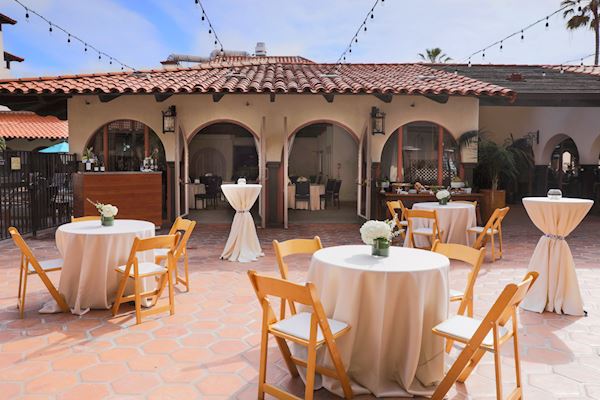
The terrace is defined by its Mediterranean tile work and wooden accents. It is the bridge between the wildness of the beach and the formality of the reception.
- What works: Low, lush compote arrangements that keep the center of gravity close to the table. Use the existing wooden posts as anchors for “climbing” greenery to add vertical interest without the risk of tipping.
- Skip: Tall, narrow glass trumpets. Even with water weight, the surface area of the flowers acts like a sail in the wind.
- Watch out: Table placement. If tables are set close to the railings, ensure arrangements are secured to the linens or weighted with stones to prevent them from shifting.
- Budget hero move: Bud vase clusters in heavy, thick-bottomed glass or ceramic. They are stable, cost-effective, and allow for a variety of textures.
Indoor Reception Spaces
Transitioning indoors allows for a shift in floral strategy. The climate control and lack of wind mean you can finally utilize those delicate, high-end blooms that wouldn’t survive the ceremony.
- What works: Tall, dramatic centerpieces that draw the eye upward toward the chandeliers. This is the place for your “statement” blooms—orchids, garden roses, and airy textures.
- Skip: Overly rustic or “beachy” decor. The indoor spaces lean toward timeless elegance; the flowers should follow suit.
- Watch out: Lighting. The indoor rooms can feel dark compared to the bright coastal sun. Bright, high-contrast palettes (whites, creams, and pops of peach or coral) perform better in these spaces than moody, dark tones.
What Works at 3338 Via Alicante
Prioritize structural stability over height. Every outdoor installation must be anchored. We recommend using weighted bases—often 25-50 lbs for arches—concealed by moss, stones, or heavy foliage. If it’s on the sand, the “feet” of your structures need to be wide and flat to prevent sinking.
Embrace salt-tolerant textures. Succulents, protea, leucadendron, and waxy-leafed greens like ruscus or smilax are impervious to the coastal spray. These should form the “bones” of your outdoor arrangements, with more delicate blooms tucked into protected pockets of the design.
Leverage the ironwork. The venue’s iron gates are a gift to floral designers. Instead of bringing in more hardware, use these gates as a natural trellis. A lush, asymmetrical installation of smilax and roses on the gate creates a high-end “estate” feel for guest arrivals.
Monochromatic palettes for the win. Against the deep blue of the Pacific and the tan of the sand, a clean, monochromatic palette—all white, all sunset tones, or all muted blushes—reads as more sophisticated than a multi-colored “wildflower” look. It provides a clear visual break between the natural landscape and the curated event space.
Design for the 360-degree view. In an open outdoor space, guests will see your ceremony structures from all sides. Ensure your arch or ground nests are finished in the back. There is no “behind the scenes” on a beach.
Budget Guide
| Level | Investment | Floral Strategy |
|---|---|---|
| Essentials | $1,750 - $3,500 | Focus on premium personal flowers and a single, high-impact ceremony focal point (like a ground nest). Minimalist weighted bud vases for the terrace. |
| Sweet Spot | $3,500 - $6,000 | A full ceremony frame (arch or deconstructed pillars), lush low-profile centerpieces for the terrace, and greenery accents for the iron gates. |
| Full Experience | $6,000 - $10,000 | Includes a dramatic staircase installation, full-scale reception centerpieces (mix of tall and low), and a repurposed floral moment for the indoor bar. |
| Statement | $10,000+ | Full-scale floral immersion. Ceiling installations in the ballroom, a floral-covered ceremony structure, and lush “growing” gardens along the entire terrace railing. |
This venue rewards those who invest in scale rather than quantity. A few massive, well-placed installations will always look better here than dozens of small, scattered arrangements.
Tips
Avoid hydrangeas in outdoor sun. They are the first to wilt in the La Jolla heat and salt air; if you must use them, keep them strictly for the indoor reception.
Anchor your aisle markers. If you are doing chair markers or ground clusters along the aisle, ensure they are in heavy containers or staked into the sand to prevent them from blowing over as guests walk by.
Plan for a “flip” with caution. Moving flowers from the beach to the indoor reception takes longer than a standard room flip due to the stairs and sand. Ensure your team is staffed for the logistics of the climb.
Use the staircase for the “money shot.” The stairs leading to the beach are a primary photography location. Budget for at least a few clusters of “growing” florals on the landings to elevate these portraits.
Check the tide schedule. While not a floral design tip per se, the tide affects where ceremony structures can be safely placed on the sand. Coordinate with the venue to ensure your “ground nests” don’t become “floating nests.”