


Behind The Design
What Happens to Your Wedding Flowers in the 48 Hours Before Your Ceremony
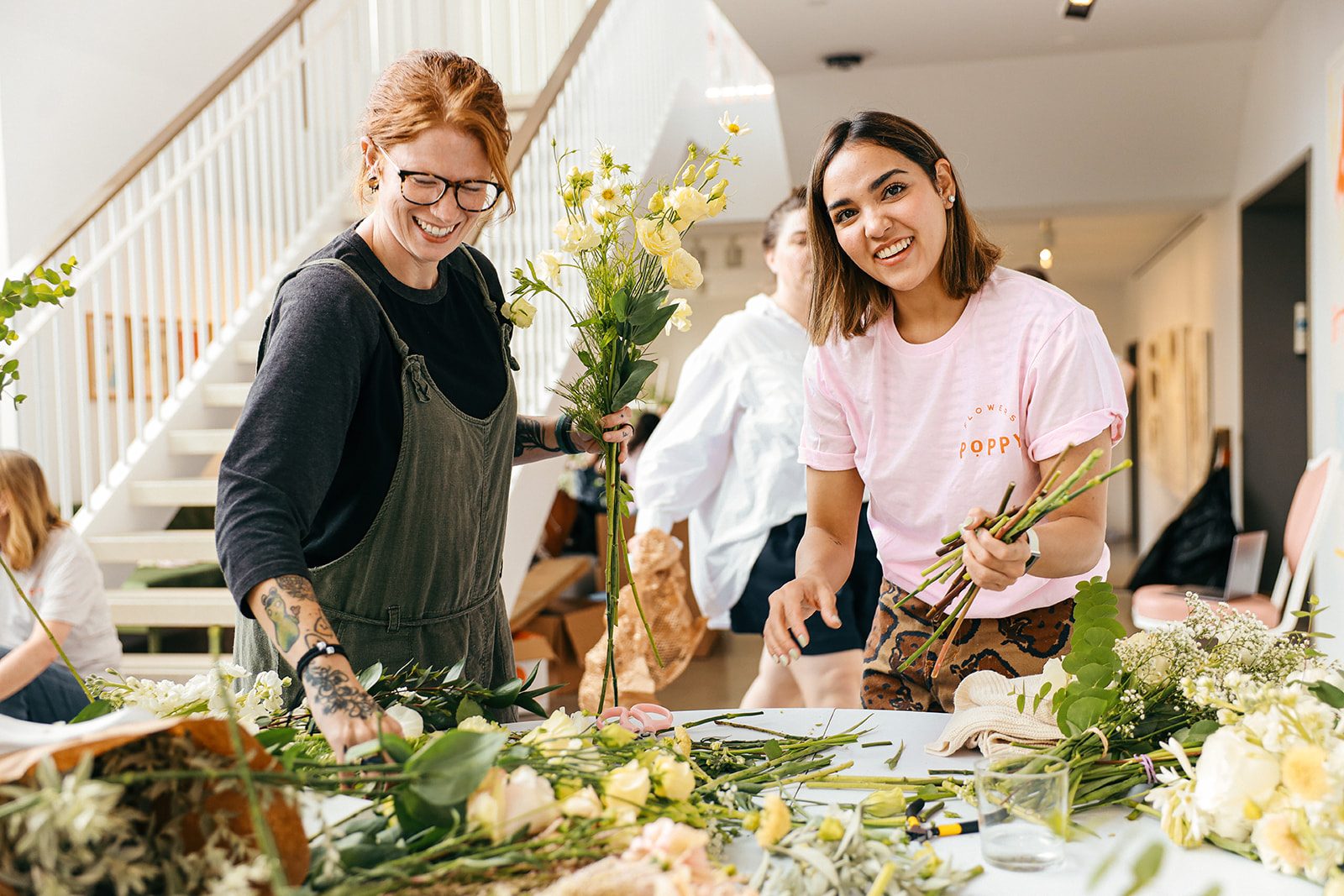
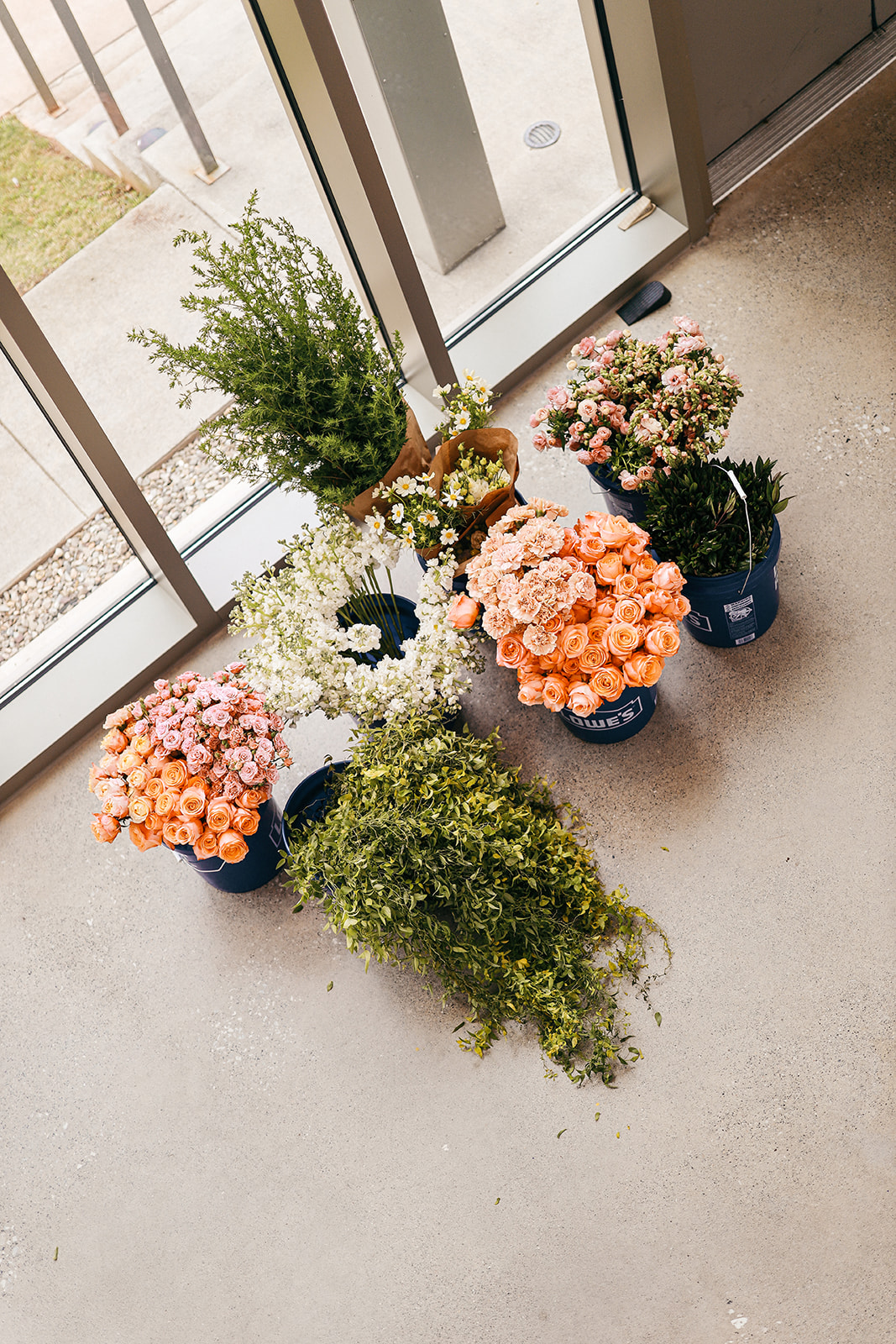
The boxes arrive at the designer's studio looking nothing like a wedding.
This is the starting point: the raw material that's about to spend the next few days becoming finished arrangements.
Most couples never see this part of the process. Here's what's actually happening in the stretch between a farm and a finished bouquet on your wedding morning.
7 Days Before Your Wedding — Prepping Hard Goods
Hard goods are unpacked and prepped. Vases are cleaned. Candles are unwrapped and checked for height, color, and finish. Every piece gets checked.
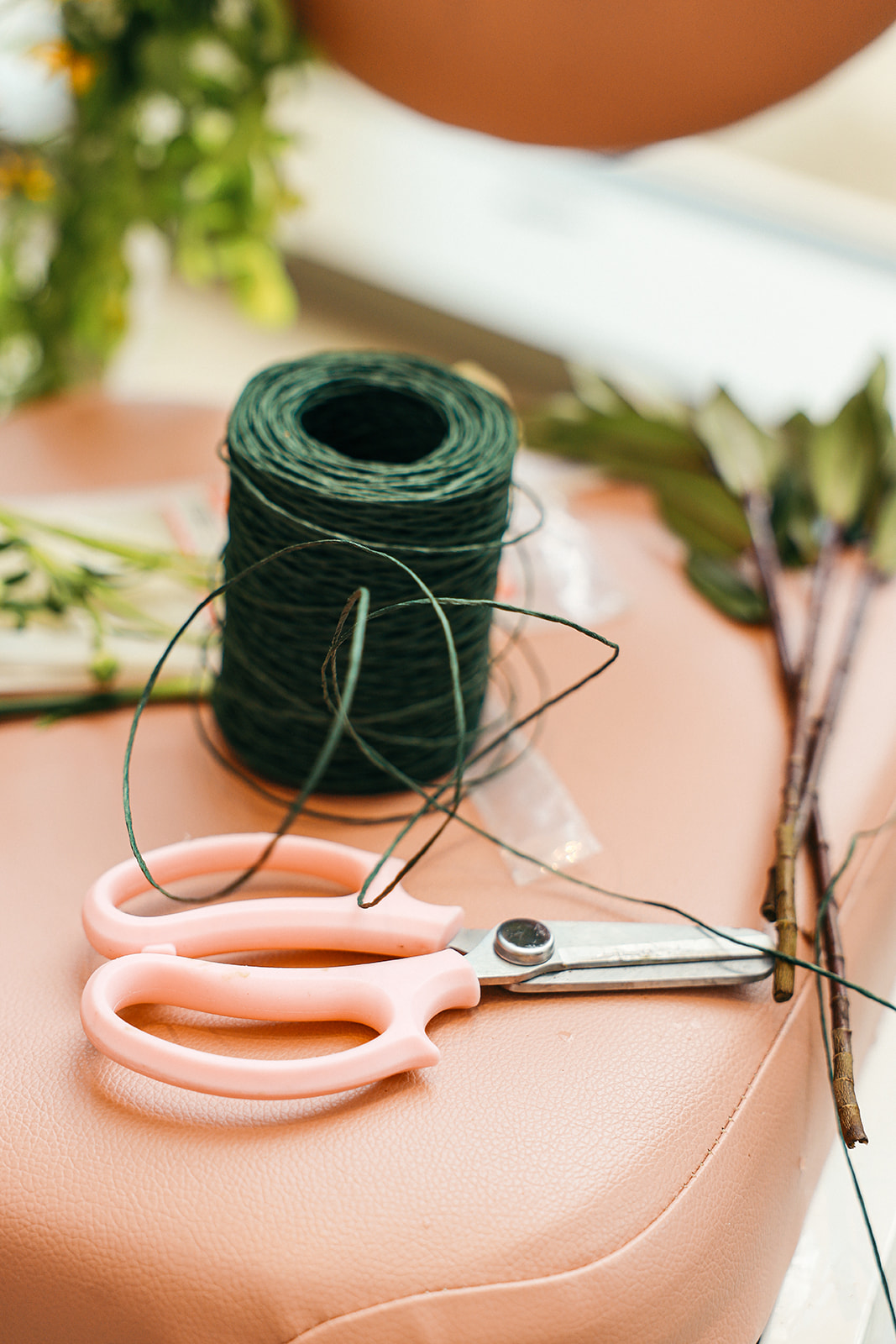
Once that inventory is confirmed, the vessels get prepped with the mechanics that will actually hold your arrangement in place, like chicken wire, floral foam, or water tubes, depending on what the design calls for. It's not a step most couples think about, but it's the reason a tall, asymmetrical centerpiece stays upright through an entire reception, or a hanging installation holds for six hours over a dance floor. The mechanics are what keep the flowers exactly where they're supposed to be.
Days Four to Three — Conditioning and Early Designing
Once the flowers arrive, they are hydrated and go into cooler storage. Temperature and humidity matter here: different stems have different optimal conditions and managing them separately keeps everything opening at the right rate.
A peony that opens too fast in a warm room becomes overblown before the reception starts. A garden rose kept slightly cooler holds that wide-open stage longer. The designer is watching all of it.
Depending on the scale of the wedding, some early designing happens in this window too. Structural or non-perishable elements can be started. The designer also does a final inventory: confirming that every stem that arrives is what was ordered.

The Final 48 Hours — Designing, Checking, Loading
The main design window starts the day before the wedding, sometimes the morning of, depending on the venue's setup schedule and how far the designer is traveling.
Bouquets are designed and wrapped. Centerpieces assembled. Ceremony arch installations and any larger structural pieces go up last. Each finished piece is checked before it leaves the studio — proportion, stem security, color distribution, anything that might shift in transit.
The morning of, everything is loaded carefully and in order. Bouquets stay in water during transport. Larger pieces are secured so they don't shift. The sequence of loading matters: what gets placed first at the venue needs to come out of the vehicle last.
At the Venue
Setup happens in the hours directly before guests arrive — the full timing breakdown is in What time does a florist arrive for wedding setup →?, and it varies significantly by venue type and access window.
The designer who made the arrangements typically handles delivery and placement. The person placing your centerpieces knows exactly how each one is supposed to look, because they designed it.
By the time you see your flowers on your wedding morning, they've been through a few days of staged, careful handling. What looks effortless is the result of a process that started well before your morning did.
For the full picture of wedding flower deadlines — when to finalize, when flowers ship, when decisions close — the deadline guide → covers it without duplication.
And if you haven't read From Mood Board to Ceremony →, it covers the design decisions that lead up to all of this.
Curious what your flowers could look like? Take the style quiz →