


Transparency Series
The Best Online Wedding Florists in 2026: An Honest Guide to Choosing
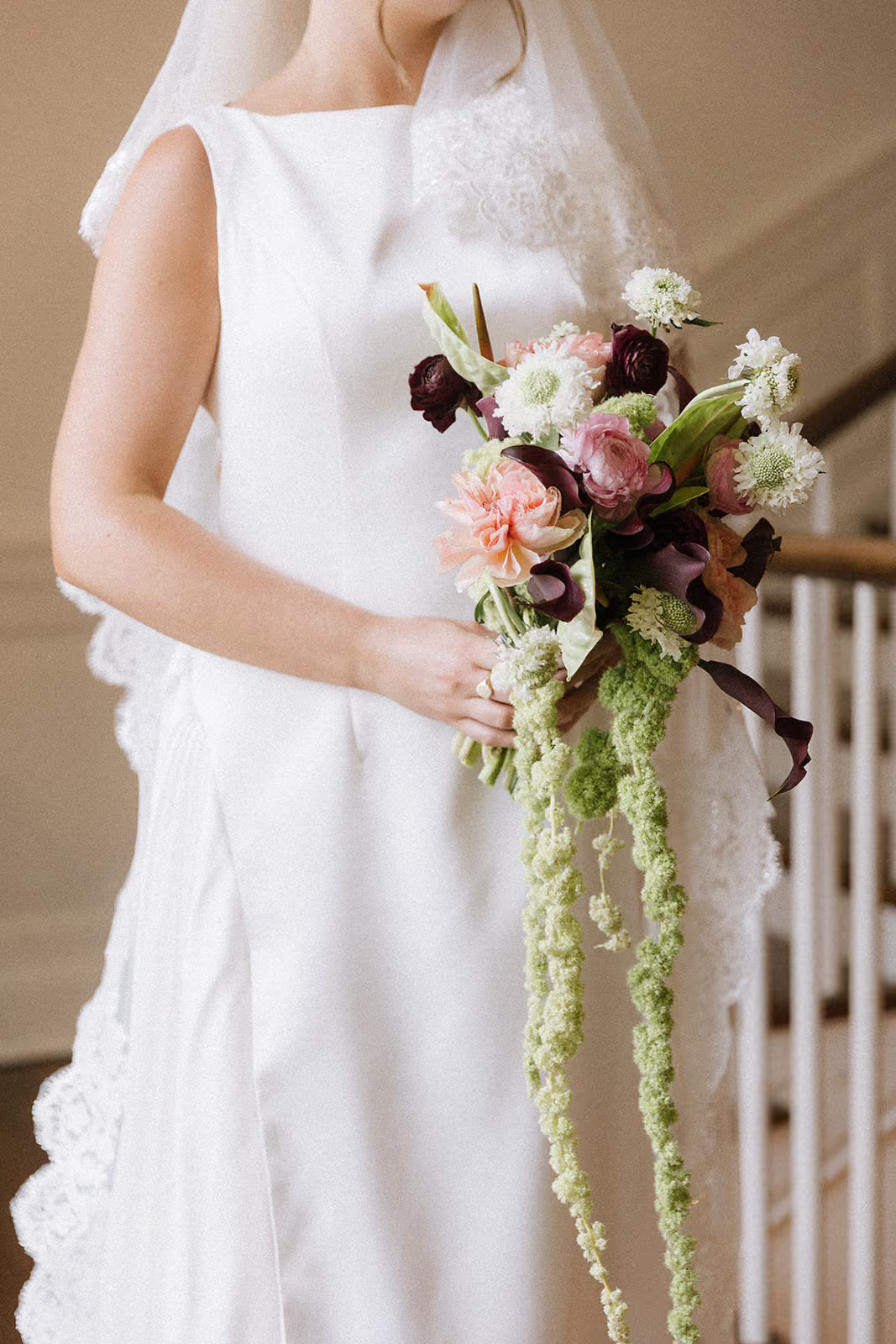
Transparency Series
You search "best online wedding florist." The results all look the same: a roundup with star ratings, a couple of sponsored results, maybe an article from a few years ago with a new year added to the headline.
You click through a few.
By the end, you still don't know whether these companies offer the same services, whether they deliver to your area, or why you'd choose one over another.
That's the real problem: it’s not a lack of options, but a lack of clarity.
The phrase “online wedding florist" covers three completely different types of businesses. Some offer full-service floral design with delivery and setup. Others ship boxes of fresh flowers for you to arrange yourself. Others rent silk or preserved flowers that get mailed back after the wedding.
Those aren't different versions of the same product. They're entirely different experiences.
That's why comparing company names before you understand the models rarely gets you very far.
This guide walks through each one, who it's best for, and the tradeoffs that don't always show up on comparison sites.
If you're still deciding whether you want a full-service florist or something more hands-on, our guide to choosing a wedding florist is a helpful place to start. →
Three Different Businesses, One Search
Here's the simplest way to think about the online wedding florist landscape.
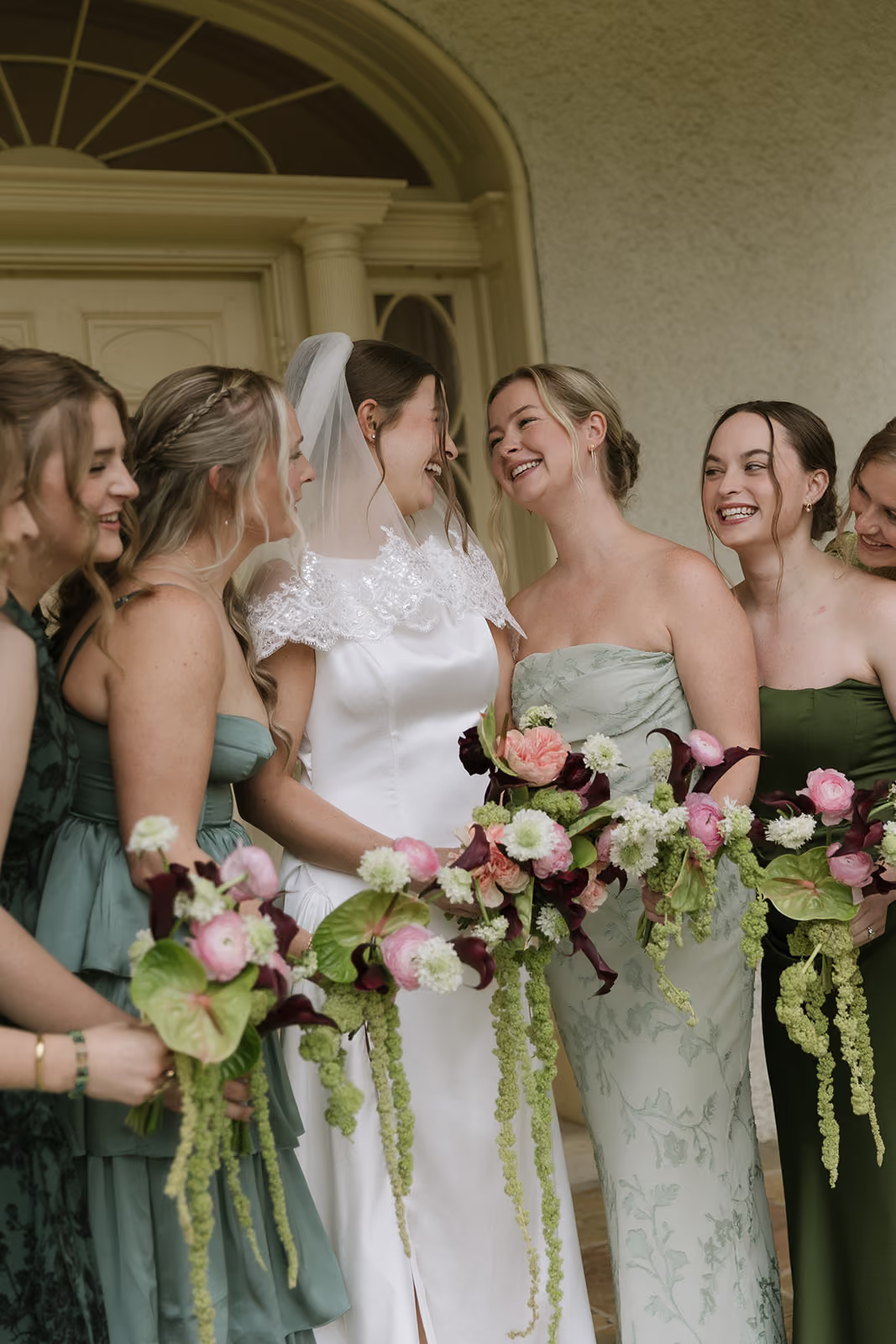
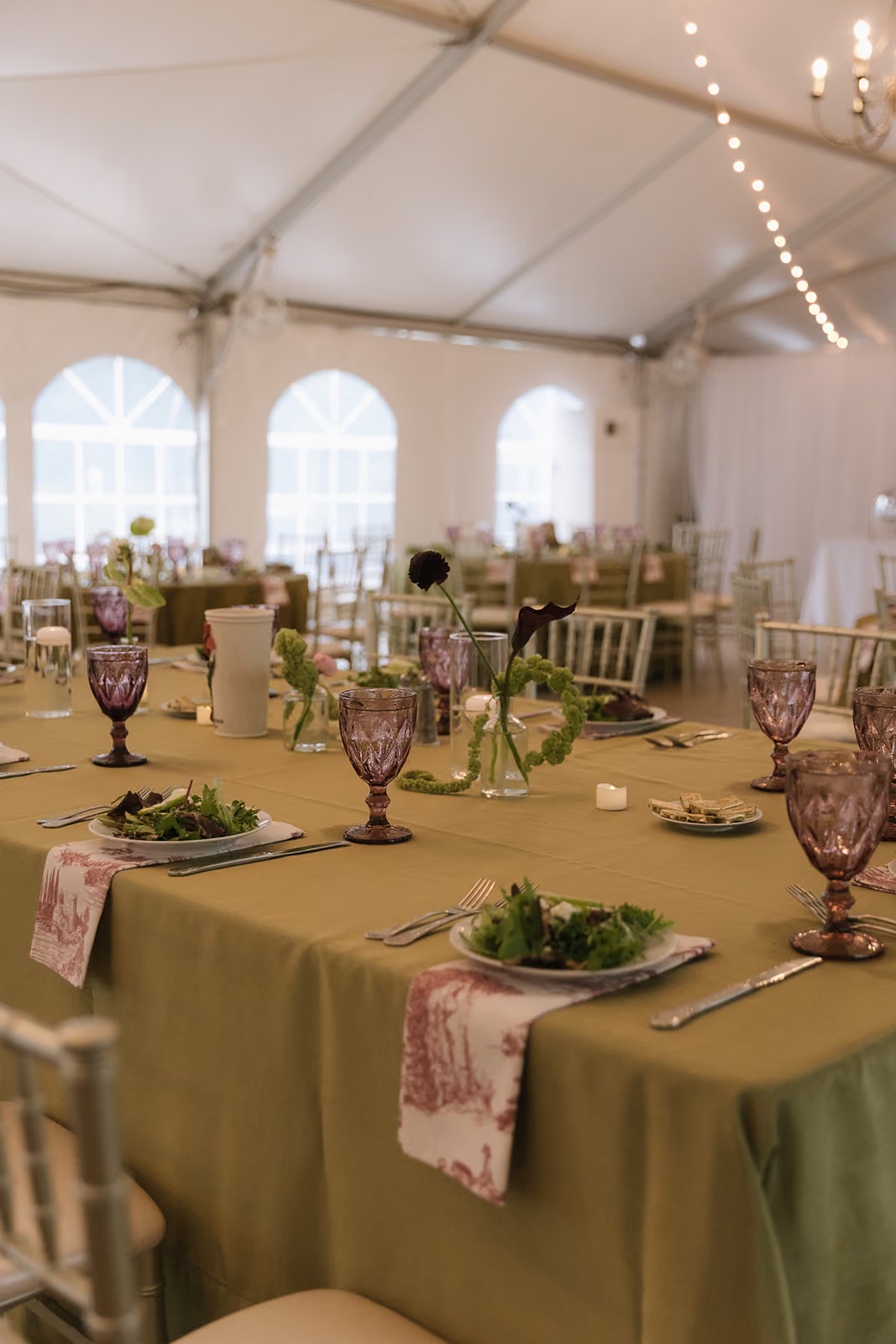
Full-service online florists
You work with a designer to create a custom proposal, then a professional team handles the flowers from there. They design the arrangements, deliver everything to your venue, and set it up on your wedding day.
You're paying for design expertise, logistics, and someone else to handle the details.
It's the same level of service you'd expect from a traditional local florist, just with a more streamlined online process, clearer pricing, and often lower minimums.
DIY bulk flower suppliers
Fresh flowers arrive by the bunch, and everything that happens after that is up to you.
You'll condition the flowers, arrange every bouquet and centerpiece, transport them to the venue, and set everything up yourself.
For couples who genuinely enjoy DIY projects, it's a great option. But it's not a less expensive version of full service — it's a completely different experience.
Rental and artificial floral marketplaces
These companies offer pre-made arrangements using silk, dried, or preserved flowers, many of which are rented and returned after the wedding.
The biggest advantage is convenience. The biggest tradeoff is that you're not working with fresh flowers.
All three can appear in the same search results.
The question isn't which one is best. It's which one fits the kind of wedding you're planning.

Full-Service Online Florists: The Alternative to Your Local Florist
A full-service online florist isn't a DIY kit with better marketing. It's much closer to working with a traditional local florist — the biggest differences are how you communicate, how pricing is presented, and when you make decisions.
Poppy is one example of this model.
You start with a short questionnaire about your date, venue, style, and budget. From there, we build an itemized proposal showing every bouquet, centerpiece, boutonniere, and ceremony arrangement individually, along with the price for each one. You can see exactly what your flowers will cost before you've committed to anything.
Holding your date requires a $249 deposit, not the 50% deposit many traditional florists ask for. After that, your proposal stays flexible. You can adjust quantities, swap flowers, or rethink individual arrangements right up until 60 days before the wedding.
The average Poppy wedding is around $3,500, with a $1,750 minimum. At that entry point, most couples are able to cover the essentials: a bridal bouquet, bridesmaid bouquets, boutonnieres, and bud vase trios for about 10 reception tables, plus delivery and professional setup. Because Poppy works directly with farms instead of buying through traditional wholesalers, it can often offer full-service florals at a lower price than many local florists providing a similar level of service.
Instead of scheduling design meetings before you know what anything costs, you can explore an itemized proposal from home, make changes as your plans evolve, and work with the same designer from your first proposal through your wedding day.
If you want to visit a floral studio, see physical samples, or build a relationship with someone local, a traditional florist may be a better choice. For some couples, those in-person conversations are part of the experience they're looking for.
Full-service online florists are a good fit if you want:
- Professional floral design
- Delivery and setup included
- Clear, itemized pricing before you commit
- The flexibility to make changes as your plans evolve
They're probably not the best fit if:
- Your total flower budget is under about $1,500
Want to see what real wedding flower budgets look like across different wedding sizes and styles? →
DIY Bulk Suppliers: The Full Picture
The idea is straightforward. You choose the flowers, order them by the bunch, and they arrive fresh from the farm. From there, they're yours to condition, arrange, transport, and set up.
For the right couple, it's an incredibly satisfying way to do wedding flowers.
If you've arranged flowers before, love hands-on projects, or have a talented friend who's genuinely excited to help, DIY gives you complete creative control. You decide exactly what goes into every bouquet and centerpiece, and you can often stretch your budget further because you're providing the labor yourself.
What tends to surprise first-time DIY couples isn't the arranging — it's everything that comes before it.
Fresh flowers don't arrive ready for the wedding. They need to be unpacked, recut, placed in clean water, and given time to hydrate. You'll need buckets, clippers, floral tape, vessels, somewhere cool to store everything, and enough space to spread out while you work. Most couples are unpacking buckets of flowers two or three days before the wedding — right as family starts arriving, welcome dinners begin, and the weekend picks up speed.
That's the tradeoff.
DIY isn't a less expensive version of full service. It's a different experience entirely. The flowers can be every bit as fresh and beautiful — but the design, the preparation, the transportation, and the setup all become part of your wedding week.
For some couples, that's exactly the fun of it.
For others, it's one more thing they'd rather hand to someone else.
DIY bulk flowers are a good fit if you:
- Have experienced help you can count on
- Have the time and space to prep flowers before the wedding
They're probably not the best fit if:
- You want professionally designed arrangements delivered ready to go
- You've never worked with fresh flowers before
- You're hoping to learn everything from YouTube the week of your wedding
Rental and Artificial Floral Marketplaces: When Fresh Flowers Aren't the Priority
Instead of fresh flowers, these companies offer arrangements made from silk, dried, or preserved blooms. Some are rented and returned after the wedding. Others are purchased and kept.
For some weddings, that's exactly the appeal.
Destination celebrations, for example, can be difficult to coordinate with fresh florals. The same goes for very short planning timelines or couples who love the idea of keeping their bouquet long after the wedding is over. In those situations, artificial or preserved flowers solve a very practical problem.
Five Questions to Ask Before You Book Anyone
A website can only tell you so much. These questions will give you a much clearer picture of what you're actually signing up for.
Am I getting full-service florals, or just the flowers?
This is the first question to ask because it changes everything that comes next.
If you're ordering flowers, you're responsible for conditioning, arranging, transporting, and setting them up. If you're hiring a full-service florist, those pieces are handled for you. Make sure you know which experience you're paying for before you put down a deposit.
How does the deposit work?
Many traditional florists ask for around 50% of the total up front. Full-service online florists often work differently. Poppy, for example, holds your date with a $249 deposit, with the remaining balance due closer to the wedding.
Whatever company you're considering, ask exactly what's due, when it's due, and whether any of it is refundable.
Can I see itemized pricing before I commit?
Some florists provide a detailed proposal showing every bouquet, centerpiece, and ceremony arrangement with individual pricing. Others share only a total until after you've signed a contract.
Knowing where your budget is going makes it much easier to adjust your order later if your priorities change.
What happens if something doesn't go according to plan?
It's worth asking this question directly.
If a flower is unavailable the week of your wedding, what's the substitution process? If there's a delivery delay, who's handling it? Who's your point of contact on the wedding day?
A full-service florist should have clear answers. With DIY flowers, those decisions become your responsibility.
Am I excited about DIY — or just excited about saving money?
This is probably the hardest question to answer honestly.
Designing flowers the week of your wedding is very different from arranging a bouquet on a quiet Saturday afternoon. If that sounds like a fun part of the experience, DIY can be incredibly rewarding. If it already feels a little stressful just imagining it, that's useful information too.
The Bottom Line
When most couples search for the best online wedding florist, they're usually looking for a florist who can handle the flowers from start to finish — they just want to work with that florist online instead of through in-person meetings.
That's why understanding the different models matters more than comparing company names.
If you're looking for professional floral design, delivery, and setup, your decision is really between a traditional local florist and a full-service online florist. From there, the differences become much easier to compare: pricing, minimums, flexibility, and how the planning process works.
Once you know which model fits the way you actually want to plan your wedding, comparing florists becomes much simpler.