


Peony Season: What Your Florist Wants You to Know
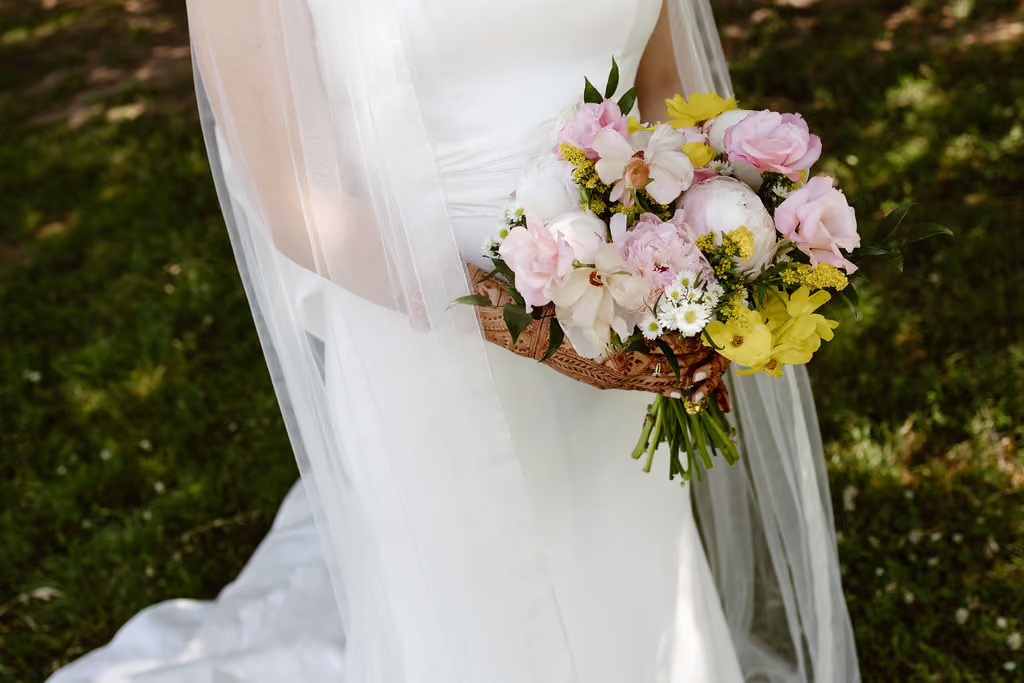
At some point during wedding planning, you realize you’ve accidentally built an entire Pinterest board around one flower.
Big, ruffled, almost absurdly pretty. The bouquet you keep saving. The centerpiece you stop scrolling for every time.
Then you look up “peony season” and realize this might be more complicated than you thought.
Here’s the part your florist wishes more couples knew upfront: peony season is real, it’s short, and your wedding date matters more than most people realize. If you’re planning around peonies, timing affects availability, pricing, and what your florist can realistically source at its best.
None of this means you can’t have the look you want. But it does help to understand how peonies actually work before you build your entire floral plan around them.
When Is Peony Season, Actually?
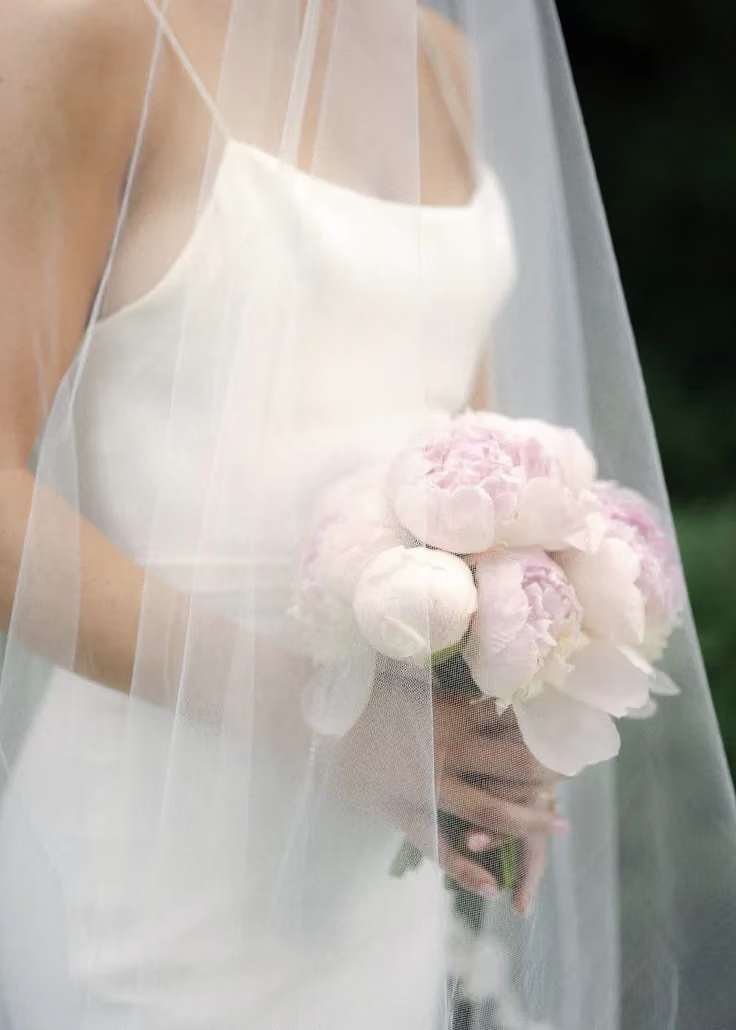
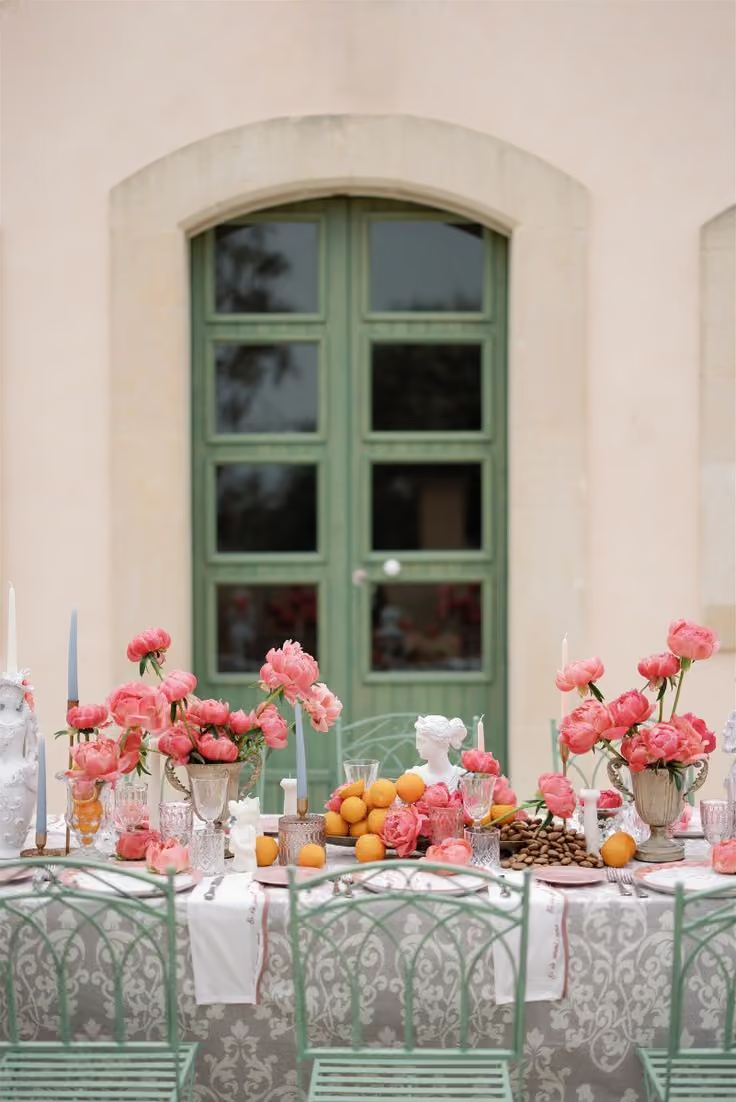
In most of the U.S., peonies are at their best from late April through mid-June. That window shifts a little depending on weather and where they’re grown, but generally speaking, you get about six to eight good weeks of domestic peony season.
During that stretch, supply is strongest, prices are usually the most reasonable, and florists have the widest range of varieties to work with.
Outside that window, things are less predictable. Imported peonies from places like the Netherlands and Ecuador can stretch availability a little earlier into spring and a little later into summer, but they come with trade-offs: higher cost, longer transit, and less consistency.
Even within peak season, timing matters. Early May usually catches the first peonies opening up, but not necessarily the widest variety to choose from yet. Late May and early June tend to be the sweet spot.
The varieties everyone saves on Pinterest also tend to disappear first, which is one reason it helps to have the conversation with your florist early.
By: Andrea Patrizi

What Your Wedding Date Actually Means
If your wedding falls in peak season (usually May through mid-June) this is when peonies are easiest to source, the selection is widest, and pricing is usually the most manageable.
If your wedding lands at the cusps of the season (mid-April or late June) peonies are often still available, but options narrow and pricing starts to climb. Bloom consistency can also get less predictable. Peonies are sensitive flowers, and early or late-season stems don’t always open the way peak-season ones do.
It’s worth talking through expectations with your florist early, especially if peonies are central to the design.
Outside peony season, especially for late summer and fall weddings, peonies can still sometimes be sourced, but they’ll almost always be imported, and the price difference is usually significant.
This is usually the point where a good florist starts asking better questions.
Do you specifically want peonies? Or are you really after the feeling peonies create?
Because those are actually two different things.
Usually, what people love about peonies isn’t literally the flower itself. It’s the feeling of them—soft, full, layered, romantic, a little undone. Once you figure that out, you have a lot more options.
Why Peonies Cost What They Cost
Part of the price comes down to timing. Peonies have a short season, and demand for them spikes during exactly the same months a huge number of weddings are happening.
They’re also delicate flowers to grow and handle. Timing of the harvest matters, shipping matters, and temperature matters. Florists are often trying to get blooms to arrive at exactly the right stage—not too tight, not fully blown open—and there’s less room for error than people realize.
Plus, not all peonies are priced the same.
The varieties that dominate Pinterest and editorial shoots are often the most expensive simply because demand for them is so high. Some lesser-known varieties are just as full and beautiful, but cost noticeably less because they aren’t the flowers everyone already recognizes by name.
If you’re working with a peony-heavy design on a tighter budget, one of the smartest things you can do is ask your florist what’s looking especially good that season instead of locking onto one specific variety.
If Your Date Falls Outside Peony Season
This is usually where the design conversation gets more interesting.
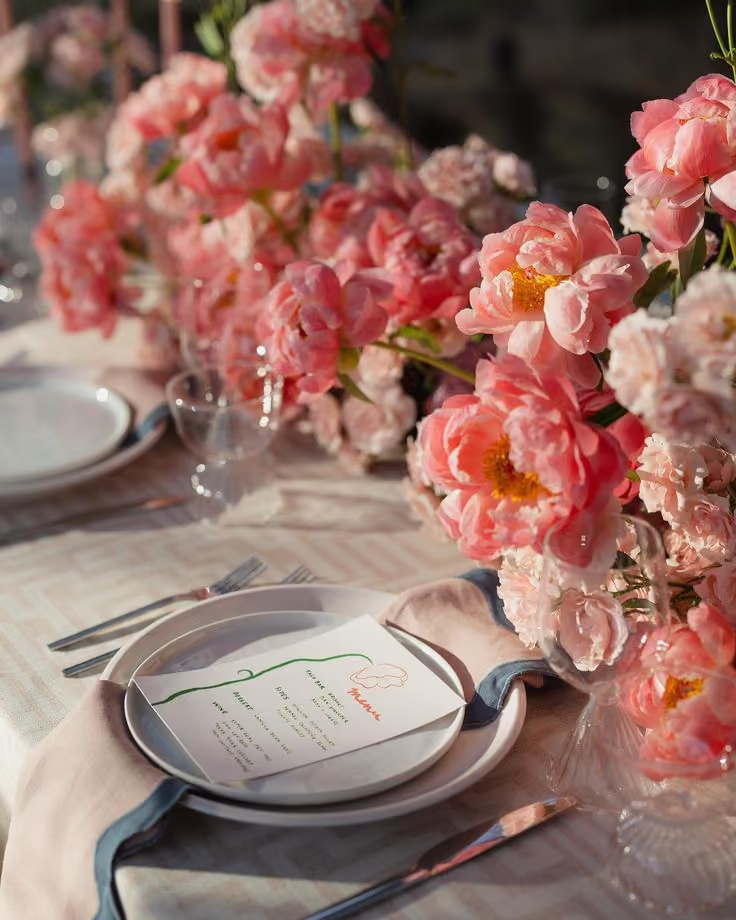
A good florist won’t just tell you peonies aren’t available in October and leave it there. They’ll start thinking about what you actually like about peonies and how to recreate that feeling with flowers that are at their best on your wedding date.
Garden roses are usually the closest substitute. They have the same layered, romantic shape, and in a finished bouquet they can create a very similar effect. They’re also available year-round, which makes them one of the most common ways florists build that soft peony look outside spring.
Ranunculus bring some of the same texture and movement, especially in larger groupings. They’re smaller than peonies, but they add the layered depth people tend to associate with peony arrangements.
Double lisianthus is another flower designers use constantly for that soft, ruffled look people associate with peonies, even if most couples don’t know the flower by name yet.
The goal is to create arrangements that feel lush, soft, romantic, and full in the same way peonies do.
At Poppy, that’s usually where the design conversation starts: what are you actually drawn to, and what flowers will create that feeling best on your wedding date?
Not sure how to describe what you’re after beyond “I want peonies”?
Take our 2-minute style quiz →
What to Tell Your Florist
Start with your date.
“I love peonies and my wedding is October 12” is the information that actually shapes the conversation.
Then think honestly about how attached you are to the exact flower versus the overall look. If what you really love is softness, fullness, and movement, your florist has a lot more flexibility to build something beautiful around your season and budget.
It also helps to be upfront about priorities. A full peony bridal bouquet during peak season is usually very doable. A full peony reception installation for a fall wedding is a different conversation entirely.
The earlier you have these discussions, the more options you’ll have.
Florists who specialize in seasonal sourcing—and who can talk through alternatives without immediately defaulting to “you can’t do that”—are usually the ones worth finding.
Want to see what flowers are naturally in season around your wedding date? [LINK TBD: seasonal flowers post]
Peonies really are one of the most beautiful flowers used in weddings. They’re also one of the most seasonal.
The earlier you understand how that season works, the easier it is to make good decisions about your flowers, your budget, and what’s actually realistic for your date.
And if your wedding falls outside the window? A good florist can still get you very close to the feeling you’re after—even if the exact flower changes.