
Designing for the Dallas Arboretum requires a shift in perspective: you are not decorating a blank canvas, but contributing to a living museum. The Alex Camp House and Lay Family Garden offer a rare combination of 1930s residential charm and expansive, tiered horticultural displays that change with the seasons.
The success of a floral plan here depends on your color palette’s relationship with the Arboretum’s seasonal planting schedule. Whether it’s the azaleas of spring or the maples of autumn, your designs must acknowledge the existing environment to feel intentional rather than superimposed.
The Spaces
Alex Camp House
This two-story historic home serves as a sophisticated anchor for smaller guest counts or as the indoor retreat for a lakeside reception. The interior features classic architectural details that favor traditional, garden-style arrangements.
- What works: Lush mantle arrangements in the living area and low, oblong centerpieces for the dining tables. The terrace is ideal for “growing” floor installations that lead guests from the garden into the house.
- Skip: Tall, spindly stands that feel out of place against the residential scale of the rooms.
- Watch out: The indoor capacity is capped at 80; for larger groups, the house functions better as a lounge and food service area.
- Budget hero move: Focus your indoor budget on the fireplace mantle; it is the natural focal point of the house and appears in nearly every interior photo.
Lay Family Garden
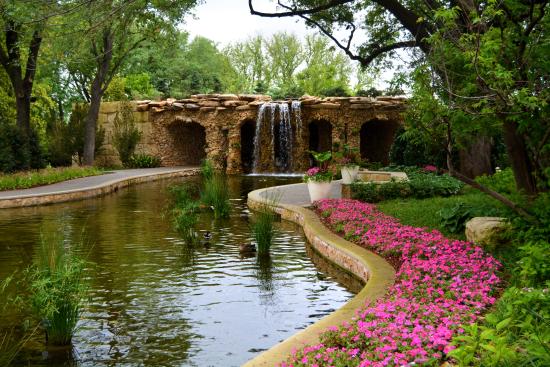
Renovated to include a dramatic waterfall and koi pond, this space is a masterclass in texture. It is sunken and intimate, making it one of the most romantic spots on the property.
- What works: Monobotanical accents that provide a rest for the eye amidst the variety of the garden. Use the stone walls as natural ledges for trailing greenery or small clusters of blooms.
- Skip: Large, geometric structures. The garden is defined by organic curves; hard angles will clash with the limestone and water features.
- Watch out: The stone pathways are narrow. Large-scale installations must be built in situ or designed for easy transport.
- Budget hero move: Use the existing stone walls to host “nestled” arrangements instead of renting pedestals.
Alex Camp House Lawn
This is the quintessential Dallas ceremony spot. The lawn slopes gently toward White Rock Lake, offering a panoramic view that needs very little help from a designer.
- What works: Asymmetrical ground-level arrangements that frame the couple without obstructing the water. These “meadow” styles mimic the natural growth of the surrounding beds.
- Skip: Traditional four-post chuppahs or heavy gazebos that act as a visual wall between the guests and the lake.
- Watch out: Wind off the lake can be significant. Any freestanding structure must be heavily weighted with sandbags hidden by floral “skirts.”
- Budget hero move: Design your ceremony focal points to be moved to the Alex Camp House terrace or the cake table immediately following the service.
What Works at Dallas Arboretum
- Complementary color theory. Check the Arboretum’s planting calendar before finalizing your palette. If the gardens are peaking with pink azaleas, a clashing orange palette will feel discordant.
- Ground-based installations. Because you cannot rig from the historic trees or the house’s ceiling, focus your budget on floor-length meadows and staircase cascades.
- Weighted vessels. The proximity to White Rock Lake means a constant breeze. Use heavy ceramic or stone vessels for centerpieces to prevent tipping on the terrace.
- Organic shapes. The Arboretum is a celebration of nature; your floral shapes should feel loose, airy, and “of the garden” rather than tight and manicured.
- Lush greenery. Incorporate textures like smilax or jasmine vine to bridge the gap between your floral arrangements and the permanent landscape.
Budget Guide
| Tier | Investment | Floral Strategy |
|---|---|---|
| Essentials | $1,750 - $3,500 | High-impact personal flowers and a pair of large-scale ceremony focal points that can be repurposed to the reception. |
| Sweet Spot | $3,500 - $7,500 | Full ceremony coverage with a ground meadow, plus a mix of elevated and low centerpieces for the terrace or house. |
| Full Experience | $7,500 - $12,000 | Lush staircase installations in the Camp House, mantle designs, and a fully realized floral “moment” at the Lay Garden waterfall. |
| Statement | $12,000+ | Floor-to-ceiling floral growth on the terrace, heavy pergola wraps, and immersive meadow aisle runners for the ceremony. |
The natural beauty of the Arboretum acts as a budget multiplier; you don’t need to hide the venue, only highlight its best features.
Tips
- Plan for a long walk. Load-in involves navigating stone paths and potentially long distances from the gate; ensure your florist has a robust team for setup.
- Respect the roots. The Arboretum has strict rules about protecting their turf and trees; never plan for installations that require staking into the ground or nailing into bark.
- Prioritize the transition. The most successful designs at the Camp House are those that blur the line between the manicured gardens and the historic interior.
- Think about the heat. For summer weddings, choose hardy varieties like zinnias, roses, and tropicals that can withstand the Texas sun on the exposed lawn.
- Repurpose with purpose. Move ceremony flowers to the base of the band stage or the entrance of the house to maximize your investment across the evening.