
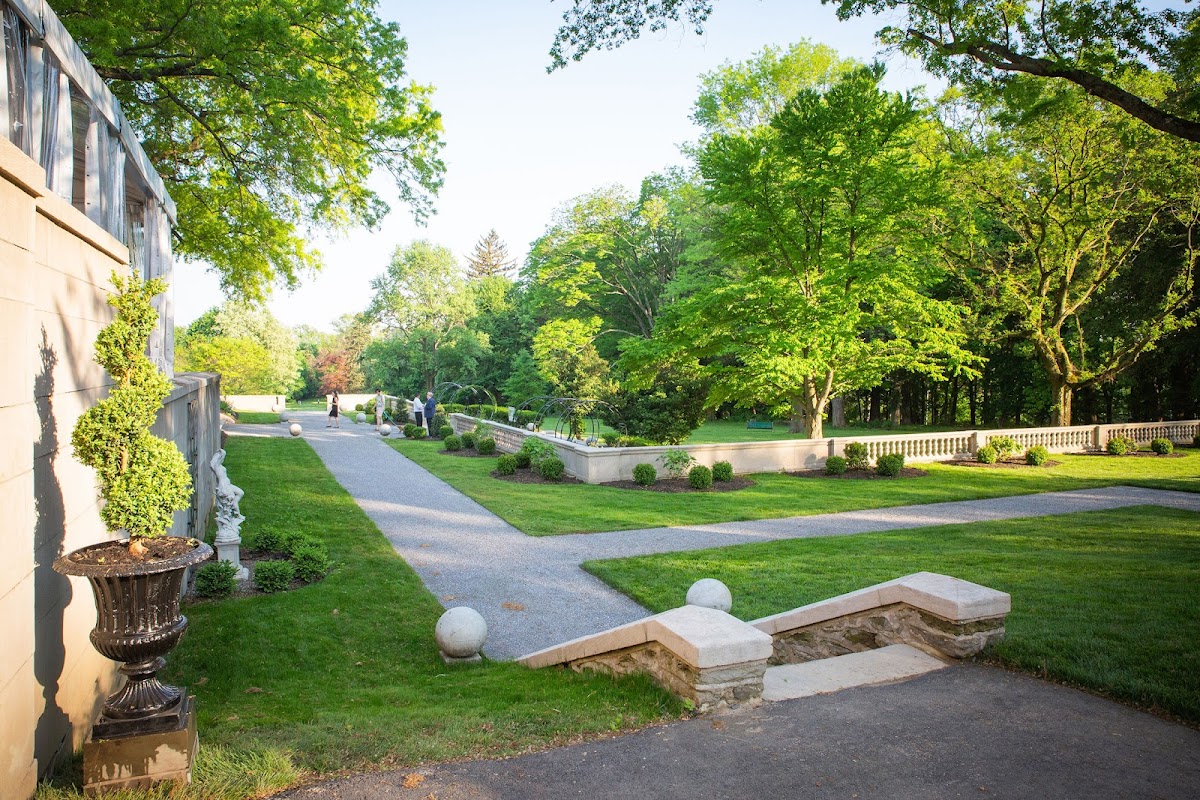
We know this venue well from our work here, and the primary takeaway is always scale. Curtis Arboretum is not a place for timid floral gestures. The 47-acre backdrop and the heavy, historic stone masonry of Curtis Hall demand designs that possess enough visual weight to hold their own against the environment.
The design opportunity here lies in the intersection of the organic and the architectural. While the arboretum provides a wild, botanical setting, the estate’s stonework provides a formal structure. The most successful floral plans at Curtis Arboretum leverage these stone elements as foundations, creating a “ruin-chic” aesthetic where flowers appear to be reclaiming the historic site.
The Spaces
The Gardens
The ceremony space is defined by sweeping views of rolling hills and the historic stone balustrade. It is a classic arboretum setting that feels both expansive and private.
- What works: Ground-level floral nests that frame the couple without obstructing the view of the ponds. Asymmetrical arches that look like they are growing directly out of the stone steps.
- Skip: Traditional four-post chuppahs or heavy wooden structures that compete with the existing stone architecture.
- Watch out: The wind can pick up across the open hills; all ceremony structures must be heavily weighted or staked into the turf.
- Budget hero move: Focus your ceremony spend on a single, lush installation on the stone balustrade. It serves as your primary backdrop and requires less hardware because the stone acts as the support.
Tented Terrace
This is where the reception typically unfolds. The clear-span tent is a blank canvas, but its transparency means the surrounding trees are part of your decor.
- What works: Hanging installations. The tent frame is robust, allowing for greenery “clouds” or suspended ladders that draw the eye up and break the horizontal plane of the tables.
- Skip: Small, low centerpieces with no height. In a tent this size, tiny arrangements disappear.
- Watch out: The floor is stone, not grass. This means no staking. Every installation must be self-supporting or weighted with sandbags or lead.
- Budget hero move: Use tall, slender glass trumpets or metal stands for half of your tables. They provide the necessary height to fill the tent’s volume without requiring the budget of a full ceiling installation.
Curtis Hall
The interior of the hall is intimate and historic, originally serving as the music room for the estate. It is often used for cocktail hour or smaller dinners.
- What works: Low, lush arrangements in brass or stone vessels that complement the dark wood and historic character.
- Skip: Modern, acrylic, or overly “glam” decor that clashes with the National Register of Historic Places vibe.
- Watch out: Space is at a premium here; keep bar arrangements compact to allow for glassware and service.
What Works at Curtis Arboretum
Architectural Integration. Do not fight the stone; use it. We recommend “meadow” style arrangements that sit at the base of the retaining walls. This creates a seamless transition from the manicured lawn to the historic hall.
High-Saturation Palettes. The arboretum is aggressively green. To make your flowers pop in photos, we suggest leaning into saturated tones—deep burgundies, vibrant corals, or crisp whites. Pale pastels can sometimes look washed out against the dense foliage and gray stone.
Textural Diversity. With over 50 tree species on-site, the venue is a masterclass in texture. Your floral designs should follow suit. Incorporate interesting foliages like smokebush, pieris, or architectural branches to mirror the arboretum’s diversity.
Clear-Tent Strategy. Because the tent is clear, the lighting changes dramatically from ceremony to sunset. Use reflective elements—metallic vessels or plenty of glass-encased candlelight—to catch the shifting light and create a glow that carries into the evening.
Movement-Oriented Design. The grounds are breezy and open. Designs that incorporate movement—think long-stemmed cosmos, fluttering ranunculus, or airy grasses—look spectacular when they catch the natural wind of the Wyncote hills.
Budget Guide
| Tier | Investment | Floral Strategy |
|---|---|---|
| Essentials | $1,750 - $3,500 | Focus on personal flowers and two high-impact “altar” arrangements for the garden ceremony that can be moved to the tent entrance. |
| Sweet Spot | $3,500 - $6,500 | Includes full ceremony decor (arch or balustrade installation) and a mix of high/low centerpieces to fill the tent’s vertical space. |
| Full Experience | $6,500 - $10,000 | Adds a significant hanging installation in the tent (greenery or floral) and lush floral runs along the stone terrace perimeter. |
| Statement | $10,000+ | Full-scale transformation: Ceiling treatments throughout the tent, meadow-style aisles, and immersive floral installations on all historic stonework. |
Curtis Arboretum is a venue that rewards those who lean into its botanical identity. It is not a space for artificiality; it is a space for celebrating the seasons through thoughtful, medium-to-large scale floral design.
Tips
Plan for the stone floor. The terrace is beautiful but unforgiving for setup; ensure your florist uses non-slip, weighted bases for any floor installations.
Repurpose the ceremony. The garden ceremony site is close to the tent. Have your floral team move your ground-level ceremony arrangements to the base of the sweetheart table or the cake display to maximize your investment.
Mind the Jeffrey A. Miller timeline. JAM Catering is efficient and moves quickly through room flips; ensure your floral plan doesn’t require a four-hour setup in the reception space if the tent is being used for cocktail hour.
Embrace the Arboretum’s season. If you are marrying in the spring, lean into the flowering trees; if in autumn, let the changing leaves of the 47-acre estate dictate your color palette.
Lighting is a floral tool. In the clear tent, the “blue hour” is stunning. Work with your florist to ensure your centerpiece colors look as good under candlelight as they do in the afternoon sun.