
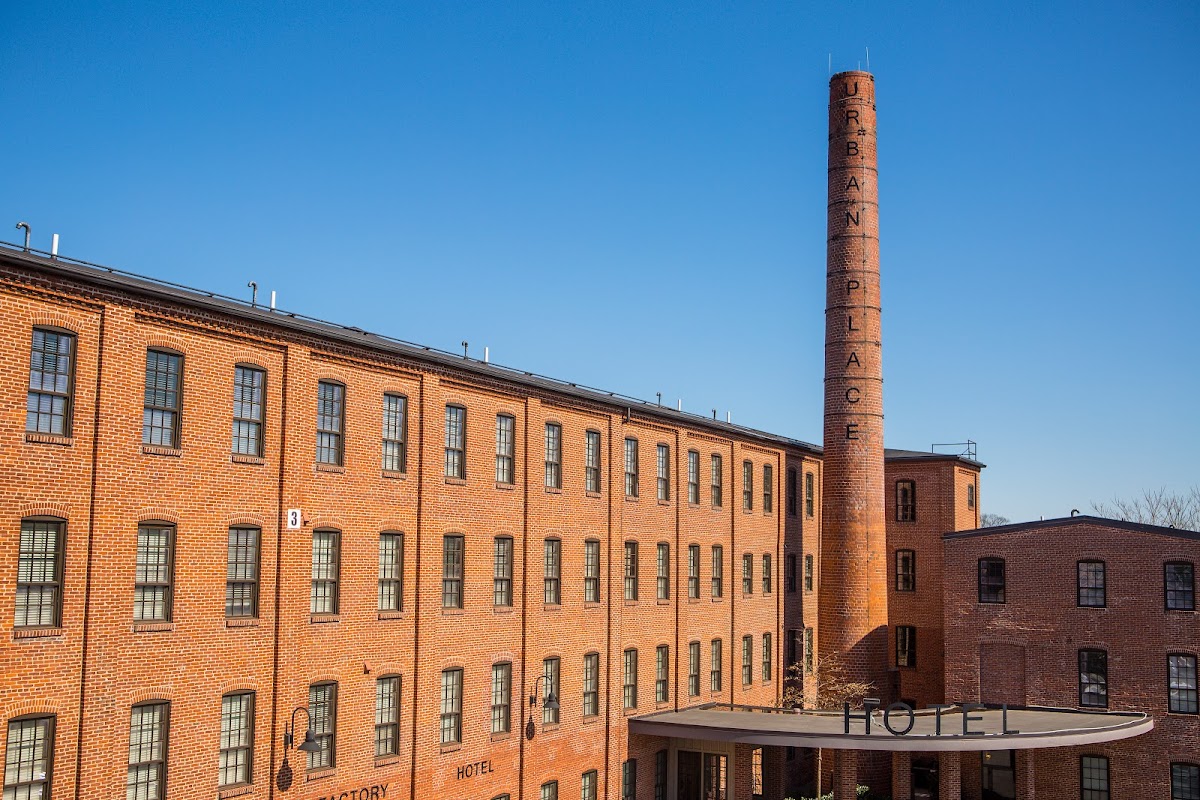
The first thing you notice when you turn off New Holland Avenue into the Urban Place complex is that this building has lived several lives. Cork Factory Hotel announces itself not through signage or fanfare, but through the weight of its 19th-century bones — brick walls three feet thick, window lintels hewn from single pieces of Pennsylvania limestone, and those unmistakable cork-lined walls visible through the ground-floor windows, glowing amber in the afternoon light. You park in the courtyard lot (free, a small mercy when planning vendor load-in), walk through the modern glass entrance, and then the timeline blurs. Exposed wooden rafters soar two stories overhead. Rustic chandeliers hang from iron chains forged when Lancaster was a manufacturing powerhouse. The original hardwood floors, refinished to a honey-toned gleam, still bear the subtle depressions worn by factory workers a century ago. This is a venue that earned its texture honestly, and that distinction changes everything about how we approach Cork Factory Hotel wedding flowers. Poppy has designed for 2 weddings here, and each time, the building itself tells us what it needs — not decoration, but continuation. We are not covering history; we are collaborating with it.
About Cork Factory Hotel
Cork Factory Hotel occupies a singular position in Lancaster’s architectural landscape. Built in 1865 as the Armstrong Cork Company’s manufacturing plant, the building spent over a century producing cork products — bottle stoppers, gaskets, insulation — before the factory closed in 1989. The structure sat vacant for years, slowly decomposing, until a thoughtful restoration in the early 2000s transformed it into a boutique hotel and event venue. What makes this renovation remarkable is what was preserved: the load-bearing brick walls with their original mortar joints, the exposed ceiling rafters that once supported factory equipment, the remnants of industrial hardware still embedded in the woodwork, and of course, those extraordinary cork-lined walls in the Warehouse and Assembly Room — actual factory cork, applied during the building’s working life, now a design feature worth its weight in historical credibility.
The hotel comprises 77 guest rooms across four floors, plus multiple event spaces ranging from grand to intimate. The architecture is a study in adaptive reuse done right. Modern steel and glass insertions sit comfortably beside 150-year-old brick. Contemporary furnishings don’t apologize for sharing space with antique baking tools and period industrial art. The color palette throughout is warm neutrals — brick red, aged wood, weathered copper, and that distinctive cork gold — which creates a remarkably forgiving backdrop for florals. Nearly any palette we bring in will either complement the existing tones or provide a welcome contrast without clashing.
Logistically, Cork Factory Hotel is a Lancaster wedding florist’s dream. The venue sits in the heart of downtown Lancaster, roughly 90 minutes from Baltimore and 2 hours from Philadelphia, making it accessible for guests traveling from either city. Lancaster itself is experiencing a culinary and cultural renaissance — farm-to-table restaurants, craft breweries, independent boutiques — which elevates a Cork Factory wedding from single-event to full weekend experience. For Poppy’s delivery team, the drive from Baltimore is straightforward via Route 30, and the venue provides dedicated loading access through the ground-level service entrance adjacent to the Ballroom. Ceiling heights vary by space (critical information when planning installations), and the events team is accustomed to working with outside vendors, which means clear communication about setup timelines, power access, and any rigging needs for suspended installations.
The venue operates with in-house catering (all-inclusive packages available) and provides full bar service with bartenders, but florists are selected by the couple, giving us flexibility in design without venue-imposed restrictions. Free on-site parking for guests and vendors removes one common source of wedding-day stress. The hotel offers room blocks, which means your florist can stay on property if needed for early-morning ceremony setups or late-night breakdown. The combination of historic charm, modern amenities, and professional event coordination makes Cork Factory Hotel a venue where we can focus on the flowers rather than fighting logistics.
Event Spaces & Floral Opportunities
The Ballroom (with Parlor & Terrace)
Capacity: 180-300 seated (depending on layout), 300-400+ reception style
Setting: The Ballroom is Cork Factory Hotel’s grandest space, and it earns that designation through sheer architectural drama. Vaulted wooden ceilings peak two stories overhead, their exposed rafters radiating from a central spine like the ribs of an inverted ship hull. Three rustic chandeliers — massive iron fixtures with Edison bulbs — hang at staggered heights down the center line. The floor is the original factory hardwood, refinished but still bearing the character marks of its industrial past. One wall is dominated by a large brick fireplace with a substantial mantle, flanked by exposed brick that climbs toward the ceiling. The opposite wall features tall windows letting in southern light. At one end, French doors open to the Parlor, a smaller adjoining lounge space, and beyond that to the Terrace, an outdoor patio suitable for cocktails or ceremonies. The combined square footage is 5,225, but the vertical volume makes the space feel even larger.
Floral approach: The Ballroom demands a strategy of focal moments rather than uniform coverage. With ceilings this high, low centerpieces on every guest table will disappear visually unless they are exceptionally lush. We typically recommend one of two approaches: either very low (under 10 inches) garden-style compotes that prioritize texture and abundance over height, or tall arrangements on 30-inch risers that lift the florals well above guest sightlines and into the vertical drama of the room. For a recent November wedding, we used aged bronze compotes filled with burgundy dahlias (Karma Naomi), taupe Quicksand roses, rust-toned hypericum berries, and trailing amaranthus, keeping everything under 8 inches to maintain conversation flow. The real investment went to the fireplace, where we installed a 12-foot asymmetrical mantle garland of autumn foliage — oak, maple, and beech branches in peak color — woven with clusters of the same dahlias and garden roses, with votives tucked into the garland for evening glow. The rustic chandeliers are tempting targets for hanging florals, but confirm with the venue first; the fixtures are original and may have load restrictions. If approved, a light touch works best — perhaps a single trailing garland of Italian ruscus and jasmine vine on the central chandelier, nothing heavy. The Parlor benefits from a statement arrangement on the bar or a low cocktail table arrangement, while the Terrace (if used for the ceremony) might feature a freestanding arch or chuppah. For the ceremony, the fireplace serves as a natural backdrop, eliminating the need for additional structure — simply dress the mantle and hearth with abundant florals and let the brick do the rest.
The Warehouse
Capacity: 120 seated, 250 reception style
Setting: Step into the Warehouse and you are immediately aware of the texture. The walls are lined floor-to-ceiling with cork — not decorative cork, but actual industrial cork tiles installed during the building’s factory days, now aged to a warm honey-amber patina with a subtle shimmer that catches the light. The effect is tactile, almost warm to look at, and completely unique in the wedding venue landscape. Opposite the cork walls, ceiling-high windows flood the space with natural light. Large antique mirrors — likely salvaged from other industrial buildings — lean against or hang on the walls, amplifying both light and space. The room is open plan, allowing for flexible layouts, and the overall vibe is clean-lined modern industrial tempered by the organic warmth of the cork.
Floral approach: The cork walls are the star here, and our job is to complement, not compete. The texture and color of the cork create a neutral backdrop, but one with so much inherent interest that heavy, opaque floral installations would be a waste. Instead, we favor arrangements with negative space — think ikebana-inspired designs with strong linear elements and deliberate openness. For a spring wedding, we might use tall, slender arrangements in clear glass cylinders: branches of flowering quince or cherry blossom as the vertical line, with clusters of white ranunculus, ivory lisianthus, and pale green hellebores at the base, and trailing jasmine vine to soften the edges. The mirrors double everything, so one substantial arrangement near a mirror effectively becomes two. The floor-to-ceiling windows invite the use of pedestals or elevated arrangements near the glass to take advantage of the natural light for photography — backlit florals at golden hour are magic. For centerpieces, low organic designs in natural wood vessels or ceramic compotes echo the materiality of the cork without mimicking it. Color-wise, this room is incredibly forgiving: soft blush and ivory feel romantic against the warm cork, while jewel tones (emerald, sapphire, deep plum) create dramatic contrast. If the Warehouse is used for a ceremony, a minimalist arch — perhaps copper tubing or weathered wood — dressed with asymmetrical clusters of blooms rather than full coverage allows the cork walls to remain visible and frames the couple without overwhelming the space.
Assembly Room
Capacity: 50 seated, 65 reception style
Setting: The Assembly Room is the Warehouse’s intimate sibling — smaller square footage (940 sq ft), but the same cork-lined walls and exposed brick combination. The scale feels cozy rather than grand, and the industrial details are even more pronounced here: visible ductwork, original factory windows with metal frames, and vintage industrial art on the walls. There is something inherently warm about this room despite its industrial materiality, perhaps because of the compressed scale that makes everything feel close and conversational. This is a space for the dinner party, not the gala.
Floral approach: With only 50 seated, we are designing for perhaps 6-8 guest tables, which means each arrangement gets individual attention. Rather than repeating identical centerpieces, we often create a varied collection within a cohesive palette — different vessels in similar tones (ceramic, concrete, wood), different bloom combinations that all draw from the same color story, different heights and silhouettes that create visual rhythm when viewed as a group. For a recent fall wedding here, we used a collection of vintage brass and copper vessels (bud vases, julep cups, small urns) and filled each with a different but related combination: some with deep burgundy dahlias and chocolate cosmos, others with burnt orange ranunculus and bronze chrysanthemums, others with taupe roses and dried grasses. The effect was abundant without being uniform, and the metallic vessels caught the warm light beautifully against the cork walls. One substantial arrangement on a bar or welcome table provides an anchor, but in a room this size, resist the urge to over-flower. The architecture is doing half the work already.
The Baker’s Table
Capacity: 40 seated, 45 reception style
Setting: The Baker’s Table is precisely what it sounds like — a private dining space centered around a large communal table, decorated with antique baking tools mounted on the walls: vintage rolling pins, bread peels, dough scrapers, flour sifters. The room has a charming, almost whimsical quality, and the communal table format creates an inherently intimate dining experience where everyone is seated together rather than scattered across multiple tables.
Floral approach: The communal table is the obvious focal point, and a long garland runner is the classic solution — but we can do better. Rather than a continuous garland (which can obstruct conversation across the table), we prefer a series of clustered arrangements marching down the center in an asymmetrical rhythm: perhaps three or four low, lush arrangements in varying sizes, with trailing greenery connecting them visually without creating a solid mass. For a summer wedding, we might use garden roses (Juliet, Patience, Keira), white lisianthus, scabiosa, and Queen Anne’s lace in ceramic crocks and wooden bowls, with lemon leaf and jasmine vine trailing between arrangements. The antique baking tools provide a playful opportunity to echo the theme subtly — incorporate wheat stalks, oats, or barley into the arrangements, or use rustic wooden vessels that nod to the farmhouse aesthetic without being literal. For a more modern take, sleek ceramic vessels in matte white or soft gray with monochromatic blooms (all white, all blush, all greenery) create a clean contrast to the vintage tools on the walls.
The 1865 Room
Capacity: 30 seated
Setting: The 1865 Room is the most intimate option, a private space with views overlooking the factory complex and downtown Lancaster, decorated with period industrial art that dates to the building’s cork manufacturing heyday. The room feels like a library or study — quieter, more contemplative, suited to small gatherings where every guest knows one another.
Floral approach: With only 30 guests, we are likely looking at four or five guest tables maximum, which means the floral budget can be concentrated rather than spread thin. One approach: forgo individual centerpieces entirely and instead create one extraordinary installation on a console table or sideboard — a large, architectural arrangement that serves as the room’s floral moment. Think branches (curly willow, manzanita, or flowering dogwood depending on season) rising 4-5 feet from a heavy stone or ceramic vessel, with clusters of roses, hellebores, and trailing amaranthus woven into the branches at varying heights. The vertical drama draws the eye and makes a statement without cluttering the small tables. Alternatively, if the client prefers table florals, use petite arrangements in bud vases or small compotes — something elegant but scaled to the room’s intimacy. The period industrial art on the walls should inform the vessel choices: consider brass, copper, or aged metal containers that echo the industrial aesthetic without competing for attention.
Wedding Suite
Setting: The Wedding Suite is the bridal preparation headquarters — a spacious room with crystal chandeliers, modern furnishings, four hair and makeup stations, a dedicated changing area, and large windows providing abundant natural light. This is where the getting-ready photos happen, which means the space should feel beautiful but not overly staged.
Floral approach: The Wedding Suite needs only a light floral touch — this is not a guest-facing space, and over-flowering here means budget that could be better spent in the Ballroom or ceremony site. A single lovely arrangement on a vanity or coffee table suffices, preferably something that complements the bridal bouquet palette so it photographs cohesively. We often deliver a small arrangement of the bride’s chosen blooms in a simple glass or ceramic vessel, placed near a window where natural light will make it glow in photos. If the bride wants something more personal, a few loose stems in bud vases scattered across the makeup stations or a small floral crown hanging on a ribbon add a whimsical touch without requiring significant investment. The crystal chandeliers create inherent glamour; let them do the heavy lifting.
The Parlor
Setting: The Parlor is the intimate lounge space adjoining the Ballroom, typically used as a cocktail hour overflow or a quiet conversation area during receptions. It includes comfortable seating, a bar area, and connects directly to the Terrace.
Floral approach: The Parlor functions as a transition space between cocktails and reception, so florals here should feel like an extension of whatever is happening in the Ballroom rather than a separate design concept. If the Ballroom features low garden-style centerpieces, the Parlor might have a slightly larger version on the bar or a substantial arrangement on a console table. If the Ballroom is going for drama with tall risers, the Parlor could echo that with one elevated arrangement as a focal point. Keep cocktail tables clear or use very small bud vases — guests need space for drinks and plates. The connection to the Terrace means florals can flow outdoors if the terrace is in use: perhaps a pair of large urns flanking the French doors, overflowing with seasonal blooms and foliage that bridges indoor and outdoor.
The Terrace
Setting: The Terrace is an outdoor patio space adjacent to the Parlor and Ballroom, suitable for ceremony, cocktail hour, or simply as an overflow space for guests wanting fresh air. It overlooks the Urban Place courtyard and downtown Lancaster beyond.
Floral approach: If the Terrace is used for the ceremony, the backdrop is urban rather than natural, which means the floral installation needs to create its own frame and focal point. A freestanding arch or chuppah is the standard solution — we favor structures made from natural materials (weathered wood, copper piping, bamboo) that feel intentional without being overly ornate. Dress the structure asymmetrically: heavy floral clusters at the base and corners, with trailing greenery and occasional bloom clusters climbing up and across the top, leaving negative space so the structure’s bones remain visible. For a spring ceremony, imagine a copper arch with blush and ivory garden roses (Patience, Charity, O’Hara), white peonies, ranunculus, and jasmine vine, grounded by two large stone urns overflowing with the same blooms plus additional foliage volume. If the Terrace is serving as cocktail space, consider a pair of large potted topiaries or arrangements flanking the entrance from the Parlor, and keep cocktail tables clear or minimally dressed. The urban setting means you are creating the garden rather than working within one, which gives you freedom but also responsibility — the florals need to be substantial enough to register against the architecture.
Wedding Flower Ideas for Cork Factory Hotel
Factory Floor Romance
This concept honors the building’s industrial past while introducing softness and romance through an unexpected palette. The foundation is blush and rust — not the pale millennial pink, but a deeper, earthier blush verging on terracotta, paired with rust-toned blooms that echo the oxidized metal and aged brick throughout the venue. Specific flowers: Café au Lait dahlias, Quicksand and Cappuccino roses, peach ranunculus, rust-colored hypericum berries, copper-toned chrysanthemums, and taupe astilbe. Foliage includes Italian ruscus, dusty miller, and eucalyptus in the more silvery varieties (silver dollar, baby blue). Vessels are aged copper urns, hammered brass compotes, and concrete cylinders — materials that feel industrial but warm. This palette sings in the Ballroom against the exposed brick, and in the Warehouse where the warm copper tones complement the cork walls beautifully. For the Ballroom fireplace, a dramatic garland installation using the rust and blush blooms with trailing amaranthus and copper-sprayed foliage creates a focal point that feels both industrial and romantic. Centerpieces sit low in concrete vessels, mounded and organic, with berries and seed pods adding texture. The overall effect is soft without being saccharine, industrial without being cold.
Cork & Cellar
This design leans into Lancaster County’s agricultural heritage and the building’s cork history with a palette drawn from wine country and harvest tables. Deep burgundy, plum, and fig tones anchor the palette, lightened by champagne, ivory, and soft greenery. Flowers include: burgundy dahlias (Karma Naomi, Black Satin), deep plum calla lilies, burgundy ranunculus, Keira and Juliet garden roses in champagne tones, ivory lisianthus, chocolate cosmos, and scabiosa. Foliage is rich and textured: seeded eucalyptus, olive branches, fig leaves (if available seasonally), and actual grapevine tendrils. Accent elements might include privet berries, dried figs, or pomegranates for autumn weddings. Vessels are natural wood bowls, stone compotes, and aged wine barrels repurposed as pedestals. This concept works beautifully for fall and winter weddings, and the deep tones photograph dramatically against both the cork-lined walls of the Warehouse and the exposed brick of the Ballroom. For the Baker’s Table, a long installation down the communal table using the wine-country palette with wheat, grapes, and figs feels abundant and celebratory. The burgundy tones ground the design while the champagne and ivory keep it from skewing too dark.
Pennsylvania Garden
This approach brings the outside in with a palette and style that references the gardens, farms, and rolling countryside surrounding Lancaster. The color story is naturalistic and varied — not a strict palette, but rather the organized chaos of a cutting garden: blush, peach, coral, butter yellow, soft lavender, white, and lots of green in varying shades. Flowers are chosen for texture and variety rather than uniformity: garden roses in multiple varieties (Patience, Charity, Juliet), ranunculus, anemones, hellebores, sweet peas (when in season), scabiosa, tweedia, astilbe, Queen Anne’s lace, and flowering herbs like lavender and rosemary. Foliage is lush and unstructured: ferns, jasmine vine, lemon leaf, Italian ruscus, and trailing smilax. Vessels are mismatched vintage — ceramic crocks, enamelware pitchers, wooden boxes, galvanized buckets — giving each arrangement a slightly different character while maintaining cohesion through the shared color story. This concept shines in spring and summer, and works especially well in the Assembly Room or Baker’s Table where the varied, collected aesthetic complements the intimate scale. For larger installations, the Pennsylvania Garden style can be scaled up dramatically — imagine an overflowing mantle arrangement in the Ballroom or a lush arch for a Terrace ceremony that looks like it grew there organically. The effect is romantic, abundant, and unmistakably garden-inspired without being literal or precious.
Seasonal Considerations
Lancaster, Pennsylvania sits in the southeastern corner of the state, experiencing a full four-season climate with cold winters, warm humid summers, and distinct spring and fall transitions. Understanding the seasonal realities here prevents both design disappointments and logistical headaches.
Spring (March-May): Spring arrives slowly in Lancaster, with March often still cold and unpredictable. By April, the region is in full bloom — flowering trees, daffodils, tulips carpeting the countryside. May is ideal wedding weather, with mild temperatures and abundant local blooms. Spring flower availability is excellent: tulips, daffodils, hyacinths, ranunculus, anemones, and by late May, the first peonies (Sarah Bernhardt, Duchesse de Nemours). Local farms provide branches of flowering quince, cherry, and dogwood. For Cork Factory Hotel spring weddings, capitalize on the abundance by using seasonal blooms generously — tulips are relatively affordable in spring and their sculptural quality photographs beautifully against the industrial architecture. Be mindful of temperature control: the Terrace may still be chilly in March/early April, so plan cocktail hour timing accordingly, and if you are using the Terrace for the ceremony, have a solid backup plan for rain. April showers are not a myth. Best months: Late April through May.
Summer (June-August): Lancaster summers are warm and humid, with July and August often pushing into the 90s. The good news: flower availability is at its peak. Garden roses, dahlias, zinnias, sunflowers, lisianthus, scabiosa, and a rainbow of local blooms are available. The challenges: heat and humidity mean flowers will need extra hydration, and outdoor installations on the Terrace will require more frequent checking and possible misting. We typically avoid the most fragile blooms (sweet peas, tulips) in high summer and favor heat-tolerant varieties. Dahlias are summer’s superstar — they thrive in heat and their range of colors and forms is unmatched. For summer Cork Factory weddings, lean into the season’s abundance with bold, saturated colors and textural, organic designs. The Warehouse’s cork walls look particularly stunning with jewel-toned blooms in summer light. Cork Factory’s air conditioning is solid, so indoor installations will hold well. If using the Terrace for cocktails, consider potted palms or ferns for additional greenery that won’t wilt in the heat, and ensure florals are installed as close to event start as possible. Best months: June and early September (late summer).
Fall (September-November): Fall is Lancaster’s crown jewel season. The surrounding countryside explodes into autumn color, farm stands overflow with pumpkins and mums, and the weather is crisp and perfect for celebrations. Flower availability shifts toward the warmer palette: chrysanthemums, dahlias (still going strong through October), marigolds, celosia, and a wealth of foliage options — oak, maple, and beech branches in peak color, ornamental grasses, and seed pods. This is the season to embrace Cork Factory’s industrial warmth with rich, earthy tones: burgundy, rust, burnt orange, chocolate brown, and deep plum. The brick fireplace in the Ballroom begs for a fall installation of foliage and seasonal blooms. The cork walls in the Warehouse glow in fall light, especially with warm-toned florals against them. Local farms provide pumpkins, gourds, and apples that can be incorporated into designs (use them as vessel bases or cluster them around larger arrangements). Fall weather in Lancaster is generally stable, making the Terrace a reliable option through mid-October. By November, plan for potential cold and have the Parlor ready as indoor cocktail backup. Best months: September through mid-October.
Winter (December-February): Winter weddings at Cork Factory Hotel have a moody, romantic quality. The industrial architecture feels particularly cozy when it is cold outside, and the warm lighting inside creates an intimate atmosphere. Flower availability contracts in winter, and prices for certain blooms (peonies, garden roses) increase due to import costs. However, winter also offers unique opportunities: amaryllis (dramatic and bold), hellebores (delicate and textured), anemones (available and affordable), ranunculus (still available), and evergreen foliage in abundance (pine, cedar, fir, eucalyptus). We also incorporate more non-floral elements in winter designs: branches (curly willow, manzanita, birch), berries (hypericum, ilex, privet), and even dried elements (lotus pods, protea, lunaria). For winter Cork Factory weddings, embrace a richer, moodier palette — deep burgundy, forest green, charcoal, cream, and metallic accents (gold, copper, silver). Candlelight becomes even more important in winter; consider installations that incorporate votives and tapers for warmth and glow. The Ballroom fireplace is a natural focal point for winter ceremonies. Outdoor elements are not practical December through February, so plan for fully indoor events. Best months: December (holiday romance) and February (Valentine’s proximity).
Poppy’s Expert Take
Budget the fireplace first. In the Ballroom, the brick fireplace with its substantial mantle is the single most photographed architectural feature. If you are holding your ceremony in the Ballroom, this is your backdrop — invest here before anywhere else. A dramatic mantle installation (garland, floral clusters, or a combination) creates impact that resonates through every ceremony photo. For a reception-only event, the fireplace still serves as a focal point visible from most guest tables. We have seen couples spread their budget evenly across 20 centerpieces and leave the fireplace bare, and it always reads as a missed opportunity. Start with the fireplace, then work outward.
Mirrors double your investment — use them strategically. The large mirrors in the Warehouse are not decorative accidents; they functionally expand the space and amplify light. When placing floral arrangements in the Warehouse, position them where the mirrors will catch and reflect them. One substantial arrangement near a mirror becomes two visually. This is especially effective for ceremony installations — an asymmetrical arch placed where the mirror captures it creates depth and dimension in photos. Avoid placing arrangements directly in front of mirrors where they block the reflection; instead, angle them slightly to one side.
Cork walls need breathing room. The cork-lined walls in the Warehouse and Assembly Room are textural and warm, with inherent visual interest. Resist the urge to cover them with large installations or lean florals directly against them. The cork should be visible and celebrated. Use arrangements that complement the cork’s warmth (blush, peach, rust, gold tones work beautifully) and position them where they frame rather than obscure the walls. For ceremonies in the Warehouse, a freestanding arch or chuppah allows the cork backdrop to remain visible behind the couple, creating a unique and photogenic setting that does not require additional floral coverage.
The communal table format is a gift — treat it differently. If you are hosting your event in the Baker’s Table, you have a single long table rather than multiple rounds. This eliminates the repetitive centerpiece dilemma entirely. Instead of ten identical arrangements, you can create one installation down the table’s length. We prefer a broken garland approach: clusters of abundant arrangements in varying sizes, connected visually by trailing greenery but with gaps that allow conversation across the table. This approach photographs beautifully (one