
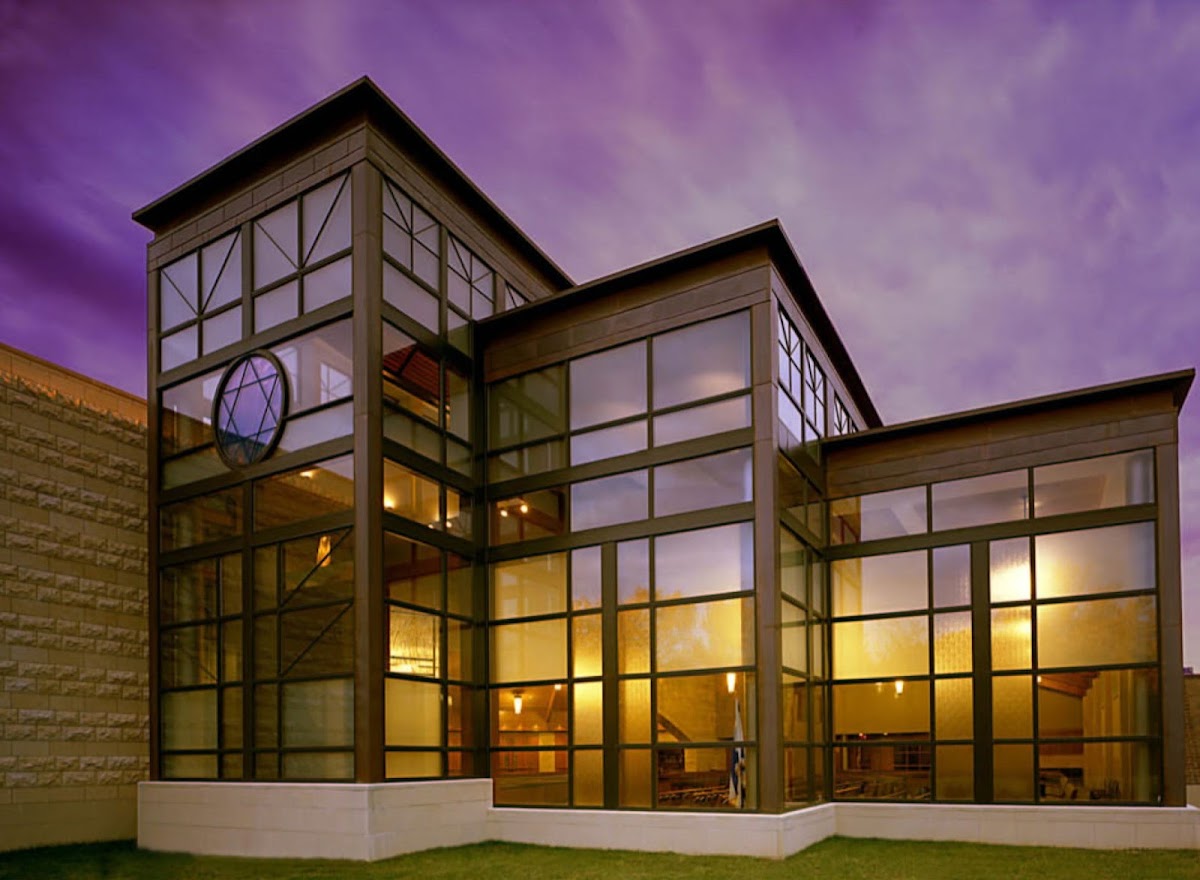
Designing flowers for Congregation Har Shalom requires an understanding of spatial volume and architectural weight. This is not a venue for timid arrangements; the soaring wooden beams and expansive sanctuaries demand a design strategy that prioritizes scale and structural integrity.
The opportunity here lies in the interplay between the warm, organic textures of the wood and the ethereal light of the stained glass. Whether you are planning a traditional ceremony on the bimah or a large-scale reception in the Main Hall, the goal is to create floral moments that feel integrated into the building’s award-winning design rather than just placed within it.
The Spaces
Main Sanctuary
The Main Sanctuary is a masterclass in mid-century religious architecture, defined by its arched ceiling and rhythmic wooden beams. The raised bimah acts as a natural stage, making it the undeniable focal point of the room.
- What works: A substantial chuppah is a requirement here. To maximize the visual impact, we recommend ground-level “meadow” style arrangements that wrap around the base of the bimah. This creates a lush, garden-like feel that anchors the ceremony without obstructing the view of the Ark.
- Skip: Thin, spindly aisle markers. In a room this large, small arrangements on the ends of pews simply disappear.
- Watch out: The height of the ceiling can make standard-sized structures look smaller than they are. Ensure your chuppah is at least 8 feet tall.
- Budget hero move: Focus the entire ceremony budget on the bimah. Two massive, exploding floor installations flanking the chuppah will do more for your photos than twenty small pew bouquets.
Main Hall
The Main Hall is characterized by its clean lines and abundance of natural light. It is a versatile space that can feel modern or traditional depending on the styling.
- What works: Tall, architectural centerpieces. Using slender gold or acrylic stands allows for large floral “clouds” that sit above the guests’ sightlines, filling the vertical void of the high ceilings.
- Skip: Short, dense mounds of roses. They lack the movement needed to compete with the hall’s scale.
- Watch out: The natural light is beautiful during the day but shifts significantly as the sun sets. Consider how your floral colors will look under artificial evening light.
- Budget hero move: Mix tall centerpieces on half the tables with low, sprawling arrangements on the others. This creates visual interest and keeps the budget manageable while still addressing the room’s height.
Stein Family Chapel
For smaller ceremonies, the Stein Family Chapel offers a much more intimate environment. The wood tones here are warm and the atmosphere is inherently cozy.
- What works: Asymmetric chuppah designs or simple, high-impact pedestal arrangements. Because the space is smaller, you can use more delicate, high-end blooms like sweet peas or ranunculus that would be lost in the Main Sanctuary.
- Skip: Overly massive structures that crowd the space. The chapel’s charm is its intimacy; don’t fight it with bulk.
- Watch out: Lighting in smaller chapels can be warmer (more yellow/orange). Avoid muddying your palette with too many “dusty” tones; opt for crisp whites or vibrant jewel tones.
Social Hall
The Social Hall is often used for Kiddush or smaller receptions. It features a more standard ceiling height and a functional layout.
- What works: Low, lush “compote” style arrangements. These are perfect for the long communal tables often used for family-style dining.
- Skip: Tall arrangements that might feel claustrophobic under a lower ceiling.
- Watch out: This space is highly functional. Ensure floral designs don’t interfere with the flow of catering or the placement of Seder plates and communal platters.
What Works at Congregation Har Shalom
Embrace the Warmth of Wood. The prominent wooden beams are the “soul” of the venue. Floral palettes that feature creams, apricots, and deep greens look exceptionally sophisticated against the honey-toned wood. If you prefer a cooler palette, crisp whites and blues provide a sharp, modern contrast that pops against the architectural background.
Scale is Non-Negotiable. In the Main Sanctuary, the distance from the back row to the bimah is significant. Your flowers need “visual weight.” This doesn’t necessarily mean more flowers, but rather more strategic placement and the use of “filler” greenery like Smilax or Eucalyptus to create larger silhouettes.
The Bimah as a Stage. Think of the bimah as a theatrical stage. Every element placed on it should be designed to be seen from 50 feet away. High-contrast colors and large-faced flowers (like Hydrangeas, Peonies, or Garden Roses) are more effective here than tiny, delicate textures.
Symmetry and Balance. The architecture of Har Shalom is very intentional and often symmetrical. Floral designs that respect this—such as mirrored arrangements flanking the Ark—feel more harmonious. If you choose an asymmetrical design, ensure it is bold enough to feel like a deliberate choice rather than an accident.
Strategic Repurposing. Because the ceremony and reception spaces are distinct but often adjacent, there is a great opportunity to move large floor arrangements from the bimah to the reception hall entrance or the front of the bandstand. This ensures you get maximum value from your largest floral investments.
Budget Guide
| Tier | Investment | Floral Strategy |
|---|---|---|
| Essentials | $1,750 - $3,500 | Personal flowers (bouquets/boutonnieres) and a focused chuppah accent. Simple, low-profile centerpieces for the reception. |
| Sweet Spot | $3,500 - $6,500 | Full floral coverage for the chuppah or two large bimah installations. A mix of tall and low centerpieces in the Main Hall. |
| Full Experience | $6,500 - $10,000 | Lush chuppah with base meadows, full-scale aisle decor, and premium tall centerpieces for all reception tables. |
| Statement | $10,000+ | Structural floral installations on the wooden beams (if permitted), a fully bloomed chuppah, and high-density reception designs. |
The character of Congregation Har Shalom is defined by its community-focused spirit and its bold, soaring architecture, both of which should be reflected in your floral choices.
Tips
Verify beam rigging early. If you are dreaming of hanging greenery from the sanctuary beams, confirm weight limits and attachment restrictions with the building manager before finalizing your design.
Prioritize bimah stability. The raised platform is a high-traffic area during the ceremony; ensure all floral pillars or chuppah legs are weighted and stable to prevent any accidents during the processional.
Coordinate with the Kosher caterer. Since outside food is restricted, work closely with the approved caterers to ensure your table arrangements leave enough room for family-style service or traditional Seder elements.
Use the stained glass as a clock. The light through the sanctuary windows changes throughout the day. If you are having a late afternoon ceremony, the colors in the glass will be at their most vibrant—choose a palette that won’t clash with those “golden hour” tones.
Think about the lobby. The transition from the entrance to the sanctuary is a great place for a small “statement” arrangement. It sets the tone for the event the moment guests walk through the doors.