
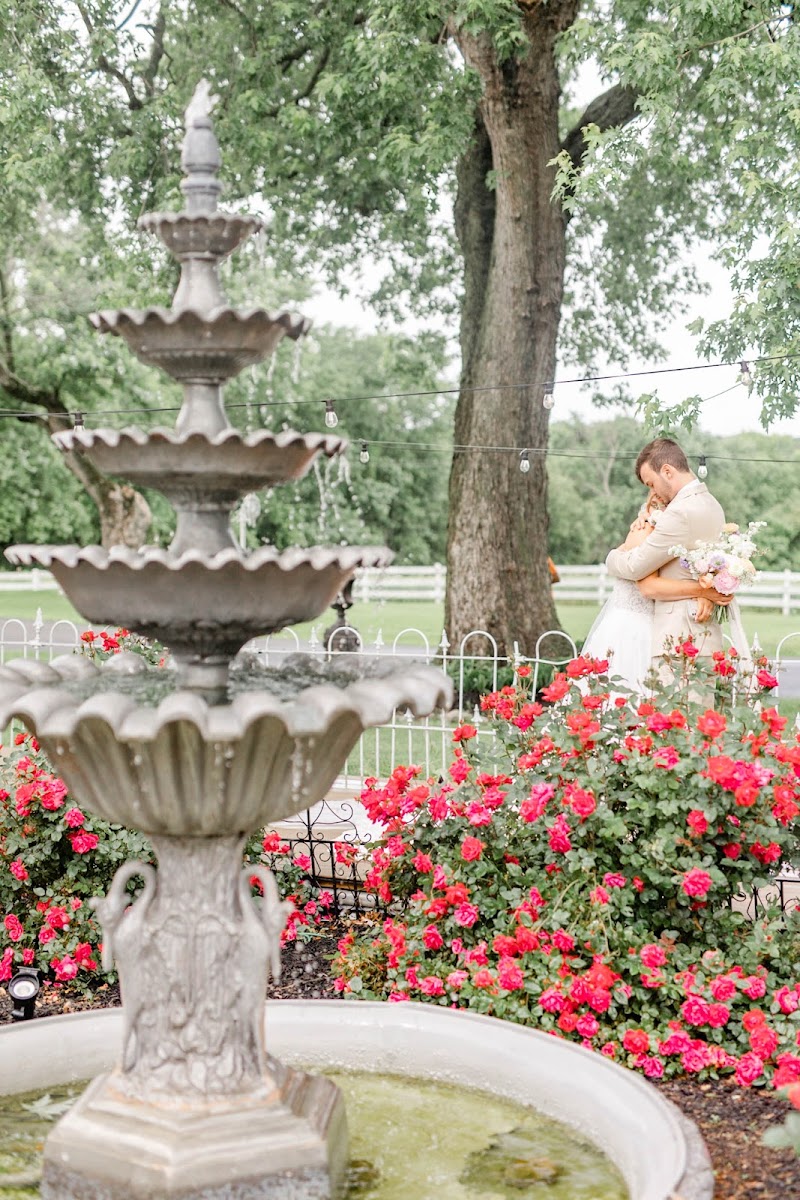
Designing for Comus Farm requires an understanding of negative space. The vast Maryland horizon and the sheer volume of the historic barn demand arrangements with enough architectural weight to hold their own against the landscape. This is not a venue for timid, delicate details; it is a place where scale and texture define the aesthetic.
The property, formerly a working dairy farm, has been thoughtfully renovated to maintain its agricultural soul while providing the infrastructure necessary for modern, high-end production. From a floral perspective, the opportunity lies in the contrast between the raw, weathered wood of the outbuildings and the refined, lush textures of premium blooms.
The Spaces
Large Barn
The Large Barn is the architectural anchor of the property, capable of seating 300 guests without feeling cramped. The interior is characterized by its verticality—high ceilings, exposed rafters, and a loft draped in string lights. The raw wood walls provide a neutral but textured backdrop that absorbs light, meaning your floral palette needs to be intentional to avoid getting lost in the shadows.
- What works: Large-scale installations are non-negotiable here. Use the overhead beams to rig “floral clouds” or thick greenery ropes that break up the ceiling height. For the tables, a mix of tall, structural arrangements and low, lush compotes creates visual variety across a room of this size.
- Skip: Small, spindly bud vases on their own. In a 300-person barn, they will disappear. If you use bud vases, group them in dense clusters of 10 or more.
- Watch out: The barn doors are on sliding tracks. Any floral installation around the entrance must be positioned to allow the doors to move freely without crushing the blooms.
- Budget hero move: Focus your investment on a single, massive installation over the dance floor or the head table. One “wow” moment in the rafters does more for the room than twenty mediocre centerpieces.
The Garden and Gazebo
The Garden offers a classic ceremony setting with a gazebo and views of the surrounding trails. It is an open-air environment where the wind is a constant factor. The mountain views are the primary draw, so the floral design should frame, not hide, the horizon.
- What works: Ground-level meadow installations that look as though they are growing out of the lawn. These are stable in the wind and provide a modern, organic frame for the couple.
- Skip: Lightweight, top-heavy pedestals. Unless they are sandbagged or bolted down, the wind coming off the mountain will knock them over.
- Watch out: The gazebo has specific dimensions; if you plan to cover it in florals, ensure your designer has accounted for the sheer volume of product needed to make an impact against the outdoor scale.
- Budget hero move: Skip the gazebo decor entirely and opt for a “broken arch” on the ground. It uses the mountain as the backdrop and can be easily repurposed to the barn’s sweetheart table later.
Farmhouse Porch
The 100-year-old farmhouse features a beautiful wrap-around porch that serves as a transition point for cocktail hour or intimate gatherings. It feels more residential and refined than the barn, offering a different design “chapter” for the day.
- What works: Railing garlands that incorporate local textures like berry bushes or native greenery. Low floor-based arrangements at the top of the stairs create a welcoming “threshold” moment.
- Skip: Tall, formal arrangements that block the flow of guests moving through the porch’s narrow corridors.
- Watch out: This is a historic structure; no nails or staples should be used. All floral attachments must be made with non-damaging ties or clips.
What Works at Comus Farm
Embrace the “Fancy Farm” aesthetic. Balance the rustic environment with high-end floral choices. Think garden roses, ranunculus, and trailing jasmine vines set against the weathered grey and brown wood of the barn.
Utilize monochromatic palettes for impact. In a space as large as the Comus barn, a tight color story (like all whites and creams with deep greenery, or a range of sunset ochres and corals) reads much more clearly from a distance than a multi-colored “wildflower” look.
Design for the 360-degree view. Most outdoor ceremony spots at Comus Farm are viewed from multiple angles as guests arrive. Ensure your ceremony arch or meadow is finished on all sides, not just the front.
Incorporate local agricultural textures. Given the venue’s history and active planting of berry bushes and pumpkins, incorporating seasonal elements like fruiting branches, dried grains, or local grasses helps the design feel rooted in the Dickerson landscape.
Prioritize verticality in the reception. The barn’s height is its best feature. Use elevated stands or hanging installations to bridge the gap between the tabletops and the rafters, preventing the room from feeling “bottom-heavy.”
Budget Guide
| Tier | Investment | Floral Strategy |
|---|---|---|
| Essentials | $1,750 - $3,000 | Focus exclusively on personal flowers and a repurposed ceremony focal point. Best for intimate groups using the Farmhouse or Pavilion. |
| Sweet Spot | $3,500 - $5,500 | Includes full personal flowers, a ground-based ceremony meadow, and a mix of bud vases and medium centerpieces in the barn. |
| Full Experience | $6,000 - $9,000 | Allows for a large-scale ceremony arch, lush centerpieces for 20+ tables, and a significant floral moment on the barn’s sliding doors. |
| Statement | $10,000+ | Includes overhead rigging in the barn (floral clouds or greenery rafters), a high-impact ceremony installation, and “growing” floor designs throughout the venue. |
Comus Farm is a venue that rewards those who lean into its scale rather than trying to shrink it down to a domestic size.
Tips
Wind-proof your ceremony. All freestanding structures in the fields must have weighted bases (minimum 50lbs) to withstand the gusts that roll off Sugarloaf Mountain.
Consider the animals. If you are taking photos in the pastures with the alpacas or ponies, ensure your bouquet does not contain any species toxic to livestock (like pieris, lily of the valley, or certain ferns).
Repurpose with a plan. The meadow installations from the Garden ceremony are perfect for lining the front of the stage or the base of the head table in the Barn—just ensure you have a dedicated team to move them during cocktail hour.
Lighting is your best friend. The barn is dark; work with your florist and lighting tech to ensure focal arrangements are pin-spotted so they don’t disappear once the sun goes down.
Seasonal awareness. In autumn, the surrounding cornfields and pumpkin patches provide a heavy visual texture; choose flower colors that either complement these warm tones or provide a sharp, clean contrast.