
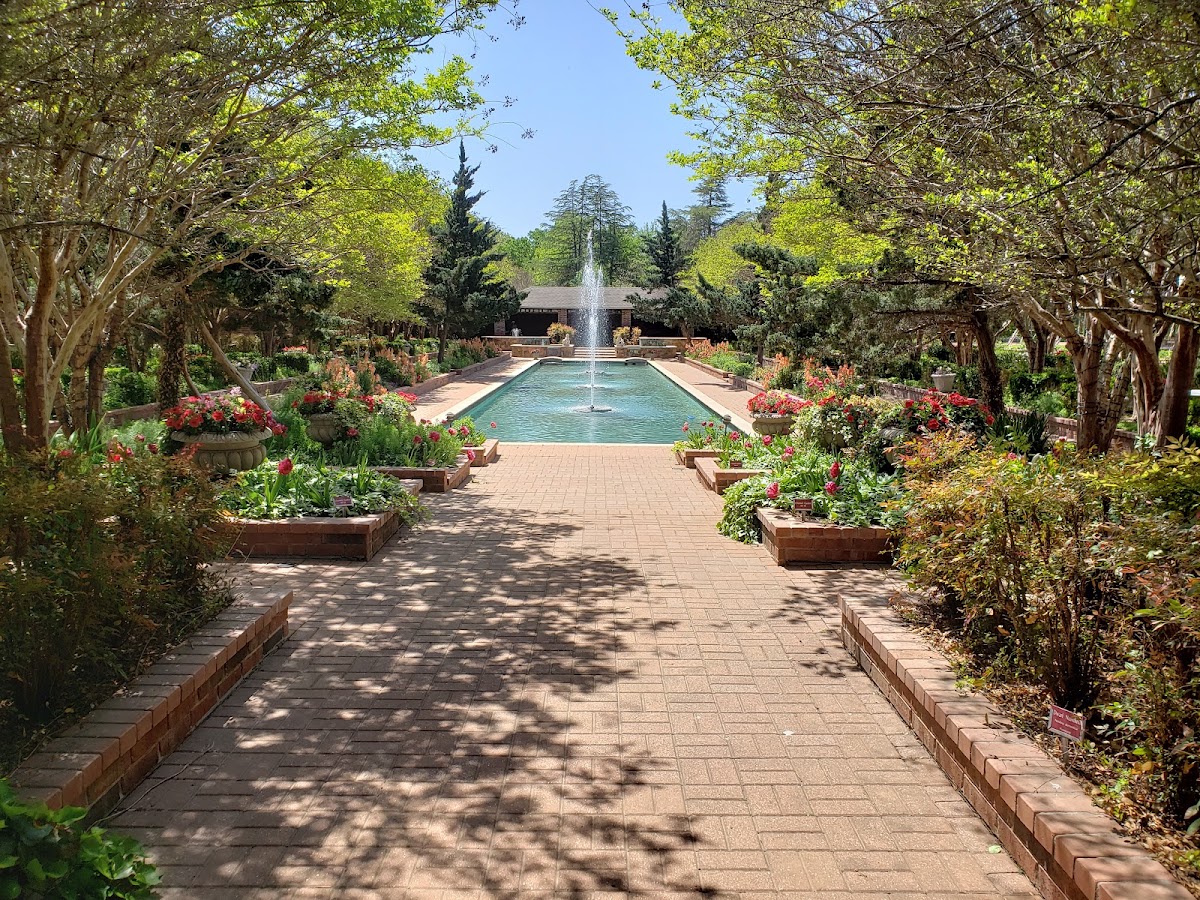
Designing for Clark Gardens requires a deep understanding of scale and environmental endurance. This is not a blank-box venue; it is a 50-acre living masterpiece where your flowers must speak the same language as the established botanical architecture.
We know this venue intimately and approach it with a focus on stability and integration. The most successful designs here look as though they were planted years ago, emerging naturally from the brick pathways and stone walls that define the property.
The Spaces
Elegant Tent Wedding Reception
The tent is the structural anchor of a Clark Gardens reception. With its high fabric ceiling and open-air sides, it offers a neutral canvas that benefits immensely from vertical interest. Because the sides are open, the transition between the garden and the reception feels seamless, but it also means the space is subject to the North Texas wind.
- What works: Large-scale greenery installations rigged to the tent frame. These soften the industrial feel of the structure and draw the eye upward. On the tables, use low, heavy-based arrangements or footed bowls that can withstand a breeze.
- Skip: Tall, top-heavy trumpet vases or spindly stands. They are a liability in a tented environment with unpredictable airflow.
- Watch out: The fabric draping is beautiful but can be delicate. All rigging must be coordinated with the venue to ensure no damage to the tent liners.
- Budget hero move: Focus your spend on a lush greenery installation over the dance floor or head table. It transforms the tent from a temporary structure into a curated garden room.
Ceremony Lawns and Garden Rooms
The various “rooms” within the garden offer distinct moods, from formal and symmetrical to wild and wooded. The challenge here is the sheer scale of the backdrop. A standard-sized arch can often look diminutive against the mature trees and expansive sky.
- What works: Ground-level “meadow” installations that frame the couple. These create a focal point that feels grounded and intentional. Freestanding arbors with significant visual weight also perform well here.
- Skip: Petal aisles. The wind at Clark Gardens will relocate them before the processional begins.
- Watch out: Sun exposure. In the Texas heat, delicate blooms like hydrangeas or sweet peas will wilt within thirty minutes of being placed. Stick to hardy, woody-stemmed flowers and succulents.
Water Feature Areas
With fountains, ponds, and resident swans, these areas provide a serene, high-end atmosphere. The masonry and stone work around these features provide excellent “anchors” for floral design.
- What works: Asymmetrical floral nests built into the corners of stone walls or at the base of fountains. Use textures like smilax or jasmine vine to trail into the water’s edge.
- Skip: Floating florals in the ponds. The movement of the water and the presence of wildlife (like the swans) make this logistically difficult and potentially disruptive to the ecosystem.
What Works at Clark Gardens
Embrace the “Growing” Aesthetic. Installations should appear to emerge from the brick pathways or climb up existing stone structures. This creates a cohesive look that honors the botanical setting.
High-Contrast Palettes. The venue is a sea of lush green. To ensure your flowers pop in photography, utilize high-contrast colors—crisp whites, deep burgundies, or vibrant ochres. Monochromatic green schemes tend to disappear into the background.
Architectural Weight. Whether it’s a ceremony arch or a reception centerpiece, every piece needs physical and visual weight. Use heavy ceramic or stone vessels that mimic the garden’s hardscaping to ensure stability and style.
Strategic Greenery Rigging. Since the tent is the only space with rigging points, maximize it. Smilax or ivy trails winding up the tent poles or hanging from the rafters create an immersive “indoor-outdoor” experience.
Texture over Perfection. In a 50-acre garden, hyper-manicured, tight floral balls feel out of place. Opt for airy, textural designs with varying heights and “reach” to mimic the natural growth patterns of the surrounding flora.
Budget Guide
| Tier | Investment | Floral Strategy |
|---|---|---|
| Essentials | $1,750 - $3,000 | Impactful personal flowers plus two large-scale ceremony statement pieces that can be repurposed to the tent entrance. |
| Sweet Spot | $3,500 - $5,500 | A full ceremony arch, a mix of low textural centerpieces, and a small greenery accent on the tent’s central poles. |
| Full Experience | $6,000 - $9,000 | Ground-level ceremony meadows, lush tent pole wraps, and elevated floral installations for the head table. |
| Statement | $10,000+ | Full overhead greenery rigging in the reception tent, custom floral “hedges” along the brick pathways, and a massive floral focal point at the garden entrance. |
The natural beauty of Clark Gardens allows you to spend less on “filling space” and more on high-impact, architectural moments that define your specific aesthetic.
Tips
Wind-proof every design. Use heavy mechanics, weighted bases, and avoid top-heavy vessels to ensure your decor stays exactly where it was placed.
Coordinate with the seasons. Clark Gardens is famous for its spring blossoms and fall color; ask the venue what will be in bloom during your date and choose a palette that complements the natural cycle.
Leverage the pathways. Use the extensive brick walkways to your advantage by placing “pathway markers” at key intersections to guide guests toward the ceremony or cocktail hour.
Plan for transport. The venue is vast; ensure your floral team has the appropriate carts and logistics plan to move large installations across 50 acres of garden paths.
Respect the wildlife. Avoid using any non-biodegradable elements (like floral foam crumbs or plastic ties) in areas near the ponds and swans to maintain the garden’s ecological health.