
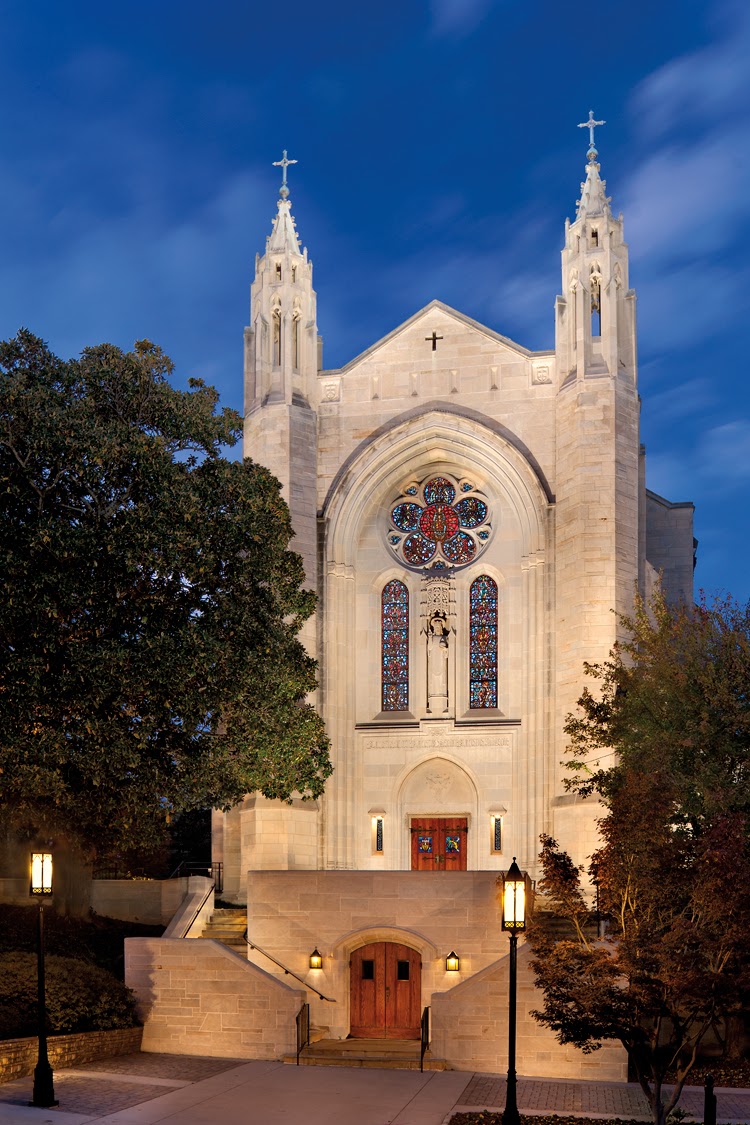
Designing flowers for the Cathedral of Christ the King requires a shift in perspective from “decoration” to “architecture.” This is not a space for delicate, airy whispers of greenery; the sheer volume of the stone arches and the weight of the history here will swallow anything that lacks intentional scale. Successful design at this Buckhead landmark is about working in harmony with the French Gothic lines while ensuring the couple remains the focal point against the grand backdrop.
We know this venue intimately, specifically how the light shifts through the stained glass and how the acoustics of such a massive space can actually be softened by the right placement of lush, organic textures. Whether you are hosting 800 guests in the Main Sanctuary or an intimate rite in the Side Chapel, the goal is to bridge the gap between the cold stone and the warmth of a celebration.
The Spaces
Main Sanctuary
The Main Sanctuary is a stone giant. With seating for 800 and ceilings that seem to disappear into the rafters, the primary challenge is scale. The altar is the visual finish line, and the flowers must be large enough to be seen from the back row without obstructing the liturgy.
- What works: Massive, flanking altar installations that utilize tall branches (quince, cherry blossom, or forsythia) to draw the eye upward. Floor-based “meadows” at the base of the altar steps provide a modern, organic contrast to the rigid stone.
- Skip: Small, spindly pew markers. They create visual clutter without adding to the overall impact of the room.
- Watch out: The cathedral has strict rules regarding the placement of flowers on or near the consecrated altar. Always prioritize floor-standing pedestals.
- Budget hero move: Focus 75% of your ceremony budget on two oversized, high-impact arrangements at the altar. These will frame every photo of the ceremony and carry the most weight in the massive room.
Side Chapel
The Side Chapel offers a reprieve from the grandiosity of the main nave. It is intimate, quiet, and heavy on religious iconography. Here, the flowers should feel like an extension of the existing beauty rather than an intervention.
- What works: Low, lush arrangements that sit in the arched alcoves or flanking the smaller altar. Use flowers with high petal counts like garden roses and ranunculus that invite closer inspection.
- Skip: Tall, exploding arrangements that block the view of the statues or stained glass.
- Watch out: Lighting in the chapel can be dimmer than the main sanctuary; choose flowers with higher luminosity (whites, creams, pale yellows) to ensure they pop.
Parish Hall / Multi-purpose Room
If your reception stays on-site, you will likely move to the multi-purpose spaces. Unlike the sanctuary, these rooms are functional and neutral, featuring standard acoustic tile ceilings and fluorescent-leaning light. This is where the heavy lifting of floral design happens.
- What works: Tall centerpieces to break up the “flat” feeling of the room. Using a mix of heights across tables creates a landscape within the room that distracts from the functional architecture.
- Skip: Minimalist bud vases. They won’t have the presence needed to transform a parish hall into a wedding reception.
- Watch out: The floor is often a hard surface; use heavy-bottomed stands for any tall arrangements to ensure stability during the party.
What Works at Cathedral of Christ the King
Monochromatic Palettes with Depth. Against the variegated gray and tan of the cathedral’s stone, a monochromatic palette—think all whites and creams with deep green foliage—looks incredibly sophisticated. It provides a clean, crisp contrast that feels modern yet respectful of the traditional setting.
High-Impact Flanking Installations. Because the aisle is exceptionally long, the “moment” at the end of it needs to be significant. We recommend oversized urns or custom-built floor installations that stand at least five to six feet tall. This ensures the couple isn’t lost against the scale of the reredos (the screen behind the altar).
Pulling From the Stained Glass. If you want color, look up. The stained glass at Christ the King is world-class. Pulling deep blues, rich burgundies, or amber tones into your floral palette creates a cohesive visual thread that makes the flowers feel like they’ve always belonged in the space.
Organic Movement in Pew Decor. Avoid the “stiff bow” look. Instead, use greenery like Smilax or Italian Ruscus to create a sense of growth along the pew ends. This softens the hard lines of the dark wood and brings a bit of the outdoors into the stone-heavy environment.
Floral Intervention in Reception Spaces. Since the ceremony space provides so much built-in ambiance, save your “transformation” budget for the reception. This is where you should use lush textures, candles (if permitted), and color to shift the mood from a formal religious ceremony to a celebratory party.
Budget Guide
| Tier | Investment | Floral Strategy |
|---|---|---|
| Essentials | $1,750 - $3,500 | Focuses on personal flowers (bouquets/boutonnieres) and two large, impactful altar pieces for the Sanctuary. |
| Sweet Spot | $3,500 - $6,000 | Adds greenery for the pew ends and a mix of low and elevated centerpieces for a Parish Hall reception. |
| Full Experience | $6,000 - $10,000 | Includes a lush “meadow” at the altar, full aisle decor, and a significant floral statement at the reception entrance. |
| Statement | $10,000+ | Full-scale transformation: floral arches at the Cathedral doors, elevated reception designs, and repurposed ceremony flowers throughout. |
The Cathedral of Christ the King is a venue that rewards bravery in scale; it is far better to have two massive arrangements than twenty small ones.
Tips
Plan for the Peachtree Road Load-in. This is one of the busiest corridors in Buckhead. Ensure your floral team has a clear plan for arrival and unloading, as the Cathedral’s schedule is often tight with back-to-back services.
Repurpose with Intention. Those massive altar arrangements can and should move to your reception. They make excellent “bookends” for a band or a grand entrance, but they require a professional team to move them safely given their size.
Respect the Statuary. The Cathedral is filled with significant religious art. Your floral designs should never obscure or hang directly from these pieces. Use self-supporting stands for everything.
Coordinate with the Sacristan. The church often has its own floral requirements or existing altar flowers depending on the liturgical season (like Lent or Advent). Always check if there are “blocked” colors or mandatory placements.
Think About the “Exit Shot.” The front steps of the Cathedral are iconic. Consider a pair of large arrangements or a subtle floral treatment for the heavy wooden doors to frame your departure photos.