
The directions will take you off Highway 74, through a stretch of Union County farmland where roadside produce stands still sell peaches in the summer and the air smells faintly of cut grass and pine. Turn onto Doster Road and the landscape shifts. The pavement narrows, curves, and then Camellia Gardens announces itself with a stand of century-old oaks, their branches arching overhead like cathedral vaulting. You pass through a stone entrance, and suddenly you are somewhere else entirely — not North Carolina farmland but a privately held Southern estate that feels lifted from the pages of a garden design portfolio. A pristine lake catches the light. Rose gardens frame every path. The grand oak tree, its trunk so wide it would take three people to link arms around it, presides over the lawn like a dignitary at a state dinner. This is not a venue that shouts. It whispers, and you lean in. Poppy has received 8 inquiries from couples planning Camellia Gardens weddings, and we understand why: this property is a floral designer’s dream canvas, where nature has already done half the work and the architecture — from the chandeliered tent to the white-pillared Terrace — provides the perfect framework for florals to shine.
About Camellia Gardens
Camellia Gardens is a privately owned estate on 20 acres of meticulously landscaped property in Monroe, North Carolina, roughly 25 miles southeast of Charlotte. The venue was designed expressly for weddings, which means every sight line, every garden path, every pergola placement was considered through the lens of a celebration. The centerpiece is the lake — small enough to feel intimate, large enough to provide a dramatic backdrop for lakeside ceremonies. Around it, the property unfolds in layers: manicured lawns give way to rose gardens, which transition into shaded groves of evergreen and deciduous trees. Crepe myrtles bloom in summer. Tea-olive shrubs release their honey-sweet fragrance in the fall. The rose walkway, which borders The Terrace, is planted with David Austin and hybrid tea varieties that bloom in waves from late April through October.
The architecture is a study in contrasts. The Barn is a renovated horse stable — all exposed beams and rustic shiplap, but refined with statement chandeliers and an attached covered patio that seats an additional 50 guests. The Tent is a permanent structure, 3,100 square feet of white canvas ceiling with wrought-iron chandeliers suspended overhead like captured stars. The Terrace is open-air Southern architecture at its finest: white columns supporting a copper-topped cupola, market lights strung overhead, and views of both the lake and the rose gardens. And then there are the ceremony spaces — three distinct options, each with its own character. The Pergola Lawn overlooks the water. The Garden Pergola is tucked into a private grove. The Arbor is covered, a fail-safe option when the Piedmont weather turns unpredictable.
For Poppy’s delivery teams, Camellia Gardens is refreshingly straightforward. Load-in access is excellent — vendors drive directly onto the property, and the venue provides golf cart transportation from parking areas to event spaces for both guests and vendors managing multiple setups. The venue coordinator is experienced and communicative, and because Camellia Gardens allows outside caterers and florists without restriction, we work without the red tape that sometimes complicates logistics at exclusive-vendor properties. The drive from Charlotte is an easy 35 to 40 minutes depending on traffic, which makes this a highly accessible location for D.C.-area vendors willing to travel for destination work or for local Charlotte-based florists looking to design in a setting that genuinely rewards thoughtful floral work.
The property sits just under 20 minutes from the charming town of Waxhaw and about 15 minutes from downtown Monroe, where historic architecture mingles with a growing collection of breweries, distilleries, and farm-to-table restaurants. For couples planning a wedding weekend, the surrounding area offers boutique accommodations and genuine Southern hospitality, the kind where strangers still wave from front porches and the waitress remembers your name.
Event Spaces & Floral Opportunities
Pergola Lawn
Capacity: 150 seated
Setting: This is the marquee ceremony site at Camellia Gardens, and for good reason. The lawn rises on a gentle knoll above the lake, providing natural theater-style sight lines for guests. The pergola structure anchors the ceremony space — a simple, clean-lined wood frame that functions as both architectural focal point and vessel for floral installation. Behind it, the lake stretches calm and reflective, bordered by native grasses and wildflowers that shift with the seasons. To the right, the century-old oak tree extends its massive canopy, providing dappled shade and a sense of gravitas. In late afternoon light, when the sun drops toward the tree line and the water turns gold, this space needs almost nothing from a designer. Almost.
Floral approach: The pergola itself is the obvious floral anchor. We favor an asymmetric installation here — a corner cluster rather than a centered swag — to echo the organic, slightly wild feeling of the surrounding landscape. Use a base of smilax or Italian ruscus, then layer in Quicksand and Patience roses, white lisianthus, and trailing jasmine vine. The effect should be lush but not manicured, as if the florals simply decided to climb the pergola on their own. For aisle markers, consider low-profile arrangements in aged stone urns rather than shepherd’s hooks, which can look too formal against the natural setting. Hydrangeas (either white or the softest blush), spray roses, and seeded eucalyptus in each urn create just enough visual rhythm without obstructing anyone’s view of the lake. If the ceremony is mid-afternoon and the sun is strong, the oak tree to the side can be softly dressed with a single swag of greenery and blooms — not a full installation, just an accent to draw the eye upward and acknowledge the tree’s majesty. For couples who want more presence without blocking the water view, a low floral hedge along the front of the ceremony site — think six to eight lush arrangements in a horizontal line, no taller than 18 inches — creates a soft visual boundary without feeling like a floral wall.
The Garden Pergola
Capacity: 100 seated
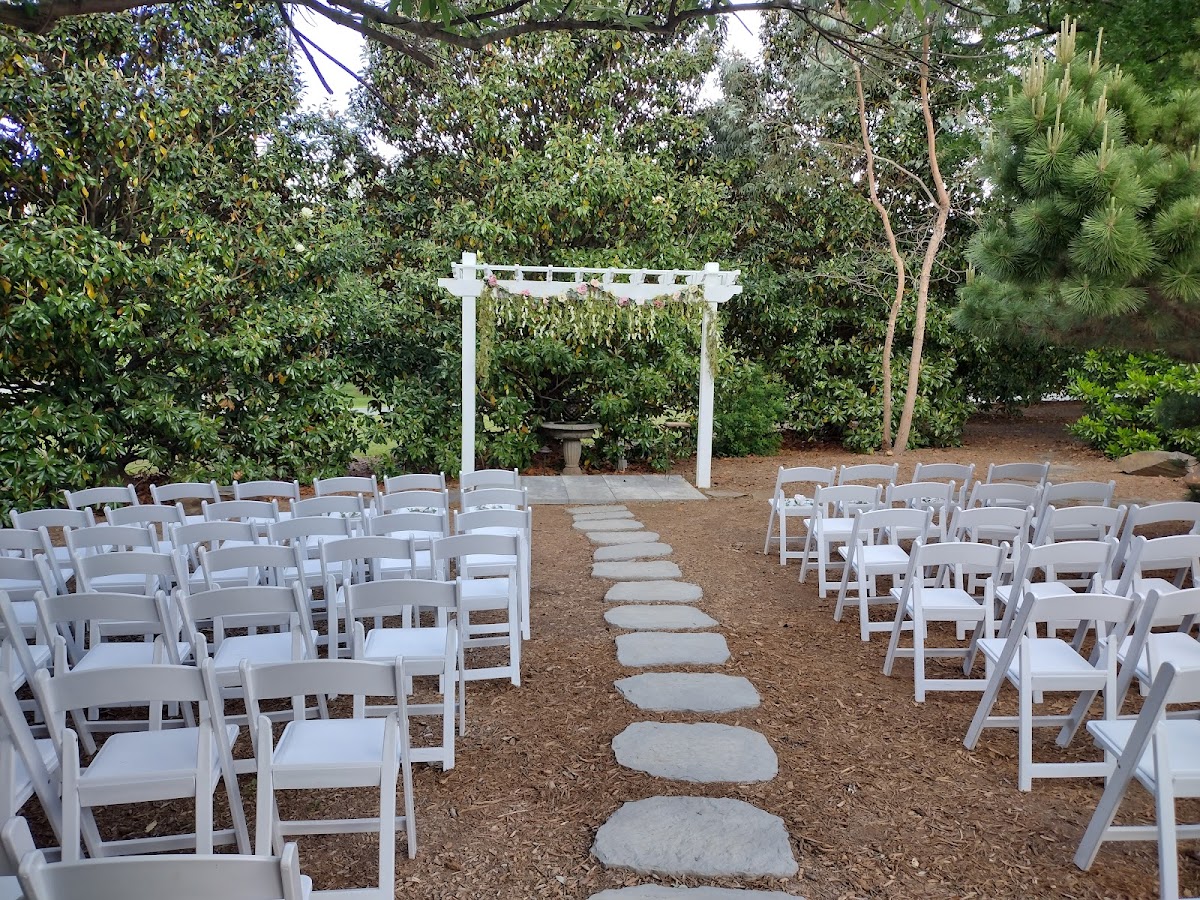
Setting: If the Pergola Lawn is the public ceremony space, the Garden Pergola is the secret garden version. This site is tucked into a grove of evergreen and deciduous trees, surrounded by tea-olive shrubs that bloom with an almost narcotic sweetness in early fall. The pergola here is smaller, more intimate — the kind of structure that suggests a private moment, a quiet exchange of vows with only the people who matter most. The canopy overhead filters the light into soft, dappled patterns. In summer, the surrounding shrubs form a living wall of green. In fall, the air smells like honey and earth.
Floral approach: This space calls for focused, lush floral work on the pergola itself rather than scattered arrangements throughout the space. The natural surroundings are doing the heavy lifting — our job is to elevate the structure where the couple will stand. A full pergola installation works beautifully here: start with a greenery base of Italian ruscus, jasmine vine, and maidenhair fern, then add in garden roses (Juliet, Patience, and Romantic Antike for depth), white peonies if in season, spray roses in ivory and blush, and clusters of astilbe for texture. Let some of the jasmine trail down the sides for movement. Because this is a shaded site, the florals photograph particularly well — no harsh sunlight to blow out the whites or cast unflattering shadows. For seating, the chairs can remain unadorned; the surrounding landscape is decoration enough. If the couple wants aisle markers, consider simple bundles of lavender and rosemary tied to the chairs with silk ribbon — fragrant, understated, and perfectly suited to the intimate scale of the space.
The Arbor
Capacity: 150 seated
Setting: The Arbor is Camellia Gardens’ weather insurance policy, and it is far too beautiful to be relegated to “Plan B” status. This covered structure features a roof overhead and open sides, bordered by dense plantings of tea-olive shrubs and rose bushes that create a living floral wall. The roof means protection from rain or harsh sun, but the open sides preserve the garden atmosphere and the connection to the surrounding landscape. It is simultaneously a garden ceremony and a sheltered space — the best of both worlds.
Floral approach: The built-in floral walls mean we can focus our efforts on enhancing the architecture rather than creating a backdrop from scratch. A garland installation along the roofline — running the full length of the Arbor — creates a sense of occasion and frames the space beautifully. Use a lush, organic mix: smilax as the base, then weave in seeded eucalyptus, silver dollar eucalyptus, white lisianthus, spray roses (Bombastic or Majolica for texture), and clusters of white hydrangea for volume. Every six feet, add a focal cluster with larger blooms — Quicksand roses, white peonies, or café au lait dahlias depending on the season. For the ceremony site itself, consider flanking the officiant with two large urns overflowing with a romantic, loose garden mix: roses, delphinium, larkspur, amaranthus, and trailing greenery. The key here is to let the existing roses and tea-olive do their work and use our florals to amplify rather than compete. If the tea-olives are in bloom (late September through October), their fragrance will be intoxicating — consider using fewer heavily scented flowers in the arrangements so the natural perfume can shine.
The Terrace
Capacity: 120 guests
Setting: The Terrace is pure Southern architectural romance: white columns supporting a copper-topped cupola, market lights strung overhead in crisscross patterns, and open views of both the rose garden and the lake beyond. The flooring is stamped concrete designed to mimic natural stone, and the surrounding plantings — roses, crepe myrtles, ornamental grasses — create a soft, garden-party feeling. This space is ideal for cocktail hour and dancing, particularly in the evening when the market lights glow warm and golden.
Floral approach: The columns are irresistible opportunities for floral installations, but restraint is key — you want to enhance the architecture, not obscure it. Consider wrapping the base of each column with a lush collar of greenery and blooms: start with a base of magnolia leaves or Italian ruscus wired into a circular form, then add in clusters of garden roses, hydrangea, and spray roses. The effect should be abundant but not uniform — each collar should feel organic, with blooms clustered more densely on one side and greenery trailing down on the other. For cocktail tables, keep arrangements low and simple: clusters of bud vases with single blooms (a Juliet rose here, a stem of tweedia there, a sprig of jasmine) create visual interest without taking up valuable table real estate. If the couple wants to incorporate the market lights into the floral design, we can add suspended garlands of smilax and jasmine vine strung between the lights — just enough greenery to soften the lines without weighing down the structure. The copper cupola provides a natural focal point; consider a single statement arrangement at its base in a large copper or brass vessel to echo the metallic tones.
The Tent
Capacity: 150 seated
Setting: This is not a temporary event tent. This is a permanent structure with a white canvas ceiling, wrought-iron chandeliers suspended at intervals overhead, and 3,100 square feet of climate-neutral space for seated dinners and dancing. The tent has a permanent floor, sidewalls that roll up or down depending on weather, and a quiet, romantic atmosphere once the sun sets and the chandeliers are lit. The white ceiling and neutral floors create a blank canvas for any design direction.
Floral approach: The chandeliers are the stars here, and our floral work should complement rather than compete. For centerpieces, we have two excellent options depending on the couple’s style. Option one: tall, elevated arrangements on clear acrylic risers that lift the florals 18 to 24 inches above the table, creating a floating effect that plays beautifully with the overhead lighting. Use a lush, romantic mix — garden roses, delphinium, stock, and trailing amaranthus or jasmine vine that cascades down. Option two: low, dense arrangements with candlelight. Think compote-style vessels filled with garden roses, ranunculus, sweet peas, and lots of texture from hellebores or scabiosa, surrounded by votives and taper candles in varying heights. Both approaches photograph beautifully under the chandeliers. If the couple wants to incorporate the chandeliers themselves into the floral design, we can add minimal greenery swags — just Italian ruscus or seeded eucalyptus, nothing heavy enough to obscure the ironwork. For the perimeter of the tent, consider statement arrangements on pedestals at the entrance and near the bar or DJ area to create focal points and anchor the space visually.
The Barn
Capacity: 80 seated indoors, plus 50 on the covered patio
Setting: The Barn is a study in rustic refinement — a renovated horse stable with original shiplap walls, exposed ceiling beams, and two statement chandeliers that bring an unexpected elegance to the space. The attached covered patio extends the capacity and provides indoor-outdoor flow, with ceiling fans overhead and views of the surrounding gardens. Inside, the palette is warm wood tones and creamy white walls, with large windows that flood the space with natural light during the day. There is a caterer’s prep kitchen tucked to one side, a groom’s lounge, and restrooms — all the logistical necessities wrapped in a beautifully designed package.
Floral approach: The Barn can go two directions stylistically, and the floral work should match the couple’s chosen aesthetic. For a rustic-organic look, use wooden boxes, terra cotta pots, or galvanized metal containers as vessels. Fill them with a wildflower-inspired mix: sunflowers, zinnias, black-eyed Susans, Queen Anne’s lace, and lots of textured greenery. Add bundles of wheat or dried grasses for movement. Drape the chandeliers with minimal greenery garlands — just enough to soften the metal without hiding the beautiful ironwork. For a more refined, elegant approach, use compote vessels in aged brass or ceramic and fill them with garden roses, lisianthus, stock, and trailing jasmine or smilax. The shiplap walls are perfect for hanging installations — consider a statement piece above the entrance or behind the head table using a combination of greenery, florals, and perhaps some Edison bulb string lights woven through for added ambiance. On the covered patio, match the indoor arrangements but consider slightly larger-scale pieces since the space is more open and needs florals with more presence to anchor the visual field.
Wedding Flower Ideas for Camellia Gardens
Southern Tea Garden
This concept draws directly from the tea-olive shrubs and rose gardens that define Camellia Gardens. The palette is soft and sophisticated: blush, ivory, champagne, and touches of apricot. Use Juliet roses, Patience roses, and Romantic Antike garden roses as the foundation, then add in blush ranunculus, white peonies (in season), ivory lisianthus, and apricot spray roses. Texture comes from café au lait dahlias, astilbe, and scabiosa. Greenery should feel garden-gathered: jasmine vine, maidenhair fern, seeded eucalyptus, and Italian ruscus. Vessels are key to this look — choose aged stone urns, terra cotta pots with a weathered patina, or ceramic compotes in cream and soft gray. This design concept works beautifully in The Garden Pergola and The Arbor, where the natural garden surroundings amplify the soft, romantic palette. For The Terrace, add touches of copper-toned elements (copper votives, copper wire accents in the arrangements) to echo the cupola.
Lakeside Modern
For couples drawn to Camellia Gardens for the lake views and clean architectural lines of the Pergola Lawn, this design concept offers a more contemporary take. The palette is restrained: white, cream, soft sage green, and touches of dusty blue. Use white garden roses (Patience, Playa Blanca), cream lisianthus, white delphinium, and soft blue tweedia or nigella. Add in pale blue hydrangea and white scabiosa for texture. Greenery should be equally refined: eucalyptus (silver dollar and seeded), dusty miller, and olive branches for a Mediterranean touch. Vessels are sleek and minimal — white ceramic cylinders, clear glass, or matte black metal stands for elevated arrangements. This look is particularly stunning on the Pergola Lawn where the clean lines of the florals echo the simple geometry of the pergola structure itself. In The Tent, this palette glows under the chandeliers, especially when combined with clear acrylic risers for centerpieces and lots of candlelight.
Carolina Garden Party
This concept embraces the exuberance of a Southern summer garden in full bloom. The palette is vibrant but not brash: coral, peach, butter yellow, lavender, and lots of green. Use coral charm peonies (if in season), peach-toned garden roses (Vuvuzela, Free Spirit), butter yellow ranunculus, lavender stock and larkspur, and white lisianthus to balance the brighter tones. Add in seasonal surprises like zinnias, cosmos, or black-eyed Susans for a garden-gathered feeling. Greenery can be bold here: magnolia leaves, lemon leaf, tree fern, and lots of jasmine vine for movement. Vessels can be playful — mix brass, ceramic, and even painted vintage containers in complementary colors. This design concept is perfect for The Barn (where the rustic architecture can handle the color intensity) and The Terrace (where the garden setting provides a natural context for the exuberant palette). For evening receptions in The Tent, this color palette looks extraordinary under warm lighting, especially when combined with amber-toned votives and tapered candles.
Seasonal Considerations
Camellia Gardens sits in the North Carolina Piedmont, which means four genuine seasons with the blessing of Southern mildness. Understanding the seasonal rhythms here is essential for planning Camellia Gardens wedding flowers that work with the climate rather than against it.
Spring (March through May) arrives early in Union County. By mid-March, the daffodils are blooming and the azaleas are preparing their show. April and May are peak spring wedding months, with mild temperatures (highs in the 70s, lows in the 50s) and the landscape in full bloom. The rose gardens at Camellia Gardens begin their first flush in late April. Crepe myrtles leaf out, and the tea-olive shrubs are fragrant with their spring bloom cycle. This is prime peony season (late April through May), tulip season, and the time when ranunculus are at their absolute peak quality and value. Garden roses are beginning to hit their stride. Spring weather can be unpredictable — warm days followed by cool evenings, and occasional rain showers — so The Arbor’s covered structure is invaluable. For floral design, embrace the season: peonies, tulips, ranunculus, anemones, sweet peas, and the first garden roses. The landscape is providing plenty of green, so your florals can focus on blooms.
Summer (June through August) in Monroe is hot and humid, with daytime temperatures regularly climbing into the upper 80s and 90s. Afternoon thunderstorms are common, rolling in quickly and departing just as fast. The rose gardens are in full production — this is when David Austin roses and hybrid teas are blooming in waves. Crepe myrtles explode in shades of pink, lavender, and white, providing a stunning natural backdrop throughout the property. For Camellia Gardens wedding flowers in summer, heat tolerance is critical. Choose blooms that can handle the temperature: zinnias, sunflowers, celosia, hydrangea (which wilt quickly but recover beautifully if properly conditioned), garden roses (which perform better in heat than standard roses), and lisianthus. Avoid delicate blooms like sweet peas and anemones, which will collapse in the heat. Timing is everything — schedule ceremonies for late afternoon or early evening when temperatures drop, and keep all florals in climate-controlled spaces until the last possible moment. Poppy’s team uses coolers and heavy hydration protocols for summer deliveries to Camellia Gardens, and we always build in buffer time for setup to account for the heat. The good news: summer evenings in The Tent or on The Terrace, once the sun sets and the market lights glow, are magical.
Fall (September through November) is the glory season at Camellia Gardens. Temperatures moderate into the comfortable 60s and 70s during the day, dropping into the 50s at night. The light shifts to that particular golden quality that photographers dream about. Tea-olive shrubs bloom again in late September and October, filling the air with their honey-sweet fragrance. The surrounding landscape begins its slow shift toward autumn color — not the dramatic foliage of New England, but a softer transition where the greens deepen and the light turns amber. This is peak wedding season in North Carolina, and for good reason. Floral availability is extraordinary: dahlias are at their absolute best, garden roses are having their fall flush, hydrangeas are still available, and the market is flooded with seasonal options like amaranthus, celosia, and ornamental grasses. The moderate temperatures mean that delicate blooms like ranunculus and anemones are back in play. For designs at Camellia Gardens in fall, you can embrace a richer, more saturated palette — burgundy, rust, mustard yellow, deep coral — or stay with the softer tones of spring and summer. Either direction, the season supports it.
Winter (December through February) is the quiet season in the North Carolina garden calendar, but Camellia Gardens still functions beautifully for winter weddings, particularly in The Barn and The Tent, which provide climate-controlled comfort. Daytime temperatures range from the 40s to the 50s, with occasional colder snaps. The landscape is dormant but not barren — the evergreens provide structure, and the bones of the property’s good design are fully visible. For winter wedding flowers, embrace the season rather than fighting it. Use evergreen materials — magnolia, holly, cedar, pine — as your foundation, then add in winter-blooming options like amaryllis, paperwhites, hellebores, and the ever-reliable garden roses (which are available year-round through specialty growers). Anemones are at their peak in winter, providing pops of color against a neutral greenery base. Consider incorporating seasonal elements like berries (ilex, hypericum, privet), pinecones, and branches (curly willow, birch). The chandeliers in The Barn and The Tent create a romantic, candlelit atmosphere that pairs beautifully with a winter palette of cream, ivory, deep green, and burgundy or wine tones.
Poppy’s Expert Take
Respect the rose gardens. Camellia Gardens has invested significantly in the rose plantings throughout the property, and they bloom prolifically from late April through October. When your wedding date coincides with peak rose season, your ceremony and cocktail hour spaces already have live florals in the ground. Design with this in mind — don’t try to compete with nature. Instead, choose floral colors that complement the existing rose palette (usually pinks, blush, white, and cream) or intentionally contrast in a thoughtful way. We’ve seen couples make the mistake of bringing in florals that clash with the property’s blooming landscape, and it never photographs well.
The lake view is everything on the Pergola Lawn. This is not the space to install a massive floral wall or a towering ceremony arch that blocks the water. Guests are seated in theater-style rows specifically to take advantage of the lake backdrop. Any ceremony florals should enhance the pergola structure itself without obscuring sight lines. We favor asymmetric installations and low-profile aisle markers. If you want presence and drama, channel it into the pergola installation and save the large-scale work for the reception spaces where views are less critical.
Chandeliers are your friends, not your competition. Both The Barn and The Tent feature statement chandeliers, and many couples initially want to “dress” them with extensive floral garlands. In most cases, less is more. The ironwork is beautiful on its own, and heavy floral installations can look overdone and make the space feel cluttered. If you do want to incorporate the chandeliers, opt for minimal greenery garlands — just smilax or eucalyptus, nothing heavy or densely flowered. Let the chandeliers provide the overhead drama, and use your floral budget on centerpieces and other installations where the impact will be greater.
Plan for the heat if you’re getting married May through September. North Carolina Piedmont summers are no joke, and florals suffer in high heat and humidity. Delicate blooms like sweet peas, anemones, and lily of the valley will not survive. Even hardier options like roses need careful handling. Poppy’s team uses heavy hydration protocols and coolers for summer deliveries, and we schedule installations as late as possible to minimize heat exposure. If you’re set on delicate blooms, consider using them only in areas with climate control (like The Barn) and opting for heat-tolerant varieties for outdoor spaces. Also, think about your guests — ceremonies at 3 PM in July are uncomfortable for everyone. Opt for late afternoon or evening timing.
Coordinate with your photographer on the oak tree. The century-old oak on the property is a photographer magnet, and for good reason — it’s magnificent. If you’re planning portraits under the tree, talk to your florist about incorporating it into your design plan. A simple swag of greenery and blooms on one of the lower branches creates a beautiful frame for photos and ties your floral design into the natural landscape. Just be sure your florist coordinates with the venue about what’s allowed in terms of installation on the tree itself — some venues have restrictions about drilling or nailing into historic trees.
Use the garden’s natural fragrance strategically. Tea-olive shrubs bloom twice a year (spring and fall) and release an incredibly sweet, honey-like fragrance that can be almost overwhelming near The Arbor and The Garden Pergola. If your wedding coincides with tea-olive bloom time, be thoughtful about adding heavily scented florals like gardenias, tuberose, or stargazer lilies. Too many competing fragrances can be cloying. Instead, opt for roses, peonies, and other blooms with softer scents that complement rather than compete.
Budget for multiple spaces strategically. Camellia Gardens offers numerous event spaces, and many couples want to use several — ceremony on the Pergola Lawn, cocktails on The Terrace, reception in The Tent. Florals for multiple spaces add up quickly. Be strategic about where you invest. The ceremony site should get priority, as that’s where all eyes will be during the most important part of your day. Cocktail hour spaces can often work beautifully with simpler arrangements or even just greenery installations. Save your second-largest budget allocation for the reception space where guests will spend the most time. Poppy often recommends a “hero piece” strategy: one or two large, dramatic installations (ceremony pergola, reception entrance) paired with simpler, repeated elements elsewhere (bud vase clusters, low centerpieces). The overall effect is cohesive and abundant without blowing the budget.
What Poppy Couples Spend on Flowers Here
While Poppy is still building our portfolio of completed weddings at Camellia Gardens, we have worked with enough couples in the Charlotte market to offer realistic guidance on wedding flower budgets for this property. Based on comparable venues in the region and the specific spaces available at Camellia Gardens, here’s what different investment levels make possible.
$2,500 - $4,000 | Garden Essentials
This budget covers a focused, beautifully executed floral plan for one ceremony space and one reception space with 80 to 120 guests. Think ceremony on The Garden Pergola with a full pergola installation (lush garland with clustered blooms) and six to eight low aisle markers in small urns. Reception in The Barn with centerpieces for 10 to 15 tables — choose between low, romantic compote arrangements or bud vase clusters depending on your style. Add in a statement arrangement for the entrance and florals for the bar area. Bridal bouquet, three to four bridesmaid