
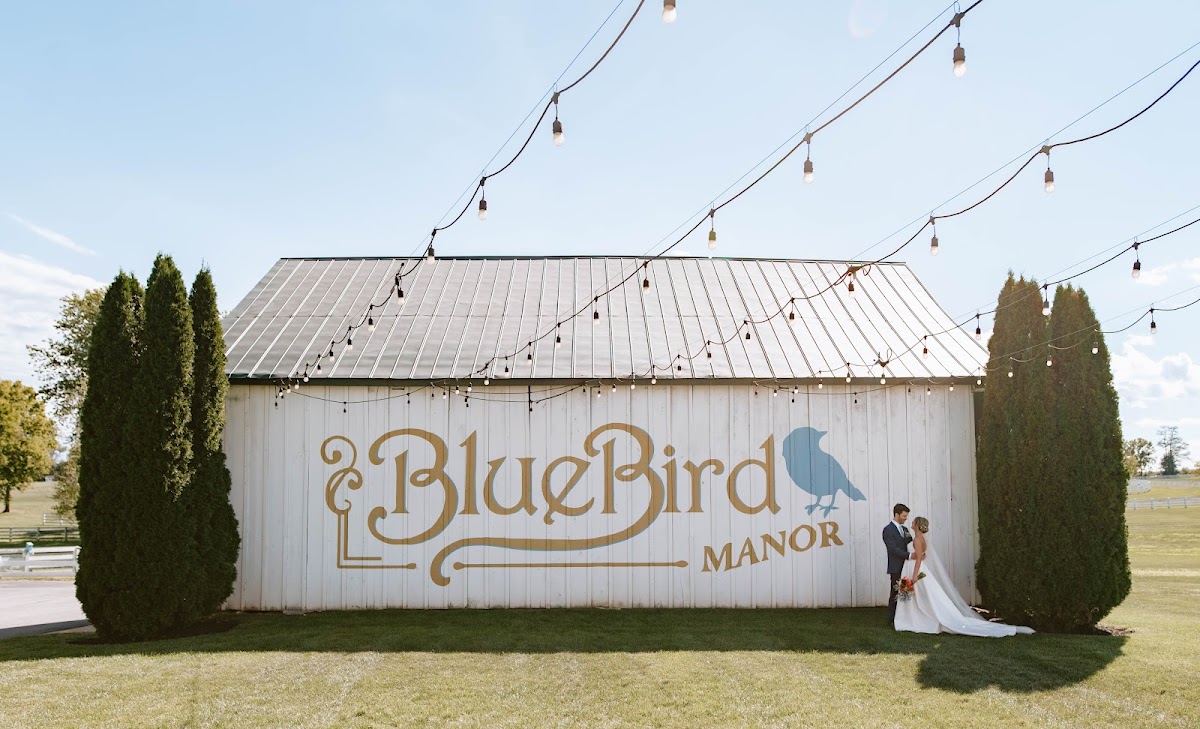
The drive out to Bluebird Manor is the kind that recalibrates your nervous system. You leave Frederick behind, wind through farmland that still looks like farmland — corn stalks in summer, bare earth plowed in rows during spring, that particular brand of Maryland countryside that refuses to be anything other than itself. Then Greenfield Road narrows, and the property opens up: 180 acres of working farm stretching in every direction, tree-lined roads leading to restored barns painted that iconic red, and somewhere near the back of the property, a weeping willow so old and so perfectly placed it seems like someone designed the entire farm around it. This is not a venue that’s been manicured into submission. The wildflower gardens grow where they want. The fields roll without apology. And that 1880s red barn — now strung with crystal chandeliers that catch the afternoon light like a jewelry store heist — still smells faintly of timber and history. Poppy has received 7 inquiries from couples planning their Bluebird Manor weddings, and while we haven’t yet designed flowers here, we’ve walked the property enough times to know exactly how we would approach it: with respect for the bones of the place, and arrangements that look like they grew there naturally.
About Bluebird Manor
Bluebird Manor sits on 180 acres of working farmland in Adamstown, Maryland, a small unincorporated community in Frederick County where the landscape still dictates the rhythm of life. The property centers around a meticulously restored red barn that dates back to 1880 — all-wood construction with iron railings, vaulted ceilings, and those famous crystal chandeliers that have become the venue’s visual signature. This is a real barn, not a barn-inspired event space built last year. The timbers are hand-hewn. The floors are original. The patina is earned, not applied. Bluebird Manor’s owners have layered in modern amenities — climate-controlled bridal and groom’s suites, a bright white chapel converted from the old dairy barn, accessible ramps and an elevator — without erasing the agricultural honesty of the place.
The property’s 180 acres provide an unusual degree of privacy and variety. There are lush grassy fields for lawn games, cornfields that glow gold in late summer, wildflower gardens that self-seed every year, and tree-lined roads perfect for golden hour portraits. The centerpiece for many outdoor ceremonies is the Wispy Willow, a massive weeping willow tree that creates a natural cathedral canopy. For couples who prefer an indoor ceremony or need a weather backup, the White Wedding Chapel offers bright, airy space with vaulted ceilings and large windows that flood the room with natural light. The red Chandelier Barn serves as the primary reception space, accommodating up to 230 guests with room for a sweeping staircase entrance, a dance floor, and those glittering chandeliers overhead.
Logistically, Bluebird Manor sits about 17 minutes from historic downtown Frederick and roughly an hour from both Washington, D.C., and Baltimore, making it accessible to the entire D.C. metro market while feeling genuinely removed from urban sprawl. For Poppy’s delivery team, the drive from our studio is straightforward via I-270 and Route 15, and the property offers ample on-site parking with easy load-in access near the barn. Couples book 12-hour venue access from 11:00 a.m. to 11:00 p.m., with the final hour reserved for vendor breakdown and load-out. The venue maintains preferred vendor lists for catering and bar service, though floral designers are not restricted — a crucial detail that allows us to work with any couple planning a Bluebird Manor wedding.
One important note: the Chandelier Barn is not climate-controlled, which matters for both guest comfort and floral longevity. Summer receptions can get warm, and delicate blooms like sweet peas and ranunculus may wilt faster than hardier varieties. The barn doors open for airflow, and the lower-level cocktail space offers air conditioning, but this is a genuine barn structure, and you should plan accordingly. Also, live flame candles are prohibited throughout the barn spaces, so all candlelight must come from battery-operated sources — a restriction that influences tablescapes and ambient lighting design.
Event Spaces & Floral Opportunities
The Chandelier Barn (Red Barn)
Capacity: 230 seated
Setting: This is the heart of Bluebird Manor, a two-story red barn dating to 1880 with all-wood construction, original timber beams, iron railings, and large crystal chandeliers that descend from the vaulted ceilings like something borrowed from a French chateau. The main level features a sweeping staircase, rustic barn doors at the entrance, and enough space for a full dinner setup with dance floor. The wood tones are warm honey and amber, beautifully aged, with enough patina to photograph rich and dimensional. The barn is not climate-controlled, which means the natural ventilation and open-air quality are part of the charm, but also part of the planning.
Floral approach: The Chandelier Barn demands a delicate balance: honor the rustic architecture without leaning too far into country kitsch, and elevate the space with florals that feel intentional and refined without competing with those show-stopping chandeliers. We recommend low, lush centerpieces for guest tables — think mounded garden roses (Juliet, Keira, Patience), ranunculus, spray roses, and clematis vine in either aged wood boxes, weathered terra cotta vessels, or galvanized metal containers that echo the barn’s utilitarian roots. Heights should stay under ten inches so guests can converse easily across tables, and textures should be abundant — jasmine vine trailing onto the table linen, scabiosa pods, astilbe plumes, and plenty of soft, romantic movement. The sweeping staircase is a natural anchor for a cascading garland: we’d run 15 to 20 feet of smilax, Italian ruscus, and seeded eucalyptus along the railing, punctuated every few feet with clusters of café au lait dahlias, quicksand roses, and white lisianthus. The barn doors can be framed with matching installations — either a loose garland draped asymmetrically across the top beam or two large urns flanking the entrance, overflowing with seasonal branches (curly willow in spring, flowering dogwood in early summer, fall foliage in October). Avoid anything that tries to compete with the chandeliers themselves; instead, use arrangements that draw the eye downward or outward, creating layers of beauty at table level and along architectural features. Because open flames aren’t permitted, consider bud vases with single stems interspersed among battery-operated pillar candles in varied heights for tablescapes.
The White Wedding Chapel
Capacity: Variable, depending on setup
Setting: Originally the property’s milking barn, this space has been transformed into a bright, romantic chapel with vaulted ceilings, exposed wooden beams, and large windows that pour natural light across white-painted walls. The aesthetic is clean and airy, with just enough rustic structure to ground the space. There’s a simple wooden cross or altar at the front, and the white backdrop allows any floral color palette to shine without competing for visual attention. This room doubles as the weather backup for outdoor ceremonies, which means it needs to be beautiful enough to stand on its own but flexible enough to accommodate last-minute pivots.
The Wispy Willow (Outdoor Ceremony Site)
Capacity: Variable, depending on setup
Setting: This is Bluebird Manor’s signature outdoor ceremony location, and it’s exactly what the name promises: a mature weeping willow tree with branches that cascade nearly to the ground, creating a natural canopy and a profoundly romantic atmosphere. The tree sits on the open farmland with panoramic views of fields, cornrows, and distant tree lines. Guests typically sit in white folding chairs arranged in rows or a semicircle, and the bride walks across the grass toward the willow. There is no built structure here, no arbor or arch — just the tree, the sky, and 180 acres of Maryland countryside stretching in every direction.
Floral approach: The cardinal rule at the Wispy Willow is restraint. This tree is already doing all the heavy lifting, and your job as the florist is to enhance, not upstage. We recommend a ground arrangement at the base of the tree trunk — something sprawling and organic that looks like it grew there: seasonal wildflowers (black-eyed Susans in summer, asters in fall, tulips in spring), grasses, unstructured foliage, and blooms in soft, naturalistic colors. Think less “floral arrangement” and more “intentional meadow.” For the aisle, simple clusters of flowers tied with linen ribbon and placed every few chairs, or shepherds hooks with small mason jars filled with a few stems of Queen Anne’s lace, cosmos, and zinnias. If you want more presence without more structure, consider loose petals scattered along the aisle in a subtle ombre — cream to blush to soft peach — that photographs beautifully and biodegrades into the lawn. Some couples want an arbor or arch under the willow, and while we understand the impulse, it’s almost always unnecessary. If you must have a structural element, choose something minimal: a simple wooden frame with asymmetrical floral corners, or a single fabric drape with florals clustered at one side. The willow’s branches will appear in nearly every ceremony photo, so let them be the architecture, and let your florals be the punctuation.
Cocktail Hour Space
Capacity: Variable
Setting: Located on the lower level of the Chandelier Barn, the cocktail hour space features a custom-built blue bar that serves as the visual anchor of the room. The bar is distinctive — painted a rich, saturated blue that feels both nautical and farmhouse-chic — and it’s surrounded by open floor space, with access to the lawn outside and covered porch areas. This is where guests mingle after the ceremony, sip signature cocktails, and transition into the reception upstairs. The space has air conditioning, which makes it a comfortable refuge during warm-weather weddings.
Floral approach: The blue bar is an opportunity for a statement installation that guests will see (and photograph) throughout cocktail hour. We’d design the bar top with a lush, low runner: smilax and eucalyptus as the base, woven with white hydrangea, delphinium in coordinating blue tones, blush spray roses, and Queen Anne’s lace. The arrangement should be low enough not to obstruct the bartenders’ sightlines or workspace, but substantial enough to feel abundant and intentional. Small bud vases or compotes can be scattered across cocktail tables — single dahlias, a few stems of veronica, a sprig of rosemary — alongside battery-operated votives. If the lawn outside is being used, consider a few larger arrangements on pedestals or in oversized vessels flanking the doorway to the outdoor space, creating a visual connection between indoors and out. The blue bar color should inform your palette choices: we’d lean into blues, whites, soft greens, and creams to complement the bar without clashing, avoiding warm oranges or reds that might fight with the custom paint color. This space is also ideal for repurposed ceremony flowers if timing allows — the arrangements from the Chapel altar or the Wispy Willow can be relocated here during the ceremony-to-cocktails transition, maximizing your investment.
The Suite Nest (Bridal Suite)
Capacity: Bridal party
Setting: This charming cottage-style bridal suite is designed like something out of a fairytale, complete with delicate wallpaper, three beauty stations, a bathroom, shower, and air conditioning. The aesthetic is soft, feminine, and thoughtfully styled — the kind of space that photographs beautifully during getting-ready coverage.
Floral approach: A small, refined arrangement in the Suite Nest serves two purposes: it elevates getting-ready photos, and it sets the tone for the bride’s day. We recommend a loose, garden-style posy in soft, romantic tones: blush Keira roses, white ranunculus, sweet peas (if the season and budget allow), spray roses, and trailing jasmine vine, arranged in a vintage brass or ceramic vessel that complements the room’s delicate wallpaper. Place the arrangement on a central table where it will appear in wide shots of the space, and consider a few bud vases with single stems at each beauty station for close-up detail shots. This is not the place for bold, dramatic florals — think soft, romantic, intimate. The arrangement can later be relocated to the gift table, sweetheart table, or cake table at the reception, so choose a vessel that’s versatile and transportable.
The Tool Shed (Groom’s Suite)
Capacity: Groom and groomsmen
Setting: The groom’s preparation space features a red pool table, rustic fireplace, bathroom, shower, and air conditioning. The vibe is masculine, relaxed, and comfortable — a space designed for the guys to hang out, get dressed, and enjoy a drink before the ceremony.
Floral approach: Florals in the Tool Shed should feel organic and unfussy. A single arrangement in a wooden box, galvanized metal bucket, or ceramic crock, featuring textural, masculine blooms: sunflowers, solidago, thistle, hypericum berries, seeded eucalyptus, and a few stems of wheat or ornamental grasses. The palette should skew earthy — greens, browns, maybe a pop of rust or gold depending on the season. This arrangement can also be repurposed later at the reception, perhaps on the bar or at a lounge area.
The Silo
Capacity: Intimate, used primarily for photos or private moments
Setting: The farm’s silo is a unique architectural feature that provides a rustic backdrop for portraits and styled moments. It’s not a functional event space, but rather a photogenic element of the property that couples and their photographers often incorporate into the day’s timeline.
Floral approach: The silo doesn’t need much, but a single statement installation can transform it into a true wow-moment for portraits. Consider a ground arrangement that spills out from the silo’s base: wild and romantic, with vines trailing across the ground, large blooms like dinnerplate dahlias or peonies (if in season), and plenty of unstructured foliage. Alternatively, if the silo has an opening or doorway, a floral installation that frames the entrance — asymmetrical, cascading, organic — creates a stunning backdrop for couples’ portraits. This is a place to take risks and be a little wild: let vines grow long, let blooms cluster unexpectedly, let the arrangement feel like it’s been there for years.
Wedding Flower Ideas for Bluebird Manor
Farmhouse Meadow
This palette is pulled directly from the 180 acres surrounding the venue: sun-bleached wildflowers, grasses that have gone to seed, and blooms that look like they were gathered from the edges of the cornfield. We’re talking black-eyed Susans, zinnias in coral and marigold, chocolate cosmos, Queen Anne’s lace, scabiosa, yarrow in soft yellow, and plenty of textural grasses — bunny tails, wheat, setaria. Foliage includes seeded eucalyptus, olive branches, and wild raspberry cane. Vessels are humble and utilitarian: galvanized buckets, ceramic crocks, wooden boxes, and mason jars wrapped in burlap or twine. This style works beautifully throughout the property but shines especially in the Chandelier Barn, where the rustic wood tones provide the perfect backdrop, and at the Wispy Willow, where the arrangements feel like a natural extension of the landscape. Centerpieces are low and loose, aisle markers are simple and understated, and the overall vibe is effortless abundance — the kind of beauty that looks unplanned but is actually meticulously curated.
Elegant Barn Romance
This concept takes the rustic setting and layers in refined, romantic florals that elevate without losing the venue’s agricultural soul. The palette is soft and sophisticated: blush Keira and Juliet garden roses, café au lait dahlias, white lisianthus, quicksand spray roses, white ranunculus, and blush astilbe, with trailing jasmine vine and smilax providing movement and softness. Foliage includes Italian ruscus, seeded eucalyptus, and dusty miller. Vessels are a mix of aged brass compotes, weathered terra cotta urns, and clear glass cylinders that allow the flowers to be the focus. This style is ideal for couples who love the barn setting but want a more polished, romantic aesthetic. It works particularly well in the White Wedding Chapel, where the clean white backdrop allows the soft blush tones to shine, and in the Chandelier Barn, where the arrangements complement the crystal chandeliers without competing. Table arrangements are lush and garden-style, the staircase garland is abundant and romantic, and the overall effect is timeless elegance grounded in rustic charm.
Country Blue
This palette is anchored by that custom blue bar in the cocktail hour space and extends the color story throughout the celebration. We’d use delphinium in shades of periwinkle and true blue, white hydrangea, blue thistle, dusty blue scabiosa, cream roses (Patience, Playa Blanca), white lisianthus, and silvery foliage like dusty miller and eucalyptus. Accents include privet berries and blue tweedia for texture. Vessels are a combination of white ceramic, clear glass, and natural wood to keep the focus on the blooms. This palette feels fresh and airy, particularly beautiful for spring and summer weddings, and it photographs stunningly against the white walls of the Chapel and the warm wood tones of the Chandelier Barn. The blue bar becomes a natural focal point with florals that echo its color, and the overall effect is cohesive, intentional, and uniquely tied to the venue’s signature features. This is the choice for couples who want their florals to feel custom to Bluebird Manor, not something that could happen anywhere.
Seasonal Considerations
Bluebird Manor’s location in Frederick County, Maryland, brings classic Mid-Atlantic seasonality: humid summers, crisp autumns, unpredictable springs, and occasional winter snow. Each season offers distinct advantages and challenges for wedding florals.
Spring (April - May): Spring in Maryland is glorious when it cooperates, with temperatures ranging from the 50s to 70s, and treacherous when it doesn’t — late freezes, surprise thunderstorms, and mud are all real possibilities. Bloom availability is excellent: tulips, daffodils, hyacinths, ranunculus, anemones, sweet peas, and early peonies (late May if you’re lucky) are all at their peak. The wildflower gardens on the property start to wake up, and the surrounding fields turn vivid green. For outdoor ceremonies at the Wispy Willow, have a weather backup plan ready — the Chapel is the obvious choice, and we recommend designing ceremony florals that can be easily moved indoors if needed. Avoid extremely delicate blooms like sweet peas for outdoor installations unless you’re certain of mild weather. Spring weddings benefit from the property’s natural renewal: even minimal florals feel abundant when the landscape is bursting with life.
Fall (September - October): This is arguably the best season for a Bluebird Manor wedding. Temperatures cool into the 60s and 70s, humidity drops, and the surrounding landscape transforms into a tapestry of golds, rusts, and crimsons. Bloom availability remains strong: dahlias are at their absolute peak, chrysanthemums arrive, and you still have access to garden roses, lisianthus, and sunflowers. The Chandelier Barn’s lack of climate control is no longer a concern — in fact, the cool air and open barn doors create a comfortable, romantic atmosphere. Fall color palettes feel natural here: deep burgundies, burnt oranges, golden yellows, and rich browns echo the changing leaves visible through every window and door. The surrounding fields provide dramatic backdrops for photos, and the weeping willow takes on a golden hue that’s particularly magical during late September. Book early for October dates — this is peak wedding season in Maryland, and preferred vendors fill quickly.
Winter (November - March): Winter weddings at Bluebird Manor are rare but magical when they happen. The property takes on a stark, minimalist beauty with bare trees, dormant fields, and the possibility of snow dusting the red barns. The Chandelier Barn is not heated, so winter weddings require thoughtful planning: portable heaters, blankets for guests, and hot cocktails during cocktail hour. Floral availability shifts to imported blooms and greenhouse varieties: amaryllis, anemones, ranunculus, hellebores, roses, and evergreens for textural base work. Winter palettes can lean into rich jewel tones (burgundy, emerald, deep plum) or crisp whites and greens for a fresh, wintry feel. The advantage is that delicate blooms won’t wilt in the cold, and arrangements can be set up earlier in the day without concern for heat damage. The White Wedding Chapel, which is climate-controlled, becomes an even more appealing ceremony option. Winter weddings here feel intimate and cozy, with candlelight (battery-operated, per venue rules) and lush florals creating warmth against the rustic backdrop.
Poppy’s Expert Take
That blue bar is a design anchor — work with it, not against it. The custom blue bar in the cocktail hour space is visually distinctive, and it will appear in nearly every cocktail hour photo. When selecting your floral palette, consider how your colors will interact with that saturated blue. Soft blues, whites, creams, and greens create a cohesive, harmonious look. Warm tones like peach, coral, and burnt orange can clash. If your overall wedding palette skews warm, keep cocktail hour florals more neutral (whites, greens, ivories) so they don’t fight with the bar color. Alternatively, lean into the blue as inspiration and build your entire floral story around it — delphinium, thistle, tweedia, and blue scabiosa all play beautifully with that signature hue.
The Wispy Willow doesn’t need an arbor — trust the tree. We’ve seen couples add arches, arbors, and structural installations under the weeping willow, and almost universally, these additions detract from the tree’s natural beauty rather than enhancing it. The willow’s cascading branches create a cathedral-like canopy that’s already the most romantic structure you could ask for. Instead of building something new, focus on a beautiful ground arrangement at the tree’s base and simple, understated aisle markers. If you absolutely must have a structural element, choose something minimal and asymmetrical that doesn’t try to compete with the tree itself. Let the willow do what it does best: create magic with zero effort.
Repurpose ceremony flowers to maximize your budget. With 12 hours of venue access and multiple event spaces, Bluebird Manor is ideal for floral repurposing. If you’re having your ceremony at the Wispy Willow, plan for arrangements that can be easily moved indoors to the cocktail hour space or reception during the transition. The ground arrangement from the tree base can become a focal point on the blue bar. Aisle arrangements in portable vessels (shepherds hooks with mason jars, small urns, weighted compotes) can be relocated to cocktail tables or the barn entrance. Communicate your repurposing plan with both your florist and your day-of coordinator to ensure timing works smoothly. This approach reduces waste, maximizes your investment, and creates visual continuity throughout the day.
Battery-operated candles only — plan your tablescapes accordingly. Open flame candles are prohibited in the barn spaces, which means all candlelight must come from battery-operated sources. This restriction impacts tablescapes significantly, especially if you were envisioning that romantic, flickering glow. The good news: battery-operated candle technology has improved dramatically, with realistic flames and warm amber hues that photograph beautifully. Invest in quality battery-operated candles in varied heights, and cluster them among floral centerpieces for dimension and warmth. Alternatively, embrace the restriction and design tablescapes that don’t rely on candles at all — think lush, overflowing floral arrangements, bud vases with single stems, and textured linens that create visual interest without flame.
Load-in and setup are straightforward — communicate timing with your florist. Bluebird Manor offers ample on-site parking and easy access to the barn and chapel for vendor load-in, which makes setup efficient and stress-free. However, with only 12 hours of venue access (11 a.m. to 11 p.m.) and the final hour reserved for breakdown, timing is tight. Make sure your florist knows the full day’s timeline: when they can arrive, when the ceremony starts, when cocktail hour begins, and when they need to complete any transitions or repurposing. If you’re doing a first look or