
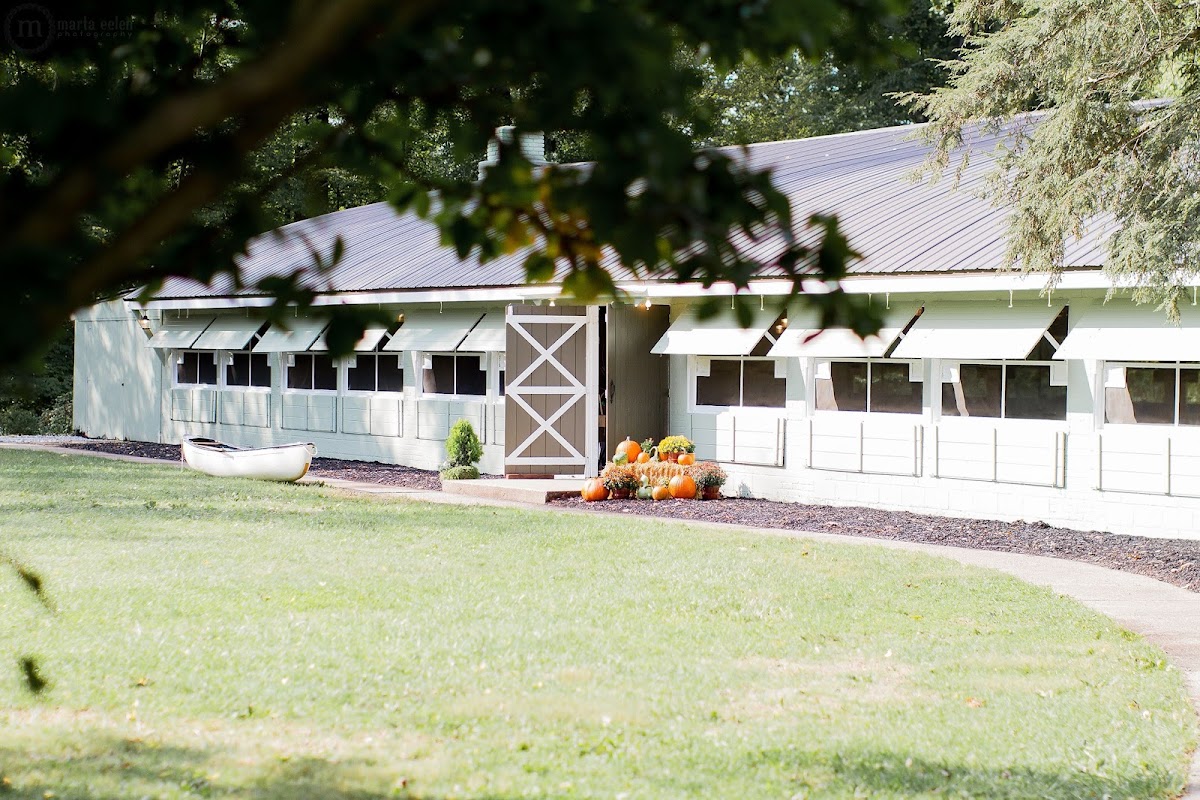
The approach to Bath Hollow Farm is not marked by any grand entrance or carefully manicured hedgerows. Instead, you follow West Bath Road through the rolling farmland of Bath Township, the sprawl of Akron and Cleveland falling away behind you, until the pavement narrows and the trees press closer. Then the farm appears — not announced, but revealed — twenty-eight acres of field and forest folded into the landscape where Woodward Creek cuts through the ravine. This is the edge of Cuyahoga Valley National Park territory, though technically just outside its boundaries, and that proximity shows in the density of the woods, the quality of the silence, and the way the land itself seems to exhale. There is a barn, yes — five thousand square feet of rounded wood ceiling and open trusses — but what you notice first is how the property breathes with the seasons: the green explosion of May, the dusty gold of September wheat, the bare honesty of January branches. Poppy has designed Bath Hollow Farm wedding flowers for one celebration here so far, but we have fielded seven inquiries, and each time we visit for a consultation, we are reminded that this is a venue where nature does most of the talking. Our job is to listen and respond accordingly.
About Bath Hollow Farm
Bath Hollow Farm is a working sustainable farm and event venue situated on twenty-eight acres in Cuyahoga Falls, Ohio, roughly equidistant between Cleveland and Akron. The property has been in the same family for generations, though the barn and amphitheater were built more recently with celebrations in mind. The land itself is diverse: open rolling fields suitable for tent installations or lawn games, a deep wooded ravine where Woodward Creek runs year-round, walking paths that wind through both meadow and forest, and a hillside amphitheater carved into the woods with the kind of natural acoustics that make officiant microphones optional. This is not a farm that has been styled into submission. There are real crops growing in the fields. The fire pit on the lawn is used regularly by the family who lives here. The cottage available as an Airbnb for the wedding party is genuinely someone’s guesthouse, complete with a walk-in shower and a queen bed upstairs, not a prop built for Instagram.
The barn itself is the anchor of the property — a modern structure designed to evoke traditional agricultural buildings without replicating them exactly. The rounded wood ceiling with its exposed trusses draws the eye upward, and the concrete floor is both practical for high-traffic events and surprisingly elegant when dressed with rugs and lighting. The working fireplace is not decorative; on cooler evenings, it throws real heat and the scent of burning wood into the room. The building includes two hundred chiavari chairs and twenty-five round tables plus five rectangular tables, which simplifies rentals considerably. Large barn doors open directly onto the lawn, allowing for seamless indoor-outdoor flow during cocktail hour or late-night dancing under the stars.
Logistically, Bath Hollow Farm sits about thirty minutes south of downtown Cleveland and twenty minutes north of Akron, making it accessible to the broader Northeast Ohio metro area while feeling genuinely removed from urban density. The venue borders Cuyahoga Valley National Park, which means your guests will be taking photos against landscapes that are protected federal land — towering oaks, native wildflowers, and creek beds that have been carving their paths for centuries. For Poppy’s delivery teams, the drive is straightforward via Route 8, and load-in at the barn is exceptionally easy with parking directly adjacent to the entrance. The venue’s owners are hands-on and communicative, which we appreciate as Cuyahoga Falls wedding florists who value clear timelines and vendor coordination.
Bath Hollow Farm operates with a flexible vendor policy. Couples select their own caterers (with a venue meeting required for anyone not on the recommended list), bring their own alcohol, and hire their own bartenders. This freedom extends to florists — there is no preferred list and no restrictions on design approach, which allows us to work without constraints. Setup access begins Friday afternoon and extends through Sunday morning, giving us ample time for complex installations without the pressure of same-day turnarounds. Insurance is recommended but not required, and the venue explicitly welcomes candles, sparklers, and well-behaved pets for the ceremony, which speaks to a thoughtful and accommodating management philosophy.
Event Spaces & Floral Opportunities
The Barn
Capacity: 200 seated
Setting: The Barn is a study in rustic minimalism — five thousand square feet of open space defined by a rounded wood ceiling with exposed trusses, polished concrete floors, and a working stone fireplace along one wall. The wood is honey-toned and warm, the kind that photographs beautifully in both natural daylight and evening uplighting. Built-in lighting is discreet but effective, and the large barn doors along the back wall open onto the expansive lawn, creating an indoor-outdoor connection that is essential during cocktail hour or when guests need to step outside for the bonfire. The neutral palette of wood, concrete, and stone means the space can accommodate any design direction, from bohemian wildflower installations to formal black-tie arrangements. There is no competing architectural ornamentation here — no chandeliers demanding attention, no bold wall colors to navigate. The barn is a blank canvas in the best possible sense.
Floral approach: The fireplace mantel is the single most important floral real estate in this barn. It sits at eye level for seated guests during dinner and serves as a natural focal point throughout the evening. We favor asymmetrical mantel installations here — a lush, cascading arrangement that spills down one side with garden roses (Keira, Patience, or Romantic Antike), textured foliage like sword fern and leather leaf, trailing jasmine vine or smilax, and seasonal accents such as burgundy dahlias in September or white lilac branches in May. The installation should feel organic and overgrown, as though it has been growing there for weeks. For the open trusses, hanging installations are both practical and dramatic. Consider suspended hoops wrapped in Italian ruscus and eucalyptus with clusters of blooms at the bottom — cafe au lait dahlias, quicksand roses, white lisianthus — positioned above the head table or along the dance floor perimeter. Table centerpieces should be kept low and textured: compote-style arrangements in brass or ceramic vessels filled with seasonal blooms and plenty of movement from grasses or trailing vines. Tall arrangements will compete with sightlines in a space this large, and low designs encourage conversation while still delivering visual impact. If the ceremony takes place indoors (a rain backup option), the fireplace becomes your altar backdrop with an installation that reads beautifully from both the front and the back.
Amphitheater & Deck
Capacity: 150 seated
Setting: This is the venue’s most distinctive feature — a small amphitheater with stadium-style wooden benches built directly into the hillside, surrounded on three sides by the wooded ravine where Woodward Creek runs below. The deck at the base of the seating serves as the ceremony platform, and the natural forest canopy creates a living backdrop that shifts with the seasons: white dogwood blooms in spring, dense green foliage in summer, fiery reds and golds in autumn, and bare sculptural branches in winter. The acoustics are remarkable; voices carry without amplification, and the only ambient sound is birdsong and the occasional rustle of wind through the trees. This is not a space that tolerates fussy or overdone design. The forest has already done the work.
Floral approach: The most successful ceremony florals in the amphitheater are those that defer to the landscape rather than compete with it. Skip the traditional floral arch — it will look precious and out of place against the towering oaks. Instead, create a low floral moment at the base of the deck where the couple will stand: a ground installation using moss-covered stones, ferns potted in aged terra cotta, and clusters of woodland blooms like hellebores, anemones, and lily of the valley in spring, or wild asters and goldenrod in fall. Aisle markers along the amphitheater benches can be simple and organic — mason jars wrapped in twine and filled with a few stems of Queen Anne’s lace and black-eyed Susans in summer, or sprigs of bittersweet and oak leaves in autumn. If the couple wants a more substantial installation, consider two large urns flanking the deck filled with branches (curly willow, birch, or flowering quince depending on season) and trailing greenery. The goal is to enhance the existing beauty, not to redecorate the forest.
The Cottage at Bath Hollow Farm
Capacity: Not applicable (getting-ready space)
Setting: The cottage is a small Airbnb structure adjacent to the barn, available for the wedding party to use for preparations and overnight accommodation. It includes a queen bed upstairs, a full bathroom with a walk-in shower, and enough space for hair and makeup setups. The interior is cozy and residential — white walls, simple furnishings, good natural light from the windows. It is not a glamorous bridal suite, but it is private, comfortable, and functional.
Floral approach: Treat the cottage florals as a small, thoughtful gesture rather than a major design moment. A single bud vase on the bathroom counter with three stems of something special — garden roses, ranunculus, or lisianthus in the wedding palette — adds a touch of ceremony to the getting-ready process without cluttering the small space. If the bride wants a larger arrangement, place a low centerpiece-style design on the dining table or kitchen island: a textured mix of blooms and greenery in a ceramic or wooden vessel that can later be moved to the reception as a cocktail table arrangement. These getting-ready flowers should feel like a preview of the wedding design to come, cohesive with the larger installation but scaled appropriately for the intimate space.
Large Lawn
Capacity: Flexible (tent and activity space)
Setting: The lawn at Bath Hollow Farm is sprawling and unmanicured in the best possible way — real grass that shows its seasonal personality, mature trees providing shade along the edges, and enough open space to accommodate party tents, lawn games (giant Jenga, cornhole, and scrabble are all provided by the venue), picnic tables, and the outdoor fire pit. This is where cocktail hour often takes place, where guests gather for late-night s’mores, and where the photographer will inevitably take the couple for golden-hour portraits against the rolling field backdrop. The vibe is decidedly casual and pastoral, which means floral design should lean into that relaxed energy rather than fight against it.
Floral approach: The lawn is best served by floral moments that feel unstudied and organic. If cocktail hour happens here, dress the picnic tables with clusters of mason jars or small metal buckets filled with wildflowers and grasses — zinnias, sunflowers, cosmos, daisies, and whatever else is blooming locally that week. These arrangements should look like someone picked them from the field that morning and casually dropped them in water. If a tent is erected on the lawn for dinner service, the entrance becomes a key design opportunity: two large urns or whiskey barrels overflowing with seasonal branches, hydrangea, and trailing greenery signal the transition from outdoor to sheltered space. Tent pole arrangements can be lush and full —WraPS of smilax and eucalyptus with clusters of blooms at eye level — but avoid anything too formal or symmetrical. The fire pit area benefits from zero floral intervention; let the natural gathering energy speak for itself, or add a few lanterns surrounded by pinecones and evergreen clippings in winter for a soft seasonal touch.
Wedding Flower Ideas for Bath Hollow Farm
Meadow Gathered
This concept embraces the farm’s wildflower fields and rolling landscape with a palette that looks like you walked through a Northeast Ohio meadow in late summer and gathered everything blooming. The foundation is locally grown or locally available wildflowers: black-eyed Susans, Queen Anne’s lace, purple coneflowers, goldenrod, white yarrow, cosmos in shades of pink and magenta, and blue bachelor buttons. Add textural grasses like feather reed grass and panic grass for movement, and soften with touches of white lisianthus and blush astilbe. Vessels should be humble and varied — mismatched mason jars, ceramic crocks, galvanized metal buckets, and simple glass bottles. Arrangements are loose and unstructured, with blooms crossing over each other at different heights and nothing feeling too precious or arranged. This is the perfect palette for couples who want Bath Hollow Farm wedding flowers that feel like an extension of the property itself, organic and unpretentious. It works beautifully on the lawn picnic tables, as low centerpieces in the barn, and as simple aisle markers in the amphitheater.
Woodland Romance
This design leans into the forested ravine and the amphitheater’s natural canopy with a palette inspired by the forest floor and the dappled light filtering through leaves. Start with a base of textured greenery: sword fern, maidenhair fern, dusty miller, eucalyptus (seeded and silver dollar), and trailing smilax. Layer in woodland blooms like hellebores in cream and soft pink, white anemones with dark centers, blush ranunculus, ivory spray roses (Majolica), and delicate astilbe in white and pale lavender. Add unexpected elements like lichen-covered branches, moss-covered stones incorporated into table designs, and small mushrooms (foraged or faux) tucked into arrangements. Vessels should feel earthy and natural: aged ceramic compotes in soft gray or taupe, wooden boxes with moss linings, and stone or concrete vessels. The overall effect is soft, romantic, and deeply connected to the natural landscape surrounding the venue. This palette shines in the amphitheater with minimal intervention, works beautifully on the barn’s fireplace mantel, and translates well to bridal party bouquets that feel ethereal and overgrown.
Garden Harvest
This approach honors the farm’s agricultural roots with a palette that bridges formal garden blooms and rustic harvest elements. The color story is warm and abundant: deep burgundy dahlias (Karma Choc, Black Satin), peachy-coral garden roses (Juliet, Free Spirit), burnt orange ranunculus, cream lisianthus, and touches of marigold or zinnia for brightness. Add textural interest with wheat stalks, oats, dried grasses, and seasonal fruits like crabapples or pomegranates tucked into arrangements. Foliage should be rich and varied: Italian ruscus, olive branches, copper beech, and trailing amaranthus in burgundy or rust tones. Vessels lean rustic-elegant: aged copper urns, wooden troughs, brass compotes with patina, and ceramic crocks in matte finishes. This is a palette that works across seasons — substitute spring blooms like tulips and ranunculus for the dahlias, or lean fully into autumn with chrysanthemums and fall foliage. It photographs beautifully against the barn’s wood tones, makes a statement on the fireplace mantel, and creates abundant, lush centerpieces that feel celebratory without being overly formal.
Seasonal Considerations
Bath Hollow Farm sits squarely in the continental climate zone of Northeast Ohio, which means four distinct seasons with significant temperature variations and precipitation patterns that directly impact both floral availability and event logistics. Understanding these seasonal shifts is essential for planning your Bath Hollow Farm wedding flowers.
Spring (April–May) arrives tentatively in Northeast Ohio, with temperatures ranging from the mid-40s to the low 70s and frequent rain showers that can turn the lawn into a muddy field. The wooded ravine comes alive first — native trillium, Virginia bluebells, and wild violets bloom in the understory, and the trees leaf out in waves of pale green. Locally available flowers include tulips (parrot, French, and fringed varieties), daffodils, hyacinth, grape hyacinth, ranunculus, anemones, lilac branches, and early peonies by late May. The amphitheater is particularly stunning during dogwood bloom (late April), when the white flowers create a natural ceiling above the ceremony deck. For spring weddings, plan for unpredictable weather: have a clear tent backup plan for outdoor ceremonies, choose flowers that can tolerate cooler temperatures, and work with your florist to create designs that won’t wilt if setup happens in cool, damp conditions. May is the most popular wedding month at Bath Hollow Farm, and for good reason — the landscape is at peak green, temperatures are pleasant, and the seasonal flower selection is extraordinary.
Summer (June–August) brings heat, humidity, and the fullness of the growing season. Temperatures regularly reach the mid-80s with high humidity, which means outdoor ceremonies in the amphitheater require careful timing (late afternoon or early evening is ideal) and guests will appreciate the barn’s cooler interior. The farm’s fields are at their most lush, and locally grown flowers are abundant: dahlias in every color, sunflowers, zinnias, cosmos, lisianthus, snapdragons, delphiniums, hydrangeas, and garden roses. Summer is also peak season for garden herbs like lavender and rosemary, which can be incorporated into arrangements for both scent and texture. The long daylight hours (sunset around 9 PM in June) mean golden hour photos on the rolling fields are magical, and the outdoor fire pit becomes a natural gathering spot as temperatures cool in the evening. From a floral perspective, summer’s heat requires strategic choices: avoid delicate blooms that wilt quickly (sweet peas, tulips), ensure proper hydration for all arrangements, and consider timing delivery and setup for early morning or late afternoon to minimize heat stress on the flowers.
Fall (September–November) is arguably the most visually dramatic season at Bath Hollow Farm. The wooded ravine transforms into a riot of color — sugar maples turn scarlet, oaks shift to burgundy and gold, and the forest floor is carpeted in fallen leaves. Temperatures cool from the comfortable 70s in September to the crisp 50s by November, making outdoor ceremonies in the amphitheater perfectly pleasant with light wraps for guests. Seasonal flowers include the continued abundance of dahlias (which peak in September and October), chrysanthemums, asters, celosia, ornamental kale, and the last of the garden roses. Fall foliage becomes a design element in itself: branches of maple, oak, and beech can be incorporated into large installations, and dried elements like wheat, oats, and ornamental grasses add texture. The barn’s fireplace becomes a functional focal point for cooler evenings, and the working fire adds both warmth and ambiance. October is the busiest wedding month here, and the landscape requires minimal floral intervention — the natural beauty is so abundant that designs can be simpler and more restrained while still feeling lush.
Winter (December–February) is the quietest season at Bath Hollow Farm, though the property has a stark beauty when the trees are bare and the fields are dormant or snow-covered. Temperatures range from the mid-30s down to the teens, and snow is common from December through February. The amphitheater is not a practical ceremony location in winter (though theoretically possible for the very brave), so ceremonies move indoors to the barn with the fireplace serving as the natural altar backdrop. Winter flower availability shifts to evergreens, holly, winterberry, eucalyptus, amaryllis, anemones (imported), ranunculus (imported), and forced branches like quince and cherry. The barn’s neutral palette and working fireplace create an incredibly cozy atmosphere for winter weddings, and designs can lean into seasonal textures: pinecones, magnolia leaves, birch bark, and dried elements. The fire pit on the lawn can still be used for brave guests who want to bundle up for s’mores, and the cottage provides a warm retreat for the wedding party during getting-ready hours. From a logistical standpoint, winter weddings require careful attention to timing — early sunsets mean ceremonies often happen with artificial lighting, and transport of temperature-sensitive flowers requires climate-controlled vehicles.
Poppy’s Expert Take
The amphitheater needs less than you think. The natural forest backdrop is so visually powerful that elaborate floral installations in the ceremony space almost always feel like overreach. We have seen couples invest thousands in ceremony arches only to have them disappear visually against the wooded ravine. Trust the landscape. A simple ground installation at the deck base, understated aisle markers, and a focus on personal flowers (bouquets, boutonnieres, corsages) will photograph better and feel more appropriate to the setting. Save your floral budget for the barn, where the neutral palette gives you room to make a statement.
The fireplace mantel is your reception design anchor. In a five-thousand-square-foot room with minimal architectural detail, you need a focal point that grounds the space and gives guests something to look at beyond each other. The fireplace mantel serves this function perfectly. Invest in a substantial, asymmetrical installation here — we are talking three to four feet wide, eighteen inches deep, with trailing elements that cascade down the stone. This is not the place for a small, symmetrical arrangement. Go lush, go textured, go abundant. When the fire is lit beneath your installation, the effect is both dramatic and warm, and it becomes the most photographed spot in the room after the dance floor.
Load-in logistics are forgiving, but communicate with the family. Bath Hollow Farm is a working property where the owners live on-site and use the spaces regularly. They are gracious and accommodating, but they are not invisible. We have found that clear communication about arrival times, setup locations, and any special requests (like borrowing an extension cord or needing access to water) goes a long way. The load-in area is immediately adjacent to the barn entrance, which makes our lives easy, but be respectful of other vendors sharing the same space and the family’s schedule. Friday afternoon setup access is generous, and we recommend taking advantage of it for any large installations that require scaffolding, ladding work, or multiple trips from the vehicle.
The lawn will show its personality. This is real grass on real farmland, not a golf-course-manicured surface. Depending on the season and recent rainfall, the lawn may be lush and green, or it may be patchy and dry, or it may be muddy. If your ceremony or cocktail hour is taking place on the lawn, plan footwear accordingly (we have seen many bridesmaids sinking into soft ground in stilettos), and consider renting a dance floor or platform if you are setting up a tent for dinner service. For floral design, this means any ground-based installations (like welcome arrangements at the lawn entrance) need sturdy bases that will not tip over on uneven terrain. Weighted urns, heavy ceramic vessels, and stakes for aisle markers are all practical necessities.
Seasonal timing affects setup conditions significantly. Summer heat and humidity mean we schedule delivery and setup for early morning whenever possible to keep flowers fresh and installers comfortable. Winter cold means we keep flowers in climate-controlled transport until the last possible moment and work quickly to get everything inside the heated barn. Spring rain means we bring tarps to protect arrangements during transport from vehicle to venue. Fall is the easiest season logistically, with pleasant temperatures and stable conditions, but it is also the busiest season, so couples should book early and expect higher demand for premium fall blooms like dahlias and garden roses.
Repurposing opportunities are limited but possible. Because the amphitheater and barn are separate locations with different setups, floral repurposing from ceremony to reception is not as seamless as at venues where both happen in the same space. However, we can repurpose ceremony aisle markers as cocktail table arrangements on the lawn, and any substantial ceremony installation at the amphitheater entrance can be moved to the barn entrance for the reception. Discuss repurposing goals with your florist during the planning process so we can design arrangements with dual use in mind and budget transportation time for moving pieces between locations.
Embrace the farm’s casual elegance rather than fighting it. Bath Hollow Farm is not a ballroom venue. It is not a mansion. It is a working farm with a beautiful barn and a forest amphitheater, and couples who lean into that rustic, organic, nature-forward aesthetic will have the most successful design outcomes. This is not the venue for towering silver candelabras, formal floral topiaries, or anything that feels too precious or stuffy. Think organic, abundant, textured, and seasonally appropriate. The venue itself is guiding you toward a certain aesthetic — listen to it.
What Poppy Couples Spend on Flowers Here
Based on our experience with Bath Hollow Farm weddings and the broader Cuyahoga Falls wedding florist market, we see three common investment tiers for wedding flowers at this venue. Your actual investment will depend on guest count, the number of event spaces you are using, and the complexity of your floral vision, but these ranges provide a useful framework.
$1,500–$2,500 | The Essentials
This tier focuses on the most visible floral moments: personal flowers for the wedding party (bridal bouquet, bridesmaids bouquets, boutonnieres, corsages), centerpieces for guest tables in the barn, and one statement installation. At this investment level, we might create a lush fireplace mantel arrangement as your focal point, dress fifteen to twenty guest tables with low compote centerpieces in a seasonal palette, provide full personal flowers, and add simple aisle markers or a small ground installation for the amphitheater ceremony. Flower choices at this tier lean toward seasonally abundant and locally available blooms — dahlias and sunflowers in summer and fall, tulips and ranunculus in spring, evergreens and amaryllis in winter. This is the most budget-conscious approach that still delivers visual impact in the barn and ensures the wedding party looks polished and cohesive. The amphitheater ceremony remains intentionally minimal, allowing the forest backdrop to be the star.
$2,500–$4,000 | The Full Picture
This is the most common investment range for Bath Hollow Farm weddings and allows for more comprehensive coverage across multiple spaces. In addition to everything in the Essentials tier, we add hanging installations in the barn (garlands across the trusses or suspended floral hoops), cocktail table arrangements for the lawn or barn entrance, additional ceremony florals (urns flanking the amphitheater deck or a more substantial ground installation), and upgraded blooms in personal flowers and centerpieces. At this level, you can incorporate premium flowers like garden roses, peonies (in season), French tulips, and specialty dahlias while still mixing in textural greenery and seasonal filler to maximize volume. We might also add floral accents to the cottage for getting-ready photos, dress the picnic tables on the lawn with wildflower clusters for cocktail hour, and create a second statement installation beyond the fireplace mantel — perhaps at the barn entrance or above the head table. This tier delivers a cohesive floral experience from the moment guests arrive through the last dance.
$4,000+ | The Full Experience
For couples who want Bath Hollow Farm wedding flowers to be a defining element of their celebration, this tier allows for maximum impact across every space. We are talking multiple large-scale installations: an abundant fireplace mantel arrangement, suspended garlands running the length of the barn, elevated centerpieces on tall risers mixed with low designs for visual variety, substantial ceremony florals at the amphitheater that enhance rather than compete with the forest (perhaps a floral-draped arbor using natural branches as the base, or extensive ground installations along the deck edge), full lawn styling with clusters of arrangements on every picnic table and urns flanking the tent entrance, and premium bloom choices throughout. At this level, we can incorporate expensive specialty flowers like Juliet garden roses, locally grown and hard-to-source blooms, foraged elements that require extra labor (like lichen-covered branches or moss installations), and complex installation techniques (like ceiling installations that require lifts or scaffolding). This is the tier for couples who want every surface touched by florals and every design moment to feel lush, abundant, and Instagram-worthy. The barn becomes a completely transformed space, the amphitheater ceremony feels like an enchanted forest wedding, and the overall floral experience is one that guests will remember and talk about long after the wedding ends.