
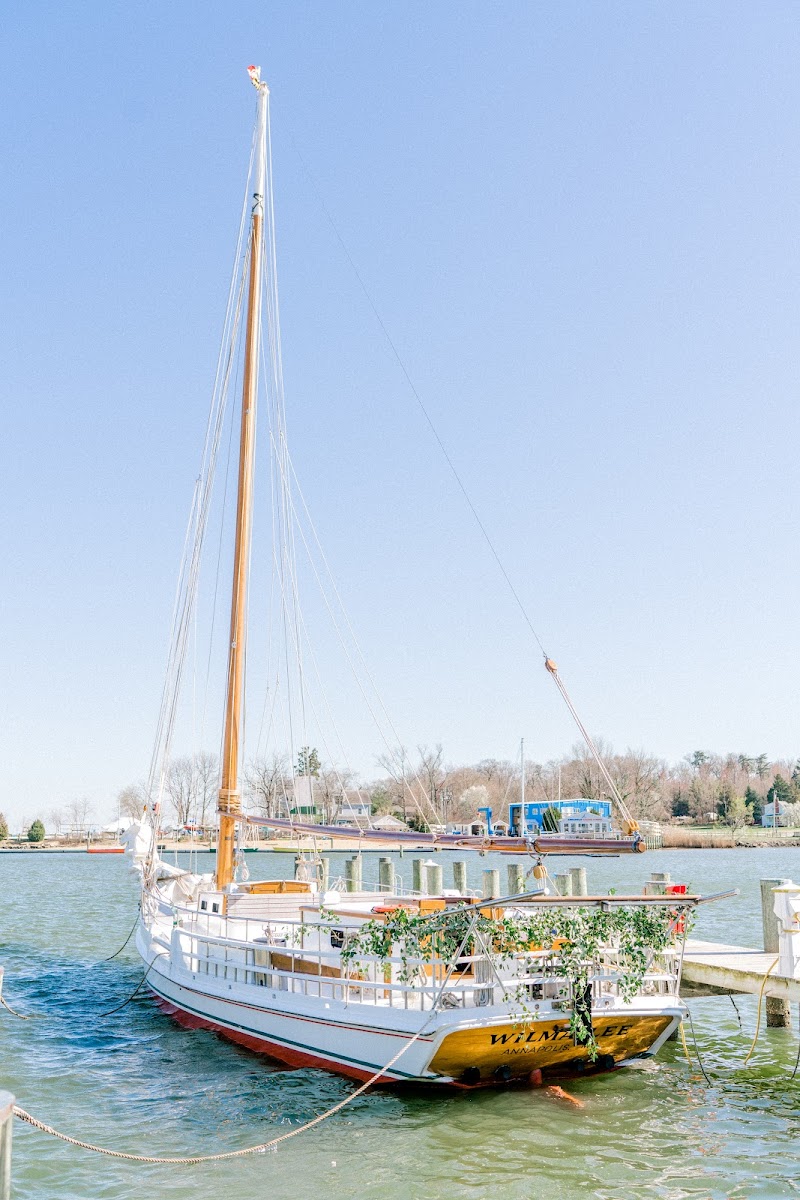
The Annapolis Maritime Museum offers a raw, honest connection to the Chesapeake Bay that modern ballrooms cannot replicate. Designing for this venue requires an understanding that the environment—the wind, the salt air, and the shifting light over Back Creek—is your primary collaborator.
Floral success here is found in texture over perfection. We recommend leaning into the “Eastport” vibe: sophisticated but unpretentious, using movement-heavy greens and hardy blooms that can withstand a steady bay breeze without bruising.
The Spaces
Park Campus Pavilion
Newly completed in 2023, this 2,600-square-foot pavilion is the venue’s crown jewel for receptions. The architecture is defined by exquisite craftsmanship and a massive fireplace that begs for a floral focal point. Because the space is open-air, the transition between the park’s nature trails and the reception is seamless.
- What works: A lush, asymmetrical mantel installation on the fireplace. This draws the eye inward once the sun sets over the water.
- Skip: Tall, top-heavy glass trumpets. The wind coming off the creek will make these a liability.
- Watch out: The “open-air” nature means guests see the floral mechanics from multiple angles. Ensure all foam or water sources are tucked behind dense foliage.
- Budget hero move: Focus your entire reception budget on the fireplace and the head table. The surrounding scenery does the rest.
The Pier
This is the quintessential Annapolis ceremony spot. You are standing 250 feet out into the water, surrounded by the Chesapeake. It is dramatic, but it is also a logistical challenge for floral designers.
- What works: Ground-based semi-circle “nest” arrangements. Keeping the center of gravity low ensures the flowers stay put and don’t block the view of the boats.
- Skip: Traditional four-post arches. Unless they are bolted to the dock, they act as sails in the wind.
- Watch out: The walk from the parking area to the end of the dock is roughly 10 minutes. Florists must plan for efficient load-in and potentially heat-sensitive blooms.
- Budget hero move: Small clusters of greenery and hardy blooms tied directly to the dock pilings to mark the aisle.
The Bay Room
Located in the main museum building, this indoor space is perfect for smaller, more formal dinners. The windows provide a panoramic view of the water, which should dictate your design heights.
- What works: Long, low “meadow” style arrangements that run the length of rectangular tables.
- Skip: Anything that sits at eye level. The view is the reason you booked this room; don’t hide it.
- Watch out: The room features maritime exhibits. Your color palette should complement the historic artifacts and blue-toned views rather than clashing with them.
What Works at Annapolis Maritime Museum
Embrace the “Wind-First” Mentality. Every design choice must consider the bay breeze. We use heavy ceramic vessels, weighted bases, and floral wire to secure everything. If a bloom is delicate—like a sweet pea or a poppy—it needs to be tucked into a denser arrangement for protection.
The Coastal Neutral Palette. While navy and white are the standard, we find that “high-desert coastal” works beautifully against the weathered gray wood of the museum. Think sand tones, bleached dried elements, and deep sea-holly blues mixed with crisp whites.
Railing Garlands. The museum and deck areas have extensive wooden railings. These are perfect rigging points for lush greenery garlands. It’s a practical way to add high-impact floral without taking up valuable floor space in the smaller rooms.
Textural Greenery. Incorporate elements that feel native to the Maryland coastline. Sea oats, grasses, and even subtle touches of oyster shells in the table decor ground the design in the museum’s specific mission of Chesapeake ecology.
Repurposing with Purpose. The ceremony flowers from the pier should almost always move to the Pavilion fireplace or the base of the sweetheart table. Because the walk is significant, we recommend designs that are modular and easy for a team to transport quickly during cocktail hour.
Budget Guide
| Tier | Investment | Floral Strategy |
|---|---|---|
| Essentials | $1,750 - $3,000 | Focus on personal flowers and high-impact “meadow” pieces for the ceremony that can be moved to the head table. |
| Sweet Spot | $3,000 - $5,500 | Adds low-profile centerpieces for all guest tables and a dedicated mantel installation for the Pavilion fireplace. |
| Full Experience | $5,500 - $8,500 | Includes a lush ceremony “nest,” railing greenery for the deck, and upgraded textural vessels for a cohesive maritime look. |
| Statement | $8,500+ | Full-scale fireplace installations, overhead greenery in the pavilion (where possible), and dense, flower-heavy table designs. |
The museum’s charm lies in its authenticity; your floral budget should enhance the maritime history, not try to mask it.
Tips
Plan for a 10-minute walk. The dock is a significant distance from the loading zone; ensure your floral team has carts with rugged wheels.
Secure the “Wilma Lee.” If hosting a micro-ceremony on the skipjack, use non-slip mats under any floral vessels to prevent sliding on the deck.
Lighting is floral’s best friend. In the Pavilion, pair your floral designs with amber uplighting to make the stone fireplace and wood beams glow after dark.
Avoid “Sailing” mechanics. Never use lightweight pedestals or tall, thin vases on the pier; if it can blow over, it will.
Respect the museum mission. Avoid using invasive species or non-biodegradable glitter/confetti, as this is a site dedicated to bay ecology.