
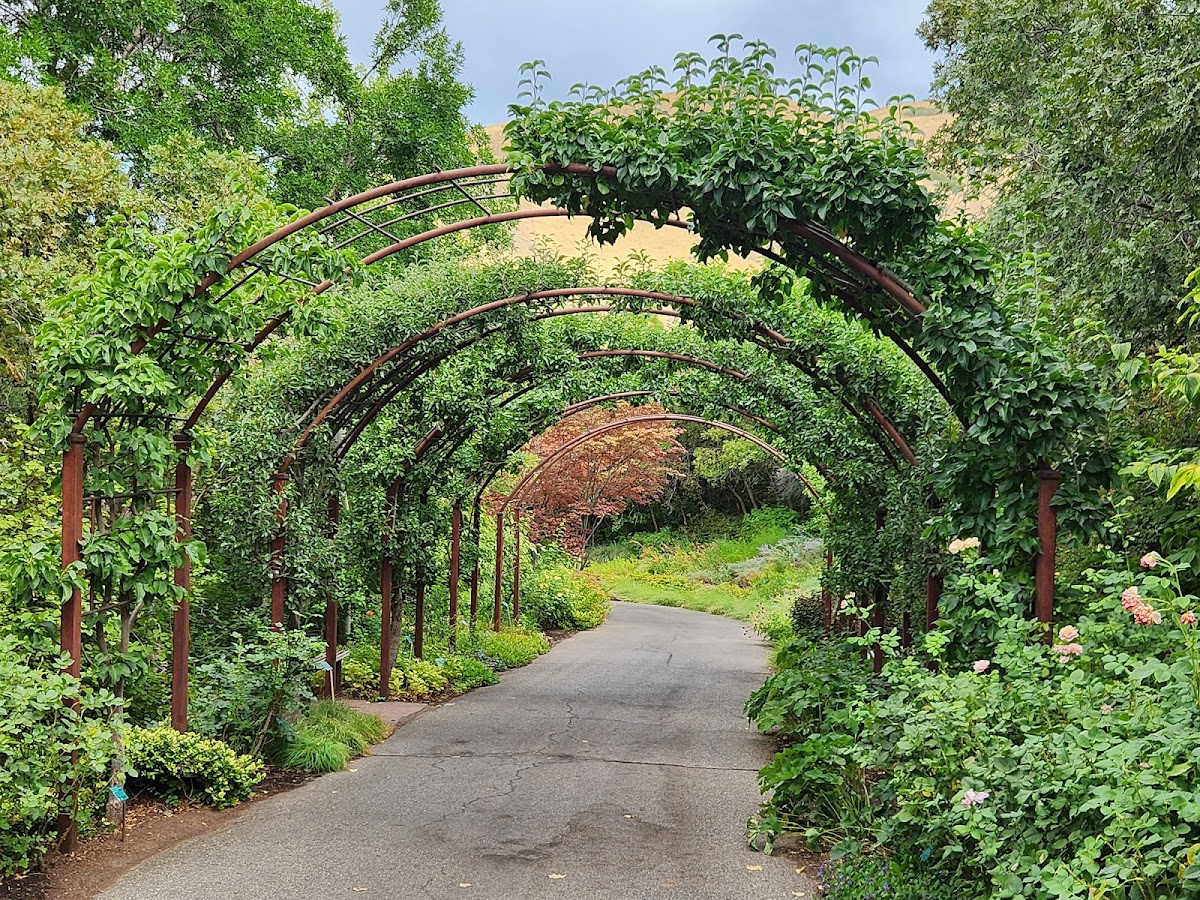
Designing flowers for Red Butte Garden requires a departure from traditional ballroom thinking. This is a botanical-first environment where the landscape does the heavy lifting, and your floral choices should act as an intentional edit of the surrounding 100 acres. We know this venue intimately, and the key to success here is understanding that you are not decorating a room; you are enhancing an ecosystem.
The challenge at Red Butte is scale. When you are standing against the Wasatch Range, a standard-sized centerpiece can look like an afterthought. We focus on architectural shapes and ground-heavy “meadow” installations that feel like they were planted by the garden staff themselves.
The Spaces
Amphitheatre
This is the venue’s most dramatic space, featuring a permanent stage and a massive mountain backdrop. It is designed for performance, which means your flowers need to perform at a theatrical scale. Anything too small will be swallowed by the environment.
- What works: Massive, asymmetrical stage installations. Think 8-foot-tall flowering branches or heavy ground-level “hedges” that line the front of the stage. These ground clusters help bridge the gap between the audience and the mountain horizon.
- Skip: Delicate, airy bud vases or small pedestals. They lack the visual weight needed for this scale and are prone to tipping in the afternoon canyon winds.
- Watch out: Lighting. Most events here transition into the evening, and the Amphitheatre uses stage lighting. White and light-colored flowers reflect this light best, while dark purples or deep reds can disappear into the shadows.
- Budget hero move: Focus all ceremony funds into two massive, ground-based “nest” arrangements at the stage center. These can be easily moved to the reception entrance or the sweetheart table later.
Rose Garden
The Rose Garden is the aesthetic opposite of the Amphitheatre. It is enclosed, intimate, and already saturated with color and fragrance. The design goal here is restraint.
- What works: Monochromatic palettes that either match or sharply contrast the existing roses. If the garden is in peak bloom with pinks and reds, a crisp all-white palette feels modern and intentional.
- Skip: Overly “garden-style” arrangements with too many competing textures. The garden already provides the texture; your arrangements should provide the focal point.
- Watch out: Fragrance. With hundreds of roses nearby, adding heavily scented lilies or gardenias can become overwhelming for guests in the heat.
- Budget hero move: Use the existing stone walls as a “shelf” for long, low floral runners. It saves on expensive hardware rentals and uses the venue’s architecture as a natural prop.
Daffodil Hill
This space is a seasonal treasure. If you are booking in the spring, you are designing into a sea of yellow and white bulbs.
- What works: Low-profile “meadow” installations that appear to grow out of the grass. Use bulb flowers like tulips, narcissus, and ranunculus to create a cohesive look with the hillside.
- Skip: Tall, formal arches with heavy draping. The hill is sloped, making traditional four-post structures difficult to level and visually jarring against the natural incline.
- Watch out: The slope. All arrangements must be weighted heavily. Gravity is your enemy on Daffodil Hill, and top-heavy designs will inevitably lean.
- Budget hero move: Skip the aisle markers and put the entire budget into a semi-circle of flowers on the ground where the couple stands. It frames the moment without obstructing the view for guests.
The Orangerie
As the primary indoor backup and reception space, the Orangerie is a glass-walled sanctuary. It brings the garden inside, which means your designs should maintain that outdoor connection.
- What works: Tall, airy installations that utilize the vertical space. Narrow-based stands with sprawling foliage at the top allow for conversation at the table while filling the high “ceiling” of the glass room.
- Skip: Solid, dense floral walls. They block the views of the garden, which is the primary reason to host an event in this room.
- Watch out: Heat gain. Even with climate control, the “greenhouse effect” is real. Choose hardy varieties that won’t wilt if the afternoon sun hits the glass.
- Budget hero move: Greenery-heavy designs. Smilax or ivy vines climbing the internal structures can make the space feel like an extension of the botanical gardens for a fraction of the cost of full floral installations.
What Works at Red Butte Garden
- Meadow-style installations: These ground-based arrangements are the gold standard for botanical gardens. They look natural, they handle wind better than tall stands, and they don’t compete with the mountain views.
- Architectural foliage: Use branches like quince, cherry blossom, or forsythia to create height and drama. These “woody” elements feel at home in a garden setting and provide a structural backbone that soft stems cannot.
- Weighted mechanics: The canyon winds in Salt Lake City are unpredictable. Every installation at Red Butte must be built on heavy steel plates or weighted with sandbags disguised by foliage.
- Seasonal color matching: We recommend checking the garden’s bloom schedule. If you are getting married during the lavender bloom, incorporating lavender or similar hues creates a seamless visual experience.
- Stone-toned vessels: Concrete, clay, or dark stone containers look better here than high-shine gold or silver. They ground the arrangements in the natural environment.
Budget Guide
| Tier | Investment | Floral Strategy |
|---|---|---|
| Essentials | $1,750 - $3,000 | Personal flowers (bouquets/boutonnieres) plus a high-impact “meadow” ceremony nest that doubles as sweetheart table decor. |
| Sweet Spot | $3,000 - $5,500 | Full personal flowers, a freestanding ceremony arch or stage clusters, and a mix of low lush centerpieces and bud vases for the Orangerie. |
| Full Experience | $5,500 - $8,500 | Large-scale stage installations in the Amphitheatre, aisle meadows, and elevated centerpieces in the Orangerie to fill the vertical volume. |
| Statement | $8,500+ | Full garden immersion. Custom-built floral structures, “climbing” vines on the Orangerie glass, and lush, multi-layered stage designs. |
The character of Red Butte Garden is one of refined wilderness; your budget should be spent on scale and texture rather than sheer flower count.
Tips
- Prioritize ground-level designs: The sloped terrain and wind make tall, top-heavy pedestals a liability; keep the weight low.
- Coordinate with the bloom calendar: Your color palette should complement, not fight, the 3,000 species already planted on-site.
- Plan for the “Long Walk”: The distance from the loading area to spaces like Daffodil Hill is significant; ensure your florist has a robust logistics plan for transport.
- Repurpose with intention: Moving flowers from the Amphitheatre to the Orangerie is a great way to maximize budget, but ensure the designs are “finished” on all sides as they will be seen from 360 degrees in the glass room.
- Avoid delicate petals: The Utah sun and mountain breeze can dehydrate thin-petaled flowers like hydrangeas quickly; opt for sturdier roses, carnations, or tropicals.